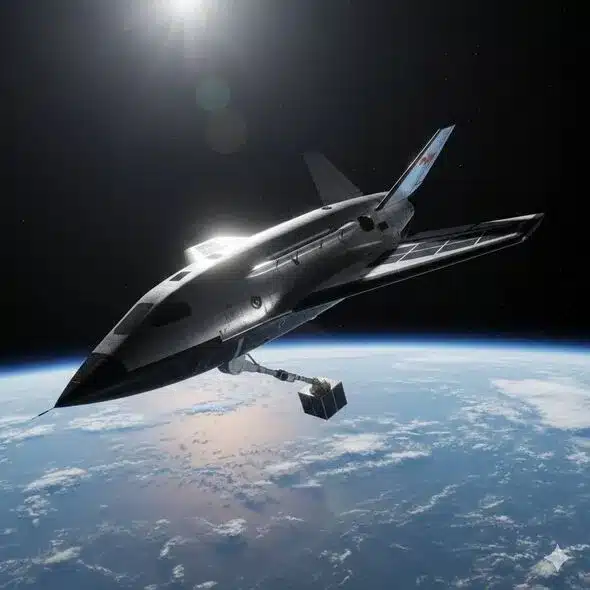
China has launched its secretive Shenlong space plane, known as ‘Divine Dragon,’ into orbit for the fourth time, prompting speculation among security analysts about its activities in space.
Launch Details
The reusable vehicle lifted off earlier this month from the Jiuquan Satellite Launch Centre in northwest China on a Long March-2F rocket. Chinese authorities have released minimal information on the mission, including its orbital duration, payload, or experiments. Officials state that the program tests technology to develop more convenient and affordable round-trip methods for the peaceful use of space.
Design and Capabilities
No official photographs or technical details have been disclosed, leaving observers to rely on orbital tracking data and amateur sightings. The Shenlong space plane resembles the US military’s X-37B, an autonomous mini-shuttle that can change orbits, stay aloft for months, and return equipment to Earth.
Unlike the X-37B, Shenlong has deployed ‘wingman’ satellites during previous missions before maneuvering to dock with or retrieve them. Past operations have lasted from several days to more than eight months, demonstrating significant endurance and flexibility.
Strategic Context
China maintains that the vehicle supports peaceful space activities. However, defense analysts suggest it evaluates technologies for satellite maintenance, space debris removal, or potential anti-satellite roles.
The timing of this launch coincides with preparations by the US Space Force for its eighth X-37B mission, highlighting growing competition in orbital operations where long-duration maneuvering capabilities represent a key advantage.