Ecuador declared Cuba’s ambassador, Basilio Antonio Gutiérrez, and his diplomatic staff persona non grata on Wednesday, requiring them to depart within 48 hours.
The Foreign Affairs Ministry issued a statement confirming the action under international diplomatic law, offering no specific rationale. The Vienna Convention permits such expulsions without justification.
Embassy Incident Sparks Attention
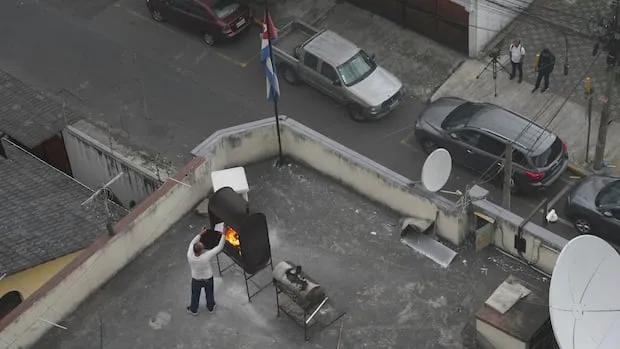
Shortly after the declaration, a man appeared on the roof of the Cuban Embassy in Quito, burning documents in an oven. President Daniel Noboa posted video footage on social media, quipping, “A paper barbecue.” Authorities provided no further details or identification of the individual.
Cuba Condemns Unprecedented Move
Cuba’s government issued a sharp rebuke that evening, labeling the expulsion an “unfriendly and unprecedented act that significantly damages the historic relations of friendship and co-operation between both countries.” Cuba’s Foreign Ministry added that it “demonstrates the contempt of the current government of Ecuador for the diplomatic practices and courtesies observed by the international community.”
Timeline of Reciprocal Actions
The decision trails President Noboa’s Tuesday executive order revoking diplomatic credentials for Ecuador’s ambassador to Cuba, José María Borja, without explanation. That same day, Ecuador and the United States launched joint military efforts against organized crime networks.
Noboa positions himself as a resolute leader combating escalating violence from armed groups.
U.S. Pressure on Cuba Intensifies
Events unfold amid escalating U.S. measures against Cuba under President Donald Trump, heightened after a U.S. operation ousted former Venezuelan leader Nicolás Maduro. Cuba grapples with 2026 economic turmoil from Trump administration curbs on oil supplies, triggering widespread fuel shortages, blackouts, and food scarcity.
Peter Kornbluh, author of Back Channel to Cuba: The Hidden History of Negotiations between Washington and Havana, calls it an existential challenge for Havana, while highlighting shared incentives for dialogue.
Ecuador aligns closely with U.S. initiatives to curb regional drug trafficking and crime.
Timing Raises Eyebrows
Foreign Minister Bruno Rodríguez noted on X that the expulsion seems “no coincidence,” aligning with U.S. influence on Cuba and regional states ahead of a Miami summit of Latin American leaders next week, where Noboa expects to participate.
Shifting Bilateral Ties
Diplomatic relations between Ecuador and Cuba date to 1960, waxing and waning with Ecuadorian political shifts.
Andrea Endara, coordinator of Political Science and International Relations at Casa Grande University, attributes an “ideological component” to the move, stating Noboa “has aligned himself with the interests of the United States.”
Pattern of Regional Tensions
The incident fits a series of disputes, including Ecuador’s 2024 embassy raid on Mexican grounds to detain a former vice-president—a step experts decried as breaching international norms, prompting Mexico to end ties. Tensions now simmer with Colombia over shared border security.