Visitors to Foul Air Cave near Buchan in eastern Victoria soon understand its grim name. Deep inside, bacteria deplete oxygen and release toxic gases, creating a pervasive stench. The cave acts as a natural trap, with its steep entrance offering no easy escape for any animal that falls in. The air carries the scent of decay amid sheer drops and thick, clinging mud.
Megafauna Remains from the Pleistocene
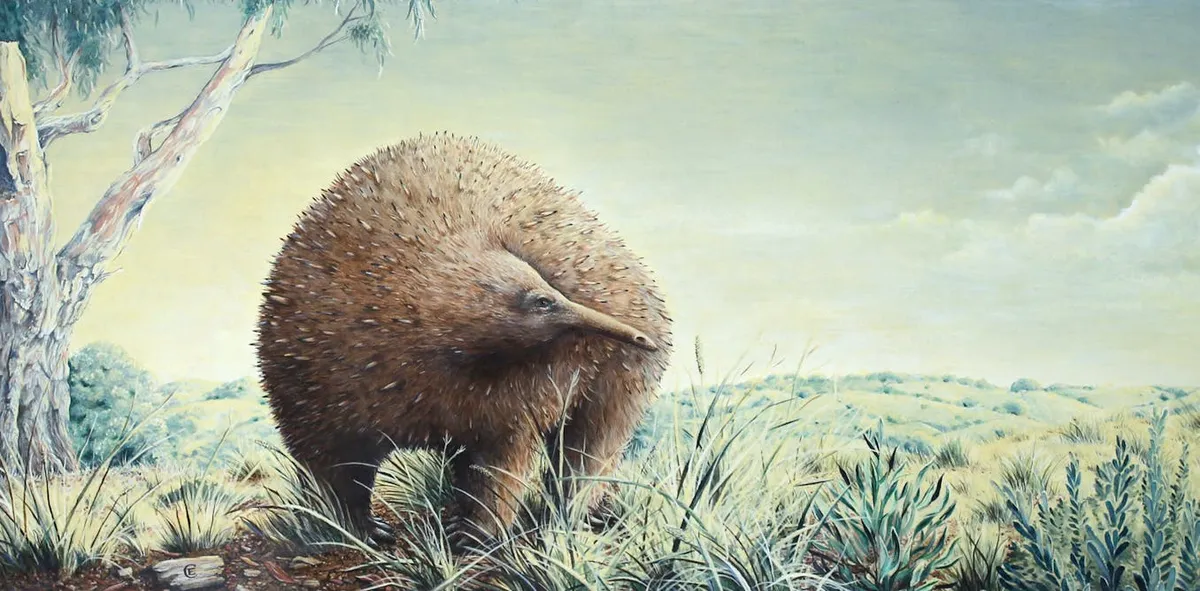
During the Pleistocene Epoch, tens to hundreds of thousands of years ago, the cave preserved bones from diverse megafauna, Australia’s giant prehistoric mammals. Among them stands out the giant echidna Megalibgwilia owenii. A newly identified fossil confirms this species inhabited Ice Age Victoria, bridging a 1,000-kilometer gap in its known range.
Early expeditions in 1906–1907, led by Frank Palmer Spry of Museums Victoria, local curator Francis Moon, and geologist Thomas Sergeant Hall, uncovered numerous bones in the damp soil. These included clawed palorchestids and predatory marsupial lions. The finds now reside in Melbourne Museum’s collection.
Features of Owen’s Giant Echidna
Previous fossils from Western Australia, South Australia, Tasmania, and New South Wales depict M. owenii as a robust monotreme twice the size of today’s Australian echidnas. Measuring one meter long and weighing 15 kilograms—comparable to a four-year-old child—it featured broad limbs, strong shoulders, and a wide, toothless beak with palate ridges.
This build suggests adaptations for tearing logs or digging hard soil for larvae, differing from modern echidnas that favor termites and worms. It closely resembled New Guinea’s long-beaked echidna (Zaglossus bruijnii), unlike the short-beaked variety (Tachyglossus aculeatus).
Identification of the Key Fossil
A seven-centimeter skull fragment, collected nearly 120 years ago, surfaced during routine cataloging at Museums Victoria. Detailed comparisons with specimens across Australia verified it as M. owenii. Historical records, including notes, maps, diaries, and newspapers, link it to Spry and Foul Air Cave.
Recent teams retraced these steps with modern gear: bright headlamps, protective suits, and durable ropes. Community support from local families, Parks Victoria rangers, and the Victorian Speleological Association aided the effort.
Future Insights from Victoria’s Fossils
This discovery highlights how museum collections yield revelations long after fieldwork. Other slender echidna bones from Victoria and South Australia merit review to determine if M. owenii varied regionally or if undiscovered species coexisted. Evidence hints Zaglossus may have lingered in northern Australia into recent centuries, suggesting more ancestors await identification in landscapes or collections.