

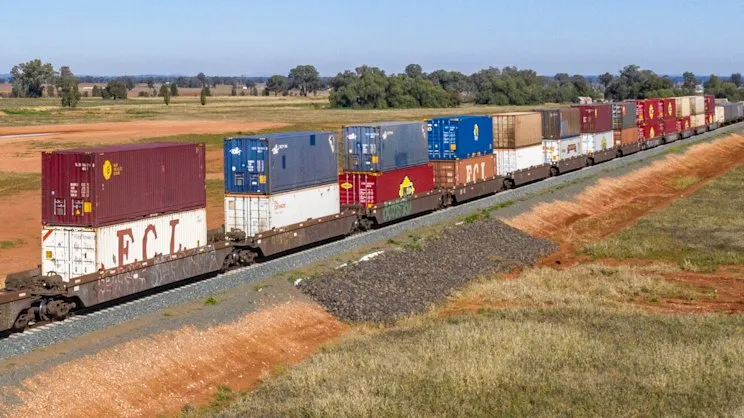
The final stages of the Inland Rail freight project, linking Parkes in New South Wales to near Brisbane, face indefinite delays following revelations that the full 1700-kilometer line could exceed $45 billion and extend completion beyond 2036.
Escalating Costs Triple Original Budget
Current projections place the total cost from Melbourne to south of Brisbane at three times the initial $14.5 billion allocation—over five times the estimate from nearly a decade ago. Serious concerns persist that even $45 billion may fall short, prompting the government to pause northern sections.
Consultants at ACIL Allen delivered these updated forecasts, building on a 2023 independent review by infrastructure expert Kerry Schott. That assessment pegged costs at a minimum of $31.4 billion, highlighting governance failures and uncertainty over timelines, final expenses, and economic viability.
Leadership Overhaul to Steer Project
To refocus efforts, rail expert Sean Sweeney steps in as the new chief executive, succeeding Nick Miller. Sweeney brings experience from leading suburban train initiatives in Dublin and Auckland. Collette Burke transitions from interim to permanent chair.
Government Prioritizes Key Sections and Upgrades
Ahead of the federal budget, priorities shift to finishing the Beveridge-to-Parkes segment—on Melbourne’s northern edge to central west NSW—by year’s end. Officials plan to safeguard the rail corridor to Queensland and potential intermodal sites near Ipswich for future consideration.
Funds from the original $14.5 billion budget redirect toward enhancing Australia’s existing freight network. This includes an additional $1.75 billion for track renewals and passing loop extensions, atop a prior $1 billion commitment. A separate $55 million initiative aims to shift more freight from roads to rail and shipping.
Federal Transport and Infrastructure Minister Catherine King describes these moves as “sensible decisions” to realign the project. She notes, “The 2023 independent review found major deficiencies in the governance and delivery of Inland Rail by the previous administration.” Schott’s analysis pointed to planning and delivery lapses by the Australian Rail Track Corporation.
Project Origins and Strategic Goals
Launched in 2017 with an $8.4 billion projection and 2025 target, Inland Rail bypassed traditional budgeting as a self-funding investment. Touted for nation-building potential, it promises 24-hour Melbourne-Brisbane connectivity via double-stacked freight trains through central Victoria and inland NSW.
Completing Beveridge to Parkes enables double-stacked services between Melbourne and Perth through Parkes. The project once included a $5 billion extension from Toowoomba to Gladstone port, tied to emissions commitments.









