Recent Executions Spark Global Alarm
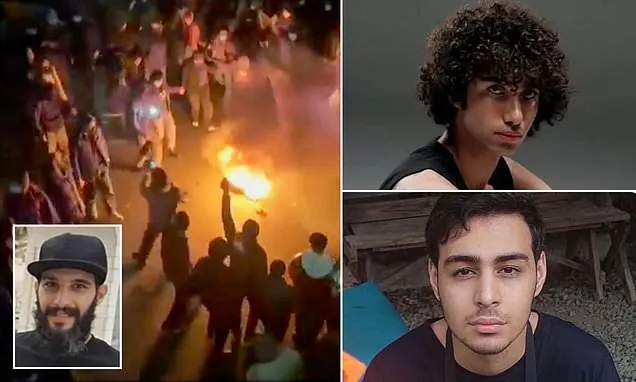
Authorities in Iran have carried out multiple executions of young anti-regime protesters, raising fears that dozens more face imminent hanging. Iran Human Rights, a Norway-based NGO, confirms that 18-year-old musician Amirhossein Hatami was hanged on Wednesday following a sentence from a ‘death judge’ linked to his protest involvement. State television broadcast his forced confession, after which his hair was shaved.
At dawn on Sunday, Mohammad Amin Biglari, 19, and Shahin Vahedparast Kolor, 30, met the same fate at Ghezel Hesar Prison. Reports indicate two others, Ali Fahim, 23, and Abolfazl Salehi Siavashani, 51, remain at the facility in an undisclosed location awaiting execution.
Eyewitness Recounts Brutal Crackdown
A protester who endured a savage beating during the Tehran demonstrations last January and later escaped the country shares his story to highlight the plight of those sentenced to death. Speaking from hiding, Darius, whose name has been changed for safety, describes haunting memories of the violence.
‘I will never get these images out of my mind, all those young people — it replays over and over in my mind and will haunt me for the rest of my life. All those young lives were just taken and murdered,’ Darius states.
On January 8, Darius and his wife joined hundreds of thousands in nationwide protests sparked by a call from Reza Pahlavi, son of the former Shah, to overthrow the regime. The gatherings escalated into one of Iran’s bloodiest crackdowns, with human rights groups estimating around 40,000 deaths and tens of thousands of arrests.
Chaos in Tehran Streets
Darius details the pandemonium at Vanak Square in north Tehran, where 50,000 to 60,000 demonstrators gathered despite heavy security near military sites and television stations.
‘I was never at a demonstration in my life before, but we decided to go out on January 8th… By the time we got to Vanak Square, there were maybe 50–60,000 people. As far as the eye could see, there was a crowd,’ he recalls.
Suddenly, motorcycles with pairs of riders unleashed tear gas. Darius helped a 75-year-old woman who fell amid the chaos. A baton-wielding assailant struck his head, then shattered his wrist. He fled as plain-clothes agents and special forces ‘Yegan Vijeh’ fired into the crowd, using green lasers to guide rooftop snipers.
‘People were falling, blood everywhere. Bodies kept going down like roulette, and we just kept on running for our lives,’ Darius says.
As a dual citizen carrying a passport, he feared accusations of being a foreign spy. He jumped ditches, sustained more injuries, and navigated back alleys with his wife and a friend who was later arrested. Bodies littered the streets, victims of both plastic and live rounds.
Underground Survival and Escape
After reaching home during the final minutes of internet access, Darius treated his injuries in secret. Neighbors provided private medical care, resetting his broken wrist without hospital visits, as reports circulated of security forces targeting the wounded in medical facilities.
‘We heard stories that some injured people in hospitals were killed… Authorities dropped bodies on the side of the road for parents to find and identify,’ he notes, recalling footage of distraught families searching amid ringing phones from body bags.
Darius recovered discreetly, retrieved his lost wallet, and fled before the war with Israel and the United States erupted on February 28, killing Supreme Leader Ali Khamenei.
These events occur against a backdrop of ongoing conflict. Darius urges international action: ‘We all want an end to this regime… We want a democratic and free Iran.’
Breaking down, he adds: ‘They are evil. You need to know what you’re dealing with.’