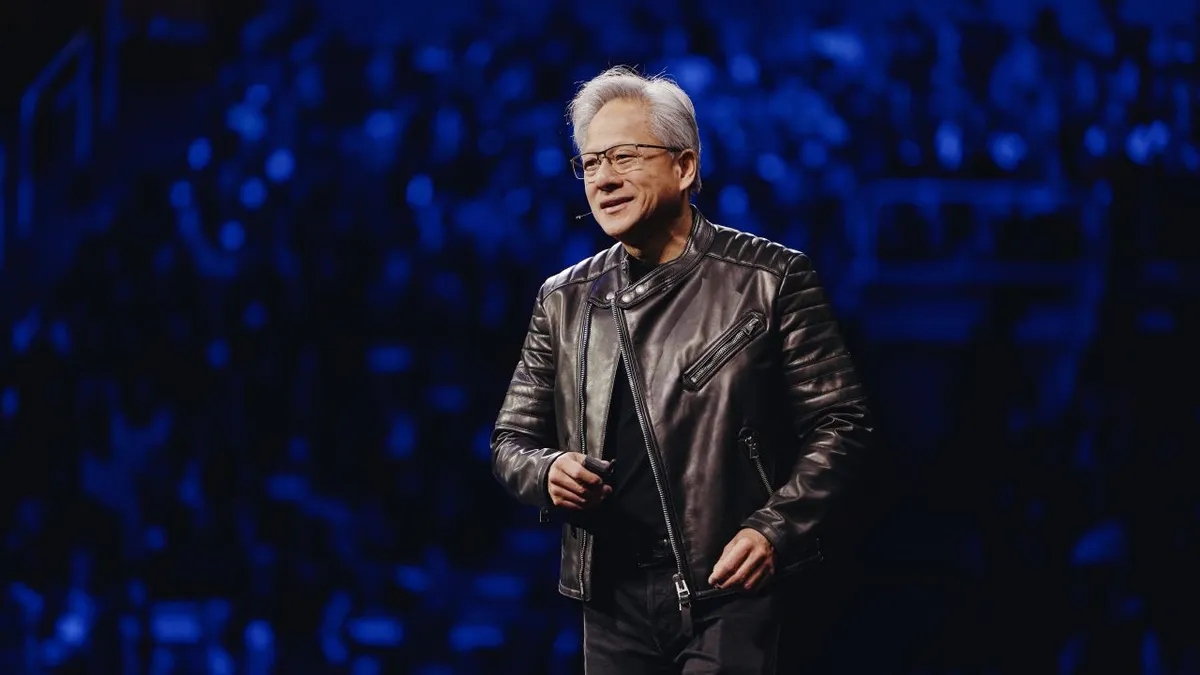
Nvidia CEO Jensen Huang has highlighted the significant compute capacity available in China, much of which remains unused, posing potential challenges for global AI development and cybersecurity.
Enormous Unused Infrastructure
Speaking on the Dwarkesh Patel podcast, Huang pointed out that China possesses abundant resources to train advanced AI models comparable to Anthropic’s Claude Mythos. “The amount of capacity and the type of compute (Mythos) was trained on is abundantly available in China,” Huang stated, emphasizing that such chips are readily produced there.
He described China’s data centers as largely empty yet fully powered, likening them to the country’s known ghost cities. “They have data centers that are sitting completely empty, fully powered,” Huang noted. “They have ghost cities, they have ghost data centers too. They have so much infrastructure capacity.”
China ranks among the world’s largest producers of chip hardware and hosts top universities and AI researchers, Huang observed, suggesting opportunities for collaboration.
Call for Dialogue Over Rivalry
Huang advocated for open communication between U.S. and Chinese AI experts. “This is an area that is glaringly missing because of our current attitude about China as an adversary,” he said. “It is essential that our AI researchers and their AI researchers are actually talking.”
While acknowledging China as an adversary, he stressed the need for the U.S. to prevail through dialogue. “We want the United States to win. But I think having a dialogue and having research dialogue is probably the safest thing to do,” Huang remarked. “It is essential that we try to both agree on what not to use the AI for.”
Cybersecurity Implications
Mythos forms a core component of Project Glasswing, Anthropic’s initiative with industry leaders to detect and address vulnerabilities in critical software. OpenAI has countered with GPT-5.4-Cyber, a tool tailored for cybersecurity professionals to anticipate advanced threats.
Huang cautioned that China’s potential to rapidly scale up by combining more chips could intensify competition in AI capabilities.