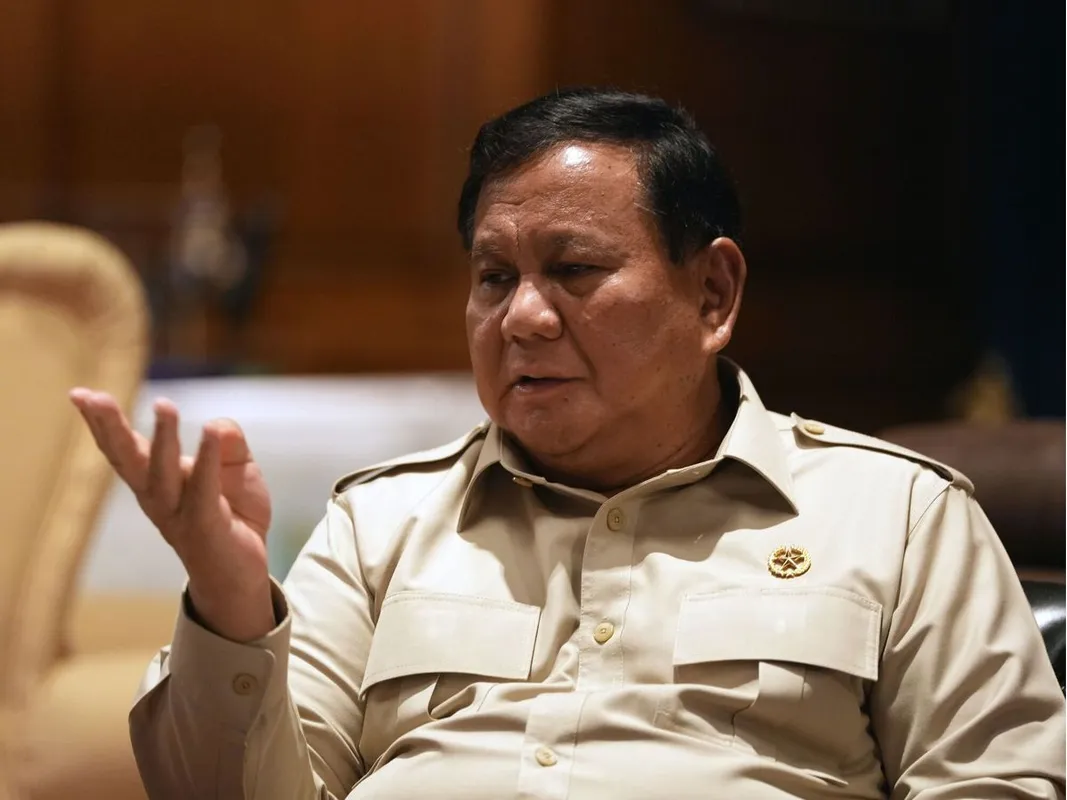
President Prabowo Subianto affirms he will only temporarily exceed Indonesia’s 3% GDP budget deficit cap during severe emergencies, emphasizing unwavering commitment to fiscal discipline and the principle of living within the nation’s means.
Fiscal Guardrails Remain Firm
The president views the deficit cap, in place since the early 2000s following the Asian financial crisis, as a vital tool for self-discipline. Investors closely monitor this limit as a key indicator of Indonesia’s fiscal health. Prabowo states there are no plans to alter it unless a crisis on the scale of the COVID-19 pandemic arises.
“I don’t believe in deficits, actually. Maybe I’m old-fashioned,” Prabowo remarked. He hopes such measures prove unnecessary, adding, “But I hope that we need not change it.”
Oil Price Pressures Test Budget
Elevated oil prices, driven by Middle East tensions, pose risks to Indonesia’s finances. Coordinating Economic Minister Airlangga Hartarto recently suggested a temporary deficit adjustment to manage higher costs without stifling growth. Finance Minister Purbaya Yudhi Sadewa warned that the shortfall could reach 3.6% of GDP if crude averages $92 per barrel this year, compared to the budgeted $70.
Indonesia, Southeast Asia’s largest economy, imports most of its fuel needs. The rupiah’s near-record low has inflated the import bill, while subsidized fuel prices—deeply entrenched as an economic entitlement—complicate cost pass-through to consumers.
Growth Targets Amid Challenges
Since taking office in October 2024 at age 74, Prabowo faces market pressures, including negative outlook revisions from Fitch Ratings and Moody’s Ratings due to perceived policy uncertainties—a claim his administration contests.
Aiming to boost annual growth from 5% to 8% by 2029, Prabowo prioritizes investments in affordable housing, village cooperatives, and a free meals program serving over 80 million people daily, which consumes 11% of the central budget. He vows to protect this initiative as a grassroots growth stimulus.
Ahead of this week’s Eid al-Fitr holiday—expecting over 100 million travelers—the government pledges no fuel price hikes. Prabowo expresses confidence in maintaining stability but notes it would prove “very difficult” if prices exceed $120 per barrel for extended periods. Strategies include curbing consumption through a potential four-day workweek and increased virtual meetings.
Accelerating Energy Independence
Dubbing the Iran crisis a “rude wake-up call,” Prabowo accelerates the shift to renewables. His administration plans to phase out costly fuel subsidies within three years, targeting 100 gigawatts of solar capacity alongside geothermal, hydropower, and biofuels.
“I’m determined to get rid of fuel subsidies,” he declared. “We cannot survive on subsidies in the long run.”
Indonesia benefits from abundant palm oil and affordable coal for energy security. Prabowo predicts that enduring current pressures will yield efficiency gains, stating, “If we weather this, in two years we will be very efficient. We will be very, very not dependent on external sources.”
Rejecting Debt-Fueled Expansion
Prabowo upholds strict fiscal rules despite some nations, including EU members, relaxing their 3% deficit targets. He rejects debt-driven growth models, guided by timeless advice: “Do not spend more than you earn. This is the basics of life to survive.”