March 15, 2026 — Beirut:
Tyre’s Silent Harbor Signals Rising Tensions
Fishing boats sit idle in Tyre’s historic harbor under ideal conditions of calm turquoise waters and gentle winds. Local fishermen remain docked amid rumors of an impending Israeli airstrike on the city, just 20 kilometers north of the border.
Mehdi Istambouli, owner of a small wooden vessel, explains the decision to stay ashore. He and his wife have stocked enough food for their four young children, but the ongoing attacks keep everyone on high alert. Standing near a prominent statue of the Virgin Mary overlooking the fleet in this Christian enclave of the biblically referenced city—known in Arabic as Sur—Istambouli emphasizes local harmony.
“I’m Muslim, but we Muslims and Christians coexist peacefully here,” he says. “Our main fear involves outsiders from nearby villages or areas—we don’t know their affiliations.”
Witness to Precision Strikes
The Israel Defense Forces (IDF) operate surveillance drones continuously over Beirut and other urban centers, hunting Hezbollah targets. The militia initiated rocket fire into northern Israel on March 2, drawing Lebanon deeper into the broader conflict with Iran.
Nearby, the UNESCO-listed al-Bass archaeological site stands closed. Istambouli notes that drones provide the IDF with intimate knowledge of local movements, surpassing even Lebanese government intelligence.
moments later, an Israeli jet roars overhead. A plume of smoke rises above the skyline, followed by a resounding explosion. Black smoke billows from a previously struck and evacuated apartment complex. No casualties result from this anticipated hit, underscoring Israel’s ability to strike at will—sometimes with evacuation warnings, often without.
The IDF pursues Hezbollah elimination through targeted drone and missile attacks on leaders and allies. Each blast sparks speculation: Was it a Hezbollah commander, Hamas operative, or Iranian Revolutionary Guard Corps member? Such uncertainty heightens wariness toward strangers in Lebanon’s traditionally hospitable culture.
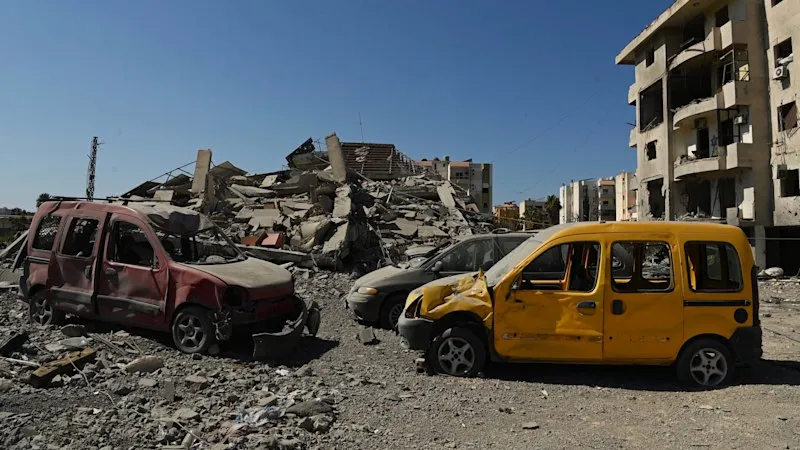
Neighbors near a missile-demolished house last week suspect sheltered outsiders loyal to Hezbollah turned it into a target.
Civilian Casualties Escalate Across Lebanon
In Beirut’s Ramlet al-Bayda beach area last Thursday, an IDF strike on two parked cars in a tent-filled zone kills eight and wounds 31. Residential neighborhoods suffer as missiles crater homes, where Hezbollah figures may hide amid civilians.
Israel employs precision weapons, yet collateral damage persists. In the upscale Raouche district, a drone hits Iran’s Revolutionary Guard members at the Ramada hotel, killing five while injuring 10 others nearby, including three children.
On Israel’s side, Hezbollah rockets—hundreds in the past week—along with Iranian missiles and drones strike civilian areas. Since attacks on Iran began February 28, at least 15 Israelis have died and over 2,000 sustained injuries.
Lebanon’s Health Ministry reports 773 deaths and 1,933 injuries from strikes since March 2, with more than 800,000 displaced. Many across sects—from Maronite Christians to Druze—blame Hezbollah’s post-Iran strike decision to engage Israel.
Defiance Amid Destruction in Bekaa Valley
East of Beirut in Hezbollah-stronghold areas, residents vow resistance. A warplane missile levels homes in Douris, south of Baalbek, injuring five. Debris scatters a child’s toy elephant and Arabic lesson pages.
Homeowner Adam Shreif, absent during the unannounced strike, dismisses personal loss. “I’m happy to sacrifice this house for the resistance and country,” he declares. “After this war, Israel should be gone.” A Hezbollah flag now marks the rubble.