Tragic Plight of a Lost Humpback Whale
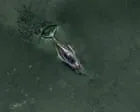
A massive 10-meter male humpback whale first stranded on a sandbar in the Baltic Sea near Wismar and Timmendorfer Strand along Germany’s north coast last month. Since then, the animal repeatedly beaches and frees itself, but now lies critically ill in the shallow waters of Kirchsee bay on Poel island, entering its final moments.
The saga grips the nation, stirring emotions among politicians and drawing unusual visitors like shamans. Rescue experts, initially called to save the whale and later to ease its passing, report receiving death threats. Critics blame authorities and environmentalists for prolonging suffering, even labeling it animal cruelty, while some tie the controversy to political shifts favoring far-right groups.
The local mayor admits, “We have all been totally out of our depth.” A prominent humpback whale specialist now avoids media quotes, stating, “it has become dangerous to talk about humpback whales in Germany.” Local fire crews remain on site, continuously spraying seawater to soothe the whale.
Failed Rescue Efforts and Expert Verdict
Nearly two weeks ago, Mecklenburg-Vorpommern Environment Minister Till Backhaus, alongside rescue teams and scientists from Stralsund’s maritime museum, held an emotional press conference declaring rescue operations over. Experts confirm the whale cannot be saved.
Key factors include a fishing net tangled in its jaw, causing disorientation and weakness. The Baltic Sea’s low salinity and shallow depths make survival impossible for this deep-water species, likely drawn in by herring schools. Additional wounds scar its back, with skin infections worsening the condition. Backhaus describes the whale as “very sick.”
Locals dub it Timmy, but experts reject the name, arguing anthropomorphizing hinders natural processes. Authorities urge the public to let nature take its course.
Public Frenzy and Wild Proposals
Backhaus calls this his most challenging operation in 27 years. Public ideas, from helicopter lifts with underbody sheets to chartering Danish catamarans, prove unfeasible despite consideration.
Well-wishers, campaigners, and influencers flock to the scene, filming for social media and live updates. Water police recently removed a Bavarian woman in her late 50s who approached within three meters. Suggestions range from cranes, planes, and pontoons to playing whale songs. An Austrian inventor proposes encircling it in a swimming pool, while a self-proclaimed whale ambassador offers a healing ritual song, HeJaWa. A millionaire pledges unlimited funds, insisting moon landings prove whale rescues possible.
Euthanasia via heart injection or explosive devices—once considered elsewhere—face rejection due to risks and impracticality. Officials rule out explosives to protect infrastructure.
Ongoing Vigil
Authorities commit to staying with the whale until the end. Backhaus hoped for an Easter miracle as it occasionally spouts water and emits cries, but recovery remains out of reach.