


[ad_1]
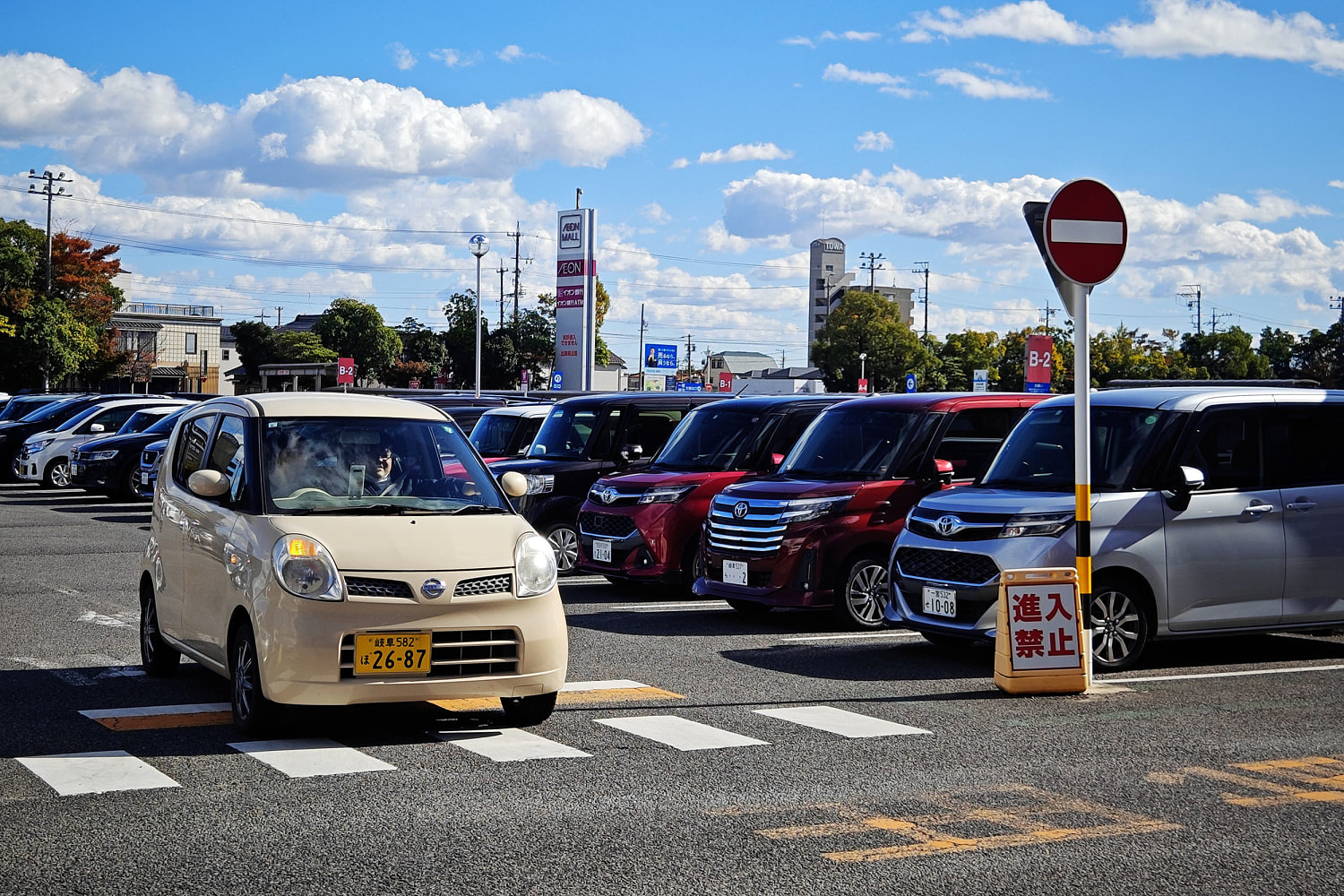
“It’s straightforward to need to drive one among these cute kei vehicles. It’s one other factor to place your loved ones in them and journey down the freeway at 70 mph between a Suburban and an F-150,” stated Tifani Sadek, director of the College of Michigan Regulation College’s Regulation and Mobility Program.
Taking their identify from the Japanese phrase “kei-jidōsha,” which implies a lightweight truck, kei vehicles had been developed after World Conflict II to stimulate Japan’s automotive trade and encourage automotive possession, with the automobiles qualifying for decrease street taxes and insurance coverage premiums.
They’re not a model by themselves, however slightly a automobile class — restrained by measurement and energy — manufactured by a number of Japanese corporations, together with Honda, Suzuki and Daihatsu. Each gasoline and electrical variants can be found.
“The Japanese authorities has actively promoted kei vehicles as a part of its nationwide coverage,” stated Shigeru Matsumoto, an economics professor on the Aoyama Gakuin College in Tokyo. “Though kei vehicles should not well-suited for long-distance driving, they’re often used for each day errands.”
In rural Japan the place roads are slender, these compact vehicles are sometimes bought as a second automobile and are notably widespread amongst girls, Matsumoto stated.
They continue to be a uncommon sight within the U.S., however demand for imports has steadily elevated, Japanese export information exhibits, partly resulting from cheaper upkeep and decrease operating prices.
McChristian stated he purchased his for $900 at an public sale in Japan practically three years in the past. Even after paying one other $2,500 in delivery charges, he stated, “you’re not going to search out something within the new or used U.S. market that has a lot utility and reliability for such a low value.”
However there are greater hurdles than simply shopper conduct for hopes of kei vehicles breaking into the U.S. market. The vehicles fall in need of federal automobile security requirements, with many missing even air baggage. Which means getting a hand on one is troublesome, with imports solely allowed beneath an exemption for vehicles greater than 25 years previous.
Even then, a patchwork of state legal guidelines take differing approaches to their use, with some states barring them from public roads or proscribing them to low-speed neighborhood streets. Lone Star Kei, an advocacy group of which McChristian is president, has fought for authorized adjustments in Texas and elsewhere.
Trump’s curiosity in kei vehicles seems to be about manufacturing comparable small-sized vehicles within the U.S. slightly than easing the method of importing them from Japan.
Among the many main kei automotive producers, few have current large-scale automotive manufacturing operations within the U.S.
Mike Smitka, emeritus professor of economics at Washington and Lee College, identified the decline in gross sales of current small vehicles throughout the U.S., including that there was a “actual barrier on the price aspect of producers.”
“You would need to make a automotive from scratch on the meeting plant degree that might meet U.S. specs, as a result of retrofitting is brutally costly,” he stated.
A U.S.-manufactured kei-style automotive would simply soar previous the everyday $10,000 price ticket in Japan, Smitka and others say.
Authorized hurdles to a kei-style revolution might theoretically be swept away if Congress amends the Security Act or passes new laws encouraging their use.
“I’m not holding my breath on this one,” Sadek stated.
One other pathway could be for the federal authorities to replace security requirements, however Sadek stated that “altering a federal rule merely takes time.”
Even when these adjustments are made, hopes of U.S. cities stuffed with kei vehicles appear distant. “The truth is that such a automotive could be in virtually each case of the second or third automotive the American household would personal,” Thomas Prusa, an economics professor at Rutgers College, stated.
There could possibly be a case to be made for dense cities like New York or Chicago or retirement communities in Florida, which have already adopted golf carts, to make use of such vehicles, Prusa stated.
“You may think about how a lot simpler New York Metropolis transportation could be if all New Yorkers had been driving considerably smaller automobiles,” he stated. “I simply do not see in the US that this matches proper presently with the American tradition.”
[ad_2]









