[ad_1]
Because the world marked Worldwide Holocaust Remembrance Day on Tuesday, consultants warned {that a} flood of “AI slop” is threatening efforts to protect the reminiscence of Nazi crimes and the tens of millions of Jewish individuals killed throughout World Conflict II.
Pictures seen by the AFP information company embrace an emaciated and apparently blind man standing within the snow on the Nazi focus camp Flossenbuerg, and a viral picture of somewhat lady with curly hair on a tricycle falsely introduced as a 13-year-old Berliner who died on the Auschwitz extermination camp.
Such content material — whether or not produced as clickbait for industrial achieve or for political motives — has proliferated over the previous 12 months, distorting the historical past of Nazi Germany’s homicide of six million European Jews throughout World Conflict II.
Christoph Soeder/image alliance/Getty 
Early examples emerged within the spring of 2025, however by the tip of the 12 months, “AI slop” on the topic “was being proven very ceaselessly,” historian Iris Groschek instructed AFP.
On some websites, examples of such content material have been being posted as soon as per minute, stated Groschek, who works at Holocaust memorial websites in Hamburg, together with the Neuengamme focus camp.
With the exponential advances in AI, “the phenomenon is rising,” Jens-Christian Wagner, director of the inspiration that manages the Buchenwald and Mittelbau-Dora memorials, instructed AFP.
A number of Holocaust memorials and commemorative associations this month issued an open letter warning concerning the rising amount of this “totally fabricated” content material.
A few of them are churned out by content material farms that exploit “the emotional impression of the Holocaust to attain most attain with minimal effort,” it stated.
The image supposedly from Flossenbuerg camp falls into this class, because it was proven on a web page claiming to share, “true, human tales from the darkest chapters of the previous.”
However the memorials warned that pretend content material was additionally being created, “particularly to dilute historic information, shift sufferer and perpetrator roles, or unfold revisionist narratives.”
Europa Press Information 
Wagner factors, for instance, to pictures of seemingly “well-fed prisoners, meant to recommend that circumstances in focus camps weren’t actually that unhealthy.”
The Frankfurt-based Anne Frank Instructional Heart has warned of a “flood” of AI-generated content material and propaganda “wherein the Holocaust is denied or trivialized, with its victims ridiculed.”
By distorting historical past, AI-generated photos have “very concrete penalties for the way individuals understand the Nazi period,” stated Groschek.
The outcomes of trivializing or denying the Holocaust have been seen within the attitudes of some youthful guests to the camps, notably from “rural components of jap Germany … wherein far-right considering has develop into dominant,” stated Wagner.
Of their open letter, the memorials referred to as on social media platforms to “proactively fight AI content material that distorts historical past” and to “exclude accounts that disseminate such content material from all monetisation applications.”
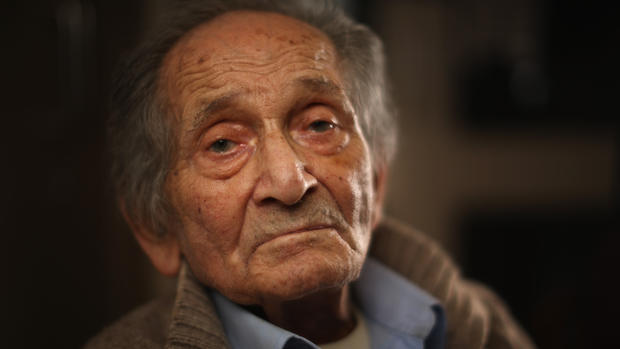
“The problem for society as an entire is to develop moral and traditionally accountable requirements for this know-how,” they stated, including: “Platform operators have a specific accountability on this regard.”
German Tradition Minister Wolfram Weimer stated in a press release to AFP: “I assist the memorials’ name to obviously label AI-generated photos and take away them when vital.”
He stated that creating wealth from such imagery must be prevented.
“This can be a matter of respect for the tens of millions of people that have been killed and persecuted beneath the Nazis’ reign of terror,” he stated, reminding the platforms that they’ve obligations beneath the EU’s Digital Providers Act.
Groschek stated not one of the American social media corporations had responded to the memorials’ letter, together with Meta, the proprietor of Fb and Instagram.
TikTok responded by saying it needed to exclude the accounts in query from monetization and implement, “automated verification,” in accordance with Groschek.
[ad_2]