Three decades after the fierce road protests, the Newbury bypass stretches high above the old railway embankment. Walking through The Chase nature reserve next door, the constant traffic noise fades to a soft hum, blending with layers of personal memories formed over time.
Conservation Grazing in Action
These memories often involve close friend Sarah, a dedicated National Trust volunteer known as a “cow watcher.” She monitors the cattle’s locations and health using a tracking app. These hardy animals serve as conservation grazers, controlling scrub growth, dispersing seeds, creating poached zones, and boosting biodiversity and plant diversity.
A Storied Landscape
Once common land featuring a sheepwash and blanket mill—lending its name to nearby Woolton Hill—The Chase faced enclosure for hunting in 1819. It joined National Trust ownership in 1944 and has long been a favored spot for exploration. Storms in 1987 and 1990 toppled trees like scattered pencils, while the bypass construction felled more; activists once jammed chainsaws with cable ties from the branches. Devastating sewage spills also claimed invertebrates, fish, lampreys, and native crayfish.
Family Moments and Wildlife Wonders
Yet brighter recollections abound: family outings with children losing boots in streams, grandparents on “welly walks,” great spotted woodpecker chicks fledging from a Corsican pine hollow, otter watches in alder carr, and silver-washed fritillary butterflies in flight.
Tracking the Shetland Herd
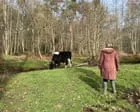
Sarah follows the herd via collars on cows like Colchis, one of six black, red, and white Shetland cattle with distinctive upswept horns. We cross a stream to spot them grazing amid wild daffodils and golden saxifrages, completing the patrol amid ongoing conversation.
Plans shift to the garden centre cafe, but brain fog leads to the pub by mistake. Arriving late, zigzag trails of peaty mud from Sarah’s boots mark the polished floor—mine add a touch of cow muck in apology.