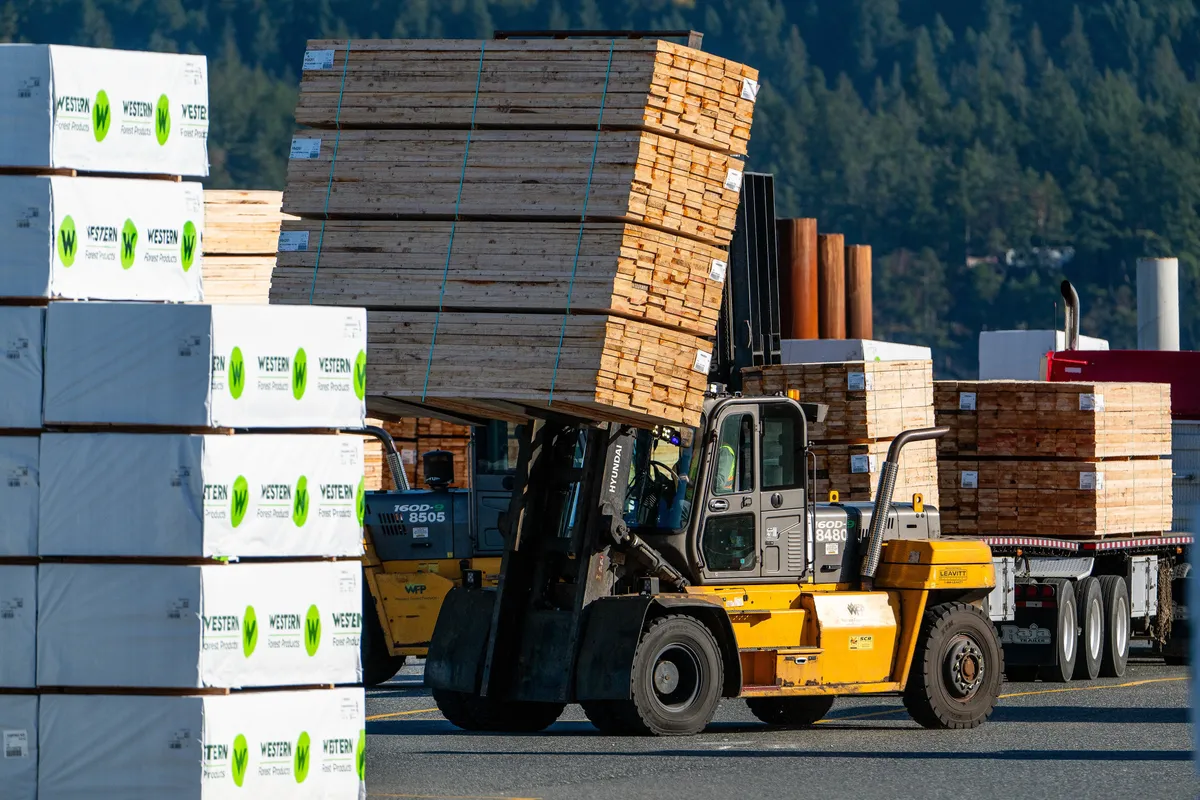
Canadian softwood lumber producers have exceeded US$8 billion in duties paid to the United States since 2017, amid ongoing efforts by British Columbia’s Forests Minister to prioritize the trade dispute in federal discussions.
USMCA Review Spotlights Lumber Dispute
The United States-Mexico-Canada Agreement (USMCA), also known as CUSMA, does not directly cover Canadian softwood shipments to the U.S. With the trilateral pact under review this year, B.C. Forests Minister Ravi Parmar emphasizes the need for resolution. “We’ve been very clear with the federal government that we believe for British Columbia, no CUSMA deal will be successful unless it includes resolving softwood,” Parmar stated in an interview. “Ottawa does forget about B.C. a lot. It’s why we continue to make noise.”
Escalating Financial Strain
Producers continue to deposit punitive duties at the U.S. border, held in trust with accruing interest. These funds remain inaccessible, hindering reinvestment. “A lot of money right now is sitting at the border, with no one being able to access it,” Parmar noted. Forestry consultant Paul Krabbe reports that roughly US$2 billion in interest has accumulated over nine years, pushing the total value beyond US$10 billion.
The softwood lumber conflict traces back to the 1980s, intensifying since 2017. British Columbia, Canada’s top lumber-producing province, faces declining output due to timber supply shortages over the past decade. Some Canadian firms have expanded into U.S. forests, gaining duty exemptions for American-sourced production.
U.S. Lobbying and Market Dynamics
The U.S. Lumber Coalition advocates strongly against Canadian imports, highlighting differences in land ownership: most Canadian forests are Crown land with stumpage fees to provinces, versus private U.S. timber at market rates. Industry groups, including the BC Council of Forest Industries and BC Lumber Trade Council, argue the duties lack justification.
Canada challenges the levies through USMCA trade panels, continuing disputes from the North American Free Trade Agreement era. U.S. softwood production meets 72% of domestic needs, with Canada supplying 21%—down from 33% in 2016—and other nations at 7%.
Pending Duty Reductions
The U.S. Department of Commerce announced preliminary cuts last week, targeting late summer or early fall 2026 implementation, pending final review. Current duties stand at 45.16% for most producers, including 35.16% countervailing and anti-dumping rates plus 10% tariffs.
Preliminary revisions lower anti-dumping duties to 10.66% from 20.53% and countervailing duties to 14.17% from 14.63%, yielding 24.83% combined plus 10% tariffs for 34.83% total. The review covers 2024 lumber markets.
Company-specific changes include: Canfor Corp. dropping to 31.02% from 47.59%; West Fraser Timber Co. Ltd. to 20.70% from 26.47%; and Resolute FP Canada Inc. to 24.95% from 35.16%.
Additional Tariff Pressures
U.S. President Donald Trump imposed Section 232 tariffs on lumber last fall, citing national security. Krabbe estimates Canadian producers have paid US$133 million in these since October.