

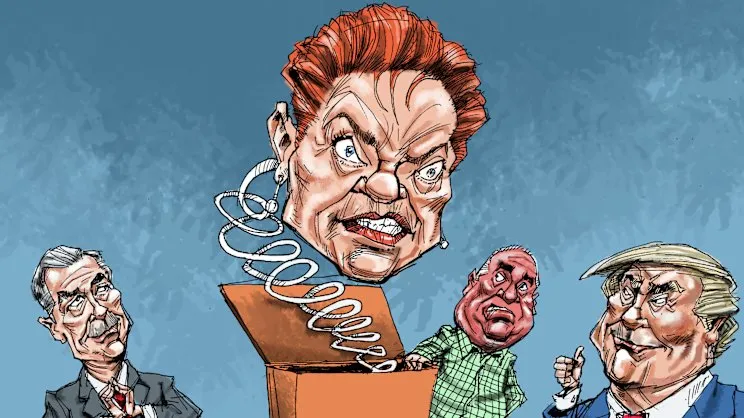
Recent global political shifts have revived a hard-right populist movement, now impacting Australia directly. Just weeks ago, far-right forces appeared weakened, with electoral setbacks for figures like Viktor Orban in Hungary and challenges for leaders such as Donald Trump amid foreign policy issues and Vladimir Putin’s struggles in Ukraine. However, events over three days—from Thursday to Saturday—saw a strong comeback through gains by parties like Nigel Farage’s Reform Party and Pauline Hanson’s One Nation.
Australia Faces Populist Challenge
The rise of hard-right populism demands a measured response from Australian democracy. Two main strategies have emerged so far.
The first involves Liberal leader Angus Taylor and Nationals leader Matt Canavan shifting rightward to capture One Nation voters and halt losses. Yet, a more than 30 percentage point swing against Liberals on Saturday indicates this approach fails. Similar tactics by British Conservatives under various leaders yielded no success, instead validating extremist views and relegating coalition parties to lower rankings, as moderate Liberals predicted.
Progressive Strategies and Their Limits
The second approach sees Labor aligning further left with the Greens, emphasizing aggressive tax reforms and redistribution to frame politics as a clash between rich and poor—or old and young. While appealing amid growing inequality, this strategy faces significant hurdles. Past tests, including Labor’s 2019 platform, led to electoral defeats. The Greens, pursuing this for decades, remain a minor force with declining votes in areas like Farrer, showing limited breakthrough potential.
Labor’s Theory of Power in Turbulent Times
As populism advances, Labor must define its path to maintain power. In normal eras, policy risks carried lower stakes, with opposition returns tolerable. Today, defeat risks a divisive, race-tinged government akin to MAGA-style politics, making incumbency a democratic safeguard.
Historical Warnings
History offers stark lessons. In March 1930, Weimar Germany’s centrist coalition—led by Social Democrats, comparable to modern Labor—collapsed over unemployment funding disputes. This handed power to extremists just as Nazis gained traction, leading to Adolf Hitler’s chancellorship within three years.
The key takeaway: In perilous periods, parties must secure the electoral center while tackling populist grievances head-on.
Adapting to a Shifting Center
Populism accelerates political change. Labor’s prior approach—moderate promises fulfilled precisely amid low government trust—worked in 2022 but now feels inadequate against demands for swift action.
Since 2019, voter priorities have evolved, with heightened awareness of housing imbalances and living costs shifting the center leftward. Labor has responded by expanding into this space, leveraging office advantages to evolve its platform, much like past Howard and Hawke governments.
This cautious expansion—holding the center while advancing—frames the 2026 budget’s tax and housing reforms. Though imperfect, it counters inaction or overreach that could empower extremists, offering the most viable democratic option.









