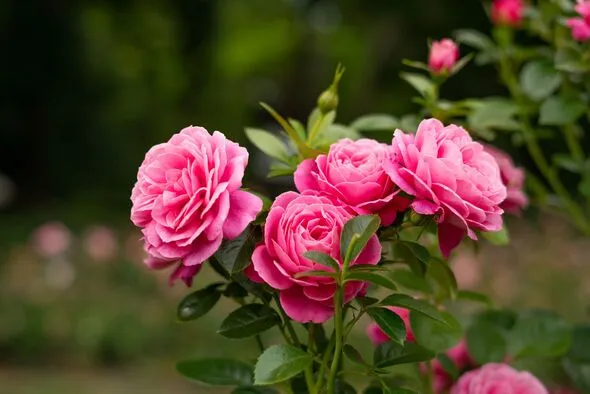
Prolong Rose Blooms All Summer with One Simple May Task
As summer approaches, gardeners eagerly anticipate the vibrant displays of blooming flowers. Roses, already beginning to showcase their beauty, can be encouraged to produce more blossoms throughout the season with a straightforward task that can be undertaken this May. A gardening enthusiast known for her online horticultural advice has shared her essential tip for ensuring a continuous and abundant flowering of roses.
The key lies in a process called deadheading. This simple technique involves the removal of faded flowers and is remarkably easy to perform, requiring minimal time commitment yet yielding significant long-term benefits for your rose bushes.
The Art of Deadheading Roses
Deadheading is fundamentally about redirecting the plant’s energy. Instead of focusing on producing rose hips after a flower has finished blooming, the plant’s resources are instead channeled into developing new buds and subsequent flowers. This practice is crucial for maintaining the aesthetic appeal and prolific blooming of roses throughout the warmer months.
To effectively deadhead, first identify the roses that have completed their blooming cycle. According to horticultural guidance, when a rose stem has no further buds developing, the cut should be made down to the next set of leaves that feature five leaflets. It is essential to double-check the leaf count before making the cut, ensuring it is precisely above this five-leaflet cluster.
In instances where a main rose bloom is fading but other buds are still developing on the same stem, a different approach is recommended. In such cases, the faded flower should be cut at the base of its stem, where it connects to the cluster of developing buds. This allows the remaining buds to mature and bloom before the stem is subsequently deadheaded above the five-leaflet leaf node.
For roses that often bloom in small clusters, if only one flower in the group has faded, you can deadhead that individual stem. However, if all blooms on a particular stem have finished, proceed with cutting down to the first group of five leaves.
Additional Tips for Rose Care
Beyond deadheading, ensuring your roses receive adequate hydration, especially during hot weather, is vital for their health and continued flowering. Deep and regular watering will help keep your plants robust.
In many cases, spent rose flowers can be removed simply by pinching them off. This method can be effective for certain varieties.
An additional benefit of deadheading is the reduction in the likelihood of fungal infections developing on the spent blooms. The sooner this task is completed, the sooner new flowers can emerge, as the plant’s energy is freed up to foster new growth.
Furthermore, deadheading contributes to a neater appearance for your rose bushes.
Expert Horticultural Insights
Horticultural organizations recommend regular deadheading as a beneficial practice for most plants, regardless of the season. For hybrid tea roses, gently snapping off faded flowers just below the head is suggested, as this method can encourage more blooms to appear more rapidly than using secateurs. For other rose varieties, snipping off individual flowers or entire clusters down to the leaf just above the next set is advised.
A practical tip to prevent fallen petals from scattering when deadheading is to cup the flower in your hand before cutting the stem. This simple measure helps to contain the petals.
Significant pruning of roses is typically reserved for later in the year, making deadheading a crucial ongoing maintenance task during the flowering season.