

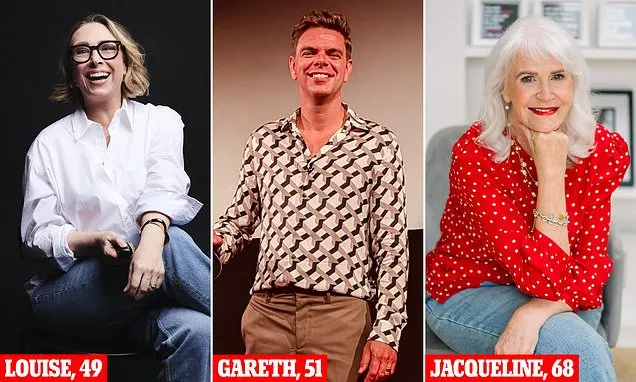
From Burnout to Business Owner: Three Individuals Share Their Paths to Fulfillment
The allure of a high-paying career can often mask deep dissatisfaction. For many, the pursuit of success comes at the cost of well-being, leading to burnout and a yearning for change. However, a growing number of individuals are proving that it’s possible to leave behind demanding, lucrative roles to build fulfilling businesses, often earning more and enjoying a better work-life balance.
Gareth Davies: Trading TV Pressure for Presenter Coaching
Gareth Davies, 51, experienced a pivotal moment during his time working on the popular BBC reality show ‘So You Think You Can Dance.’ The demanding six-day work weeks and intense pressure fostered a culture where long hours were equated with dedication. “I started to think, is this really what I want to do – six-day weeks and very long hours?” he reflected.
Nine years later, at age 45, Davies made the significant decision to leave his £85,000-a-year career in television production, where he had produced major shows like ‘Strictly Come Dancing.’ This move aligns with a broader trend: one in five Britons reportedly switch careers after turning 40, often driven by a desire for better work-life balance, career stagnation, or the pursuit of new challenges.
Leveraging his extensive experience in talent spotting and development, Davies founded ‘The Presenter Studio.’ This business coaches established hosts and provides media training to top brands such as Fenty Beauty, Nike, and ASOS. He had previously run training courses as a side venture, and the pandemic provided the impetus to transform this into a full-time enterprise.
“I wanted to take those years of expertise and pass it on to others,” Davies explained. “I felt the presenter training business was out of date and I knew I could do better.” He also sought greater control over his daily life and future. “When I first started, you were staff at the BBC if you worked in TV production. But even when you were staff, you were on short-term contracts. It always felt that every time you finished the programme, you were almost starting again because you only get a contract for that series and then you would have to find more work. You just feel like you deserve a little bit more.””
Despite the initial fear of leaving a stable, albeit demanding, career, Davies found that his own business offered a greater sense of security and excitement. “I wanted to be excited about what I was doing rather than feeling part of office culture.” He now earns more than before and feels significantly happier. His advice for those considering a similar transition is to “start small. Set yourself up as a side hustle if possible. See if you like it, to test the waters.” He emphasizes the importance of being prepared to work hard, but notes that this effort is more enjoyable when self-directed. “I still work long hours but I do them on my own terms. If I need to work on the weekend, for example, I’ll take a day off in the week instead, and there’s a lot of joy in doing that.”
Jacqueline Rogers: From 20-Hour Days to Empowering Women
Jacqueline Rogers, 68, reached her breaking point after enduring 20-hour working days in her corporate sales role at Thomson NETg. As a single mother of two, the exhaustion and pressure became unbearable. “My back was to the wall and I slid to the ground. I just thought, I can’t do this any more. The hours were just too long,” she recounted.
At 45, Rogers was burnt out and felt overlooked, even wishing for redundancy. When the opportunity arose, she strategically negotiated her exit in 2003, seeking to leave her £60,000-a-year job while advocating for others who needed the role more. “It wasn’t that I didn’t need it. It was that I couldn’t cope with it any more.”
Rogers then established ‘The Athena Network,’ a women’s networking organization offering online and in-person meetings, training, and collaboration opportunities. Twenty years later, she describes the transition as life-transforming. “It’s so freeing. I feel very relaxed and good about life.” She later franchised her business across the UK, reinvesting her £35,000 redundancy payout. While she still hosts events, her focus has shifted to coaching franchise members.
Rogers now earns more than her previous salary, with her business generating a turnover of £140,000 annually. Her current lifestyle offers unparalleled freedom and flexibility. “It’s so much more free,” she stated. “At the moment, I have my brother’s dogs to stay and I’m looking after them. I can commit to things that I could never have done before.” Her advice includes starting small, thorough research, and building a business alongside employment if possible. A key challenge she identified was the absence of a support team: “Everything was on me.” However, this also led to significant personal and professional growth.
Louise Thompson: Finding Happiness After a £100,000 Career
Louise Thompson, 49, demonstrated that it’s never too late for a career change when she left her £100,000-a-year role as a communications director for a logistics company serving the NHS at age 44. Years of climbing the corporate ladder had led to burnout, exacerbated by the pandemic.
“I was exhausted,” Thompson recalled. “All the adrenaline from leading and stepping up and doing all this great work in the pandemic, that ebbed away. I worked extremely hard. I was one of those women who thinks the harder I work, the better it will be and the more valuable I’ll be. But it didn’t help me. All I was doing was working myself into burn-out.” Compounded by perimenopause and other health issues, Thompson took a year to recover before launching her own business.
In 2022, Thompson established ‘Louise Thompson Leadership Coaching,’ a business focused on coaching senior women in corporate roles to build confidence and leadership skills. She was inspired by her own coach and had already completed her coaching qualifications. While she had savings, the initial financial adjustment was significant, with her earnings in the first year amounting to approximately £9,000.
Now, four years later, she earns a “high five figures” and aims to surpass her previous corporate salary. Despite the initial financial dip, Thompson emphasizes her increased happiness. “It’s having it on my own terms.” She has cultivated a significant following on TikTok (@leadwithlouise), sharing advice on burnout, leadership, and menopause.
Thompson encourages women to view turning 40 as a midpoint, not an endpoint, for building successful careers. “You’ve got more than enough time to build a business or start a second, different career that can be as successful or more successful than your previous one.” She advises embracing reinvention and not fearing perceived awkwardness. “Don’t be scared of being cringe. Lean into your personal brand, do the thing that scares you. You’re never too old.” While she still works hard during the growth phase of her business, she now sets her own hours and boundaries.
A key challenge for Thompson was the multiplicity of roles required in a one-person business. “When you’re a one-person business, you’re building it yourself and you have to be everything. You’re running the business, you’re delivering the coaching, you’re doing the admin, you’re doing the invoices and you’re doing the marketing.” This experience, however, led to significant upskilling, particularly in marketing and social media.
Six Steps to Consider Before Making the Leap:
- Choose a Business Model: Decide whether to start from scratch, acquire an existing business, or opt for a franchise.
- Test Your Idea: Validate market demand for your offering and develop a solid financial plan for startup.
- Start Small: If feasible, begin your venture as a side hustle to test its viability before committing full-time.
- Create a Brand: Develop a strong business name and brand identity, and secure registrations to protect it.
- Set Up Your Business: This may involve registering with official bodies and determining the appropriate legal structure.
- Consider Funding: Explore various funding options, including grants, loans, and investment opportunities, as startup costs can be significant.
Further guidance on business setup and funding can be found at business.gov.uk.









