

Olympic Athletes Deserve Fair Compensation Amidst FIFA’s Massive Prizemoney
This month’s FIFA World Cup boasts an unprecedented $1.3 billion in prize money, with even teams exiting early guaranteed a substantial $13 million. This starkly contrasts with the current financial realities for Olympic athletes, who, according to International Olympic Committee (IOC) President Kirsty Coventry, are not directly compensated. Coventry has stated her belief that athletes benefit sufficiently from the “beautiful experience” of competing in world-class facilities as a form of reward, funded by the IOC’s revenue.
A History of Exclusion and Evolving Ideals
The historical roots of Olympic “amateurism” reveal a deliberate class-based exclusion. When the Games were revived in 1896, the ethos of the Victorian gentleman amateur was adopted, a code designed to prevent working-class individuals, who lacked private income, from competing. A prominent example of this harsh enforcement was the 1912 disqualification of Jim Thorpe, arguably one of the greatest all-around athletes, for accepting money to play minor league baseball. His Olympic medals were only returned to his family seven decades later, long after his death.
The term “amateur” was officially removed from the Olympic Charter around 1981, paving the way for professional athletes, including tennis stars and the U.S. “Dream Team” of NBA millionaires in 1992. However, this shift in policy appears to have benefited those already at the pinnacle of professional sports, while athletes who embody the core Olympic spirit often struggle financially. The current system sees wealthy NBA players participating alongside athletes who may have made significant personal and financial sacrifices, including remortgaging their futures.
IOC’s Financial Model and Athlete Earnings
While the IOC emphasizes that approximately 90 percent of its income, exceeding $2.8 billion annually, is reinvested into the Olympic movement, critics argue that this distribution does not directly benefit the athletes themselves. Funds allocated to national Olympic committees, officials, and venues do not equate to direct financial support for the competitors. Furthermore, Article 40 of the Olympic Charter grants the IOC control over athletes’ names, images, and likenesses, allowing the organization to profit from their performances in perpetuity while restricting athletes from monetizing their own brand and achievements.
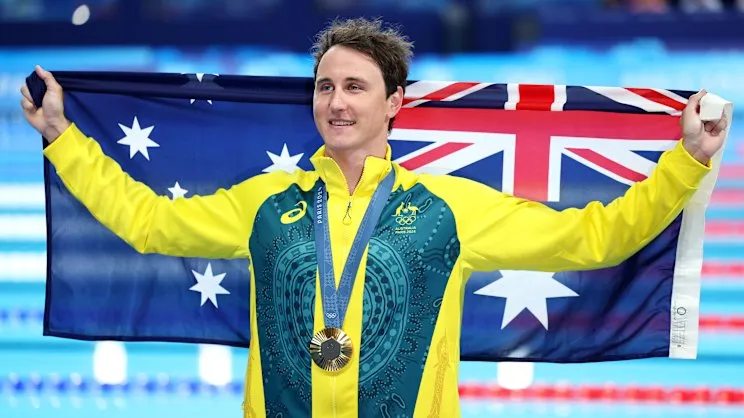
Recent accounts highlight the financial strain on Olympians. Nine-time Olympic medalist Leisel Jones has expressed reluctance to encourage young people to pursue the Olympic dream due to the potential for overwhelming debt. Cam McEvoy, who set a world record at the Paris Games, reportedly received no financial reward. Athletes are advocating for a more equitable system, suggesting an appearance fee for all qualified competitors and substantial rewards for medalists, a model that demonstrably works in professional sports.
World Athletics Leads the Way in Athlete Compensation
In a significant departure from the established norm, World Athletics has become the first international federation to implement a direct prize money system for its athletes. Ahead of the Paris Games, the federation announced it would award $50,000 to each track-and-field gold medalist and has committed to rewarding the entire podium at the Los Angeles Games. Lord Sebastian Coe, President of World Athletics, articulated a clear rationale: the revenue generated by the Games is a direct result of the athletes’ performances, and therefore, a portion of that revenue should be shared with them.
While some may argue that comparing FIFA’s professional football to the Olympics is unfair, the notion of Olympic purity died decades ago. The current arrangement, where the IOC profits immensely from broadcasting rights and a large bureaucracy, while asking athletes to compete for little to no financial return, is unsustainable and inequitable. The argument that awarding prize money for gold medals overlooks athletes who do not medal is a valid point, but it serves as a call for a more comprehensive compensation model, not an argument against any compensation at all.
A Call for Financial Equity in the Olympic Movement
The Olympic movement’s narrative of ideals and sacrifice is increasingly at odds with the financial realities faced by its athletes. The question remains: if the Olympic movement generates vast wealth, why are the athletes who create the spectacle often left with significant debt, while administrators and stakeholders benefit financially? Addressing this fundamental question is crucial to determining whether the Olympic ideal is a genuine principle or merely an excuse to maintain an outdated and inequitable system. The commitment to putting athletes at the forefront of the movement hinges on a transparent and fair financial structure.









