Unlocking Cosmic Mysteries: Nuclear Decay Rates Shed Light on Heavy Element Origins
The formation of heavy elements across the cosmos has long been a subject of intense scientific inquiry. Crucial to this process are the beta-decay rates of extremely neutron-rich atomic nuclei. However, experimentally determining these rates has historically presented significant challenges.
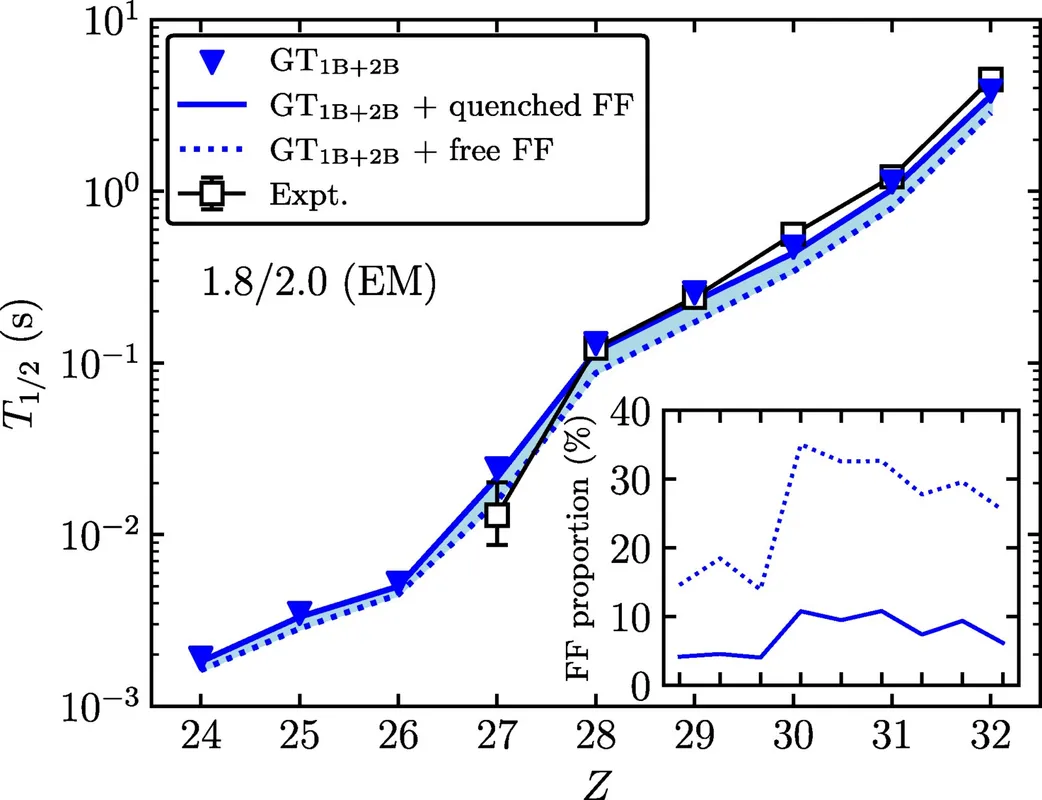
Now, researchers have developed advanced theoretical predictions for these nuclear processes, successfully validating them against existing experimental data. This breakthrough promises to refine current models for how heavy elements are synthesized in the universe.
Advanced Theoretical Models Yield Precise Decay Rate Predictions
The core of this new research centers on the beta-decay rates of neutron-rich nuclei, which are fundamental to understanding element synthesis. To achieve a more accurate understanding and prediction of these rates, the team employed state-of-the-art “ab initio” methods in nuclear ics. These sophisticated techniques calculate nuclear properties directly from the underlying fundamental interactions between a nucleus’s constituent particles, bypassing the need for empirical adjustments based on prior measurements.
By integrating modern nuclear forces and decay operators with many-particle calculation methods, the scientists were able to precisely map the structure of nuclei and, consequently, determine their decay rates with unprecedented accuracy.
Experimental Validation Confirms Theoretical Accuracy
A pivotal outcome of this study is the strong agreement between the theoretical predictions and the experimental data available for these exotic nuclei. This validation is particularly significant in the current range where extremely neutron-rich nuclei can be studied at accelerator facilities. Recent experimental investigations into these nuclei have been conducted at the RIKEN research center in Japan.
These findings not only contribute to a deeper comprehension of the structure of exotic atomic nuclei but also significantly enhance the accuracy of models that describe the creation of heavy elements throughout the universe.