Rabbi Questions Secularism’s Role in Combating Antisemitism
A prominent Toronto rabbi has voiced strong reservations about the effectiveness of secularism as Canada’s primary bulwark against rising antisemitism, arguing that a foundational belief in God, rather than a secular state, is essential for moral resolve and societal tolerance.
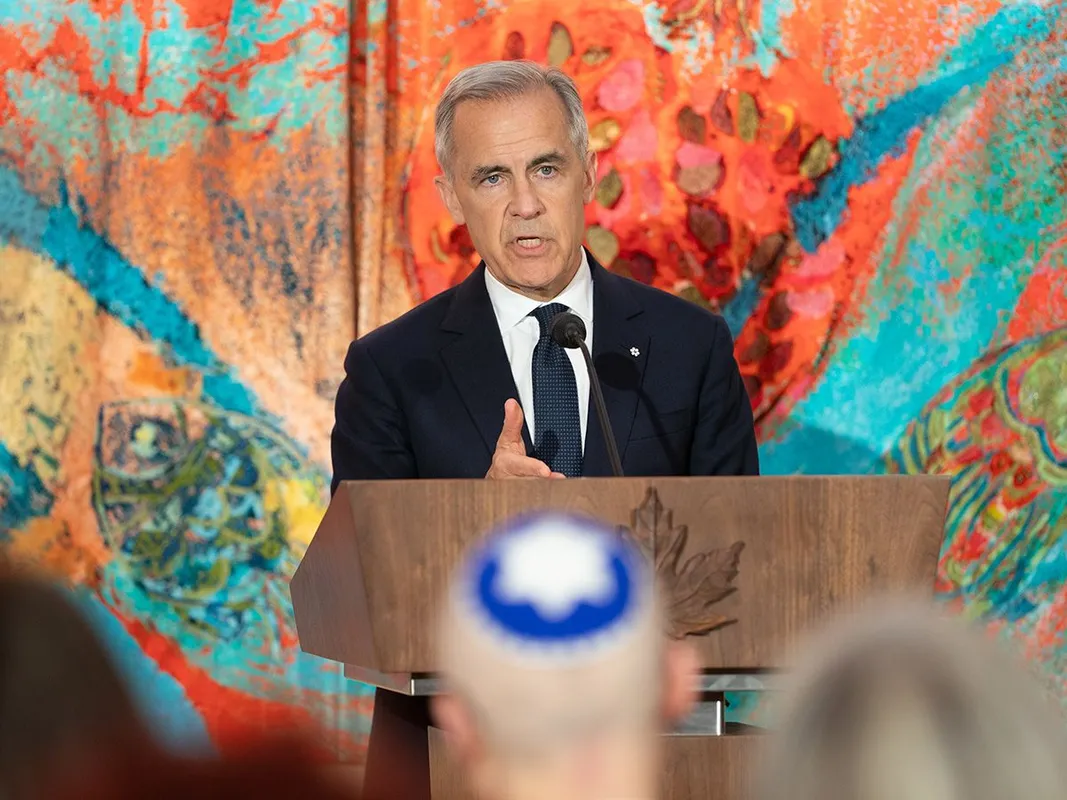
The senior rabbi of Beth Avraham Yoseph of Toronto (BAYT), Daniel Korobkin, shared his perspective following a recent address by Prime Minister Mark Carney to a gathering of Jewish leaders. Rabbi Korobkin, whose synagogue was a target of vandalism in March, received an invitation to the event but was unable to attend due to officiating at a wedding.
Critique of Proposed Solutions
While acknowledging Prime Minister Carney’s recognition of hatred as a growing concern and his affirmation of pluralism and tolerance, Rabbi Korobkin contends that the proposed remedies – new legislation, increased security grants, and an anti-racism council – fall short. He believes that without explicitly naming radical Islamism as a significant source of the problem and acknowledging the role of anti-Zionist rhetoric in fueling Jew-hatred, any solutions will ultimately be ineffective.
The ‘Dog Whistle’ of Secularism
Rabbi Korobkin found Prime Minister Carney’s assertion that Canada is a secular country, uncommitted to any particular religious values, particularly concerning. He interpreted the statement, “Our secularism is open. The state takes no side in the matters of belief, and the institutions of public life are not captured by any faith or identity,” as a potential “dog whistle” to people of faith.
He elaborated, “A nation grounded in secularism is founded not upon a creed, but upon the absence of one. Nature abhors a vacuum. It is exceedingly difficult to sustain tolerance for all beliefs when there is no overarching value beyond tolerance itself.” The absence of the word “God” in the Prime Minister’s remarks was noted as significant.
The Foundational Role of Faith
According to Rabbi Korobkin, belief in the God of the Bible has historically provided Western civilization with the moral strength to address poverty, pursue justice, and accommodate diverse voices within society. He suggests that when God is absent from a nation’s guiding principles, the defenses against societal decay are weakened.
He pointed to Canada’s Constitution, which begins with the words: “Whereas Canada is founded upon principles that recognize the supremacy of God and the rule of law.” This language, enshrined in the Constitution Act, 1982, reflects a historical understanding that rights originate from a higher power, that government is bound by moral law, and that religious faith fosters public virtue.
A Call for a Return to Core Values
Rabbi Korobkin argues that while belief in God is not a legislative requirement, the complete removal of God from the public square represents both a significant error and a departure from the foundational values of Canada. He also expressed concern about the potential vulnerability of national symbols, referencing the prayer in the national anthem: “God keep our land glorious and free.”
He concluded with a plea for a course correction in national leadership, stating, “If Canada is to sustain a genuine culture of tolerance, God must return to our public conversation — not the God of any one people or tradition, but a recognition that without a higher power animating our values of morality and altruism, Canada’s future forbodes dark days ahead.” He ended with a traditional blessing: “And assuming our leaders will accept the blessing, may God bless Canada.”