

Voters Assess Economic Well-being as Political Support Rises
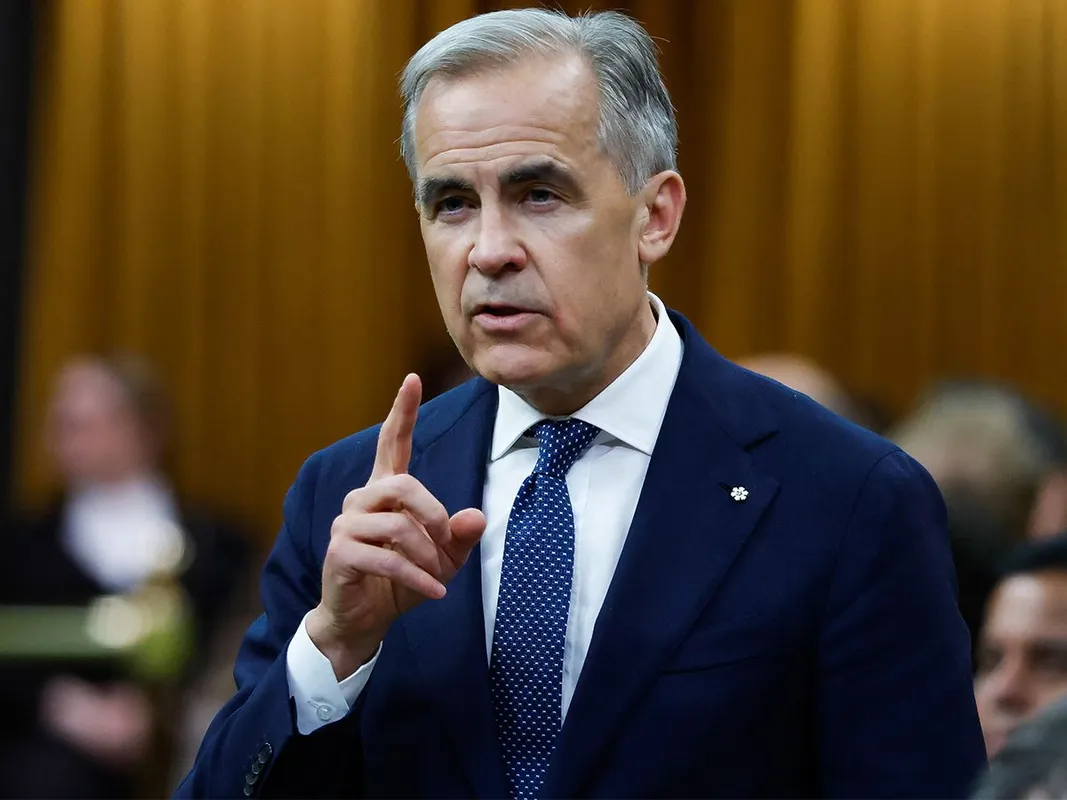
A common adage in political discourse suggests that voters often make decisions based on their financial standing, asking whether their personal circumstances have improved under the current leadership. This sentiment appears to be a key consideration for many Canadians as recent polling indicates substantial support for the governing Liberal party, with Prime Minister Mark Carney also enjoying a notable approval rating.
However, questions are being raised about the connection between this political support and the tangible economic realities faced by citizens. As of recent data, the Canadian dollar has seen a significant decrease in value against its U.S. counterpart, the nation has experienced a technical recession, and food prices have escalated sharply. Furthermore, the CUSMA trade agreement is reportedly facing challenges, and consumer insolvencies have reached their highest point since 2009 in the first quarter of the year. These economic indicators prompt a critical examination of whether the current policies align with perceptions of a healthy national economy, even among those who support the government.
Concerns Over Government Response to Antisemitism
Recent public addresses by Prime Minister Carney have drawn attention, particularly his remarks concerning the rise of antisemitism in Canada and the perceived failure of the country to adequately address it. During a speech at a religious institution, the Prime Minister characterized the situation as a crisis, a sentiment that resonated with some segments of the audience who reportedly experience such issues daily.
However, the proposed solution to this acknowledged crisis has been met with skepticism. The announcement of a committee to study antisemitism has been questioned, with critics suggesting that tangible evidence of the problem is readily observable. References have been made to public demonstrations and incidents at academic institutions and Jewish community centers as clear indicators of the issue, seemingly negating the need for further study.
The composition of the newly formed committee has also become a point of contention. Concerns have been voiced regarding the selection of certain members, with some critics questioning their qualifications or past associations in relation to the issue of antisemitism and related geopolitical conflicts. This has led to speculation that the committee’s mandate may be intended to defer or delay meaningful action.
Economic Hardships and Political Messaging
The rising cost of fuel has become a significant concern for many Canadians, with the price to fill up a standard truck tank approaching a notable monetary threshold. This economic pressure has led to some public commentary suggesting that the design of currency could serve as a reminder of the perceived causes of such financial burdens.
Calls for Stronger Deterrence Against Antisemitic Crime
Reports indicate a concerning escalation in antisemitic incidents, which have involved threats, acts of violence, assaults, and gunfire, with deliberate targeting of Jewish individuals, businesses, and places of worship. While educational initiatives and expressions of solidarity are acknowledged, their effectiveness as deterrents is being questioned.
Analysis suggests that a more robust approach to deterrence is necessary. Sentencing practices, it is argued, should place greater emphasis on general deterrence, sending a clear message not only to convicted offenders but also to potential imitators that such actions will face significant consequences. The perception that penalties are too lenient can inadvertently encourage further offenses.
Intelligence assessments reportedly indicate that some of these acts are part of organized efforts, with external state actors allegedly providing financial support for incitement, recruitment, and operational tools. While the actions of foreign entities cannot be directly controlled, it is argued that the justice system can play a crucial role by ensuring that prosecutors seek substantial penalties for those found guilty, thereby serving as a vital warning to others.
Debate Over Separatism and Rights
Discussions surrounding regional aspirations and federalism have highlighted a perceived disparity in how separatist movements and those advocating for the status quo are treated. Analysis suggests a peculiar imbalance in the political discourse, where proponents of separation are often framed as champions of freedom, while those who wish to maintain existing national structures are sometimes characterized as resistant to change.
The argument for self-determination is recognized as a legitimate concept. However, within a democratic framework, rights are generally considered reciprocal. If a minority group possesses a right to secede, it is posited that a majority has an equally valid, if not stronger, right to remain united, as the existing state does not require a new mandate to continue.
The framing of questions and the timing of referendums are noted as significant factors in public decision-making, potentially influencing outcomes. It is argued that democracy should possess mechanisms to protect itself from self-dismantling and that the right to remain part of a nation is a fundamental freedom that should be equally protected. The notion that a minority can initiate a process that forces a public test on the majority’s existing status is viewed by some as an unequal application of rights, leading to an asymmetry that undermines democratic principles.
Senate’s Role in Criminalization Debates
A recent decision by the Senate has been met with approval for its refusal to endorse a proposal that would have criminalized certain expressions related to residential schools under proposed legislation. The Senate’s stance is seen as a safeguard against potentially stifling historical discourse.
It is argued that historical records and various accounts indicate that Canada’s Indian Residential Schools provided beneficial services in addition to the widely acknowledged harms. Archival evidence, such as official reports detailing the management of epidemics in the Northwest Territories and the relatively low pupil mortality rates in affected schools due to the dedication of staff, is cited as an example of information that should not be subject to criminalization. The ability to reproduce and discuss such historical documents is considered essential for a comprehensive understanding of the past.
Procurement Strategies for Military Equipment
When considering major military acquisitions, such as submarines, the primary criteria should focus on the quality of the equipment, its cost, and the delivery timeline. The inclusion of residual economic benefits to the country as a significant factor in these decisions is often questioned.
Past experiences with military procurement contracts suggest that any mandated domestic economic contributions are frequently factored into the overall price, without a guarantee of efficient production. A more pragmatic approach, it is argued, would be to prioritize obtaining the best available equipment at the most competitive price, simplifying the procurement process and ensuring value for taxpayer money.
Observations on Political Speeches and Identity
Commentary on a recent speech by Prime Minister Carney has highlighted a particular statement suggesting that newcomers to Canada should abandon ethnic rivalries. While the sentiment aims to foster unity, it has been noted that this perspective may overlook the lived experiences of many Canadian Jews.
A significant portion of Canada’s Jewish population was born within the country and identifies strongly as Canadian. Their connection to Canada is not as immigrants bringing external conflicts but as citizens with deep roots. In contrast, a notable percentage of Canadian Muslims are foreign-born. This difference in background and identity may render the speaker’s message less resonant or appropriately targeted to all segments of the audience, suggesting that the chosen venue and the specific framing of the remarks might have been misaligned with the diverse realities of Canadian society.









