

Two Life-Altering Incidents Fueled Farage’s Political Ambitions
Nigel Farage’s journey into politics was significantly influenced by two harrowing near-death experiences during his youth. These events instilled in him a desire to pursue a more meaningful life, moving beyond purely business aspirations and fostering a deep engagement with political matters.
Born in Kent in 1964, Farage grew up in a rural setting, experiencing a childhood marked by freedom and a connection to nature. A childhood friend, John Hudson, recalls their “outdoorsy life” in Downe, describing a safe environment where they explored the woods and learned about the local flora and fauna. This idyllic upbringing was shattered by two separate incidents that profoundly altered Farage’s perspective.
The Orpington Crossing Accident
On the evening of November 25, 1985, after leaving work and enjoying drinks, Farage was struck by a car while crossing the road near Orpington station. The impact threw him into the air, and he landed on his head. Transported to Bromley General Hospital, his blood alcohol level was too high for general anesthesia, requiring sedation before surgery. While he miraculously avoided brain damage, the accident resulted in a serious leg injury that necessitated a lengthy recovery and still causes him discomfort. He also sustained broken ribs, lost teeth, and began experiencing tinnitus. The injury forced him to abandon competitive golf due to its impact on his hand-eye coordination. During his recovery, however, he met nurse Clare Hayes, who would become his first wife.
A Medical Crisis and a Cancer Scare
The second critical incident occurred on Boxing Day in 1986. While at a local pub, Farage experienced severe pain in his lower abdomen. An initial diagnosis of a twisted testicle requiring immediate surgery proved incorrect. Further medical assessments revealed an infection, and he was prescribed antibiotics. The pain persisted, and his left testicle began to swell significantly. After weeks of agony and a growing concern, he sought further medical advice. A referral to an NHS consultant proved unhelpful, and it was only after accessing private healthcare through his employer’s insurance that testicular cancer was diagnosed.
The subsequent removal of his testicle was followed by the possibility of secondary tumors. This period of uncertainty led Farage to confront his mortality directly. He recalled telling his mother that chemotherapy seemed inevitable, thus rendering a haircut pointless. The news he received was unexpectedly positive: after six months of tests, he was given the all-clear. This experience, however, solidified his belief in the importance of private healthcare, stating, “It has left me with a clear belief that without private healthcare I would probably be dead.”
A Shift in Priorities and Political Awakening
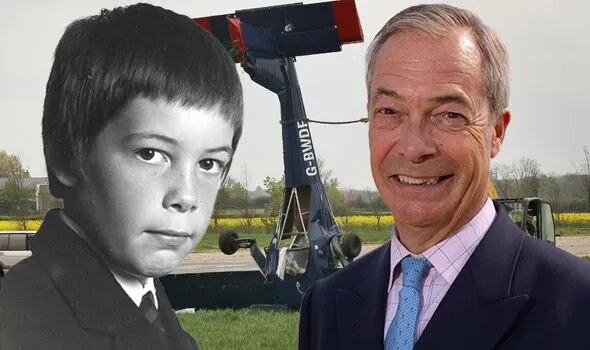
These two brushes with death left an indelible mark. Farage became convinced that time was a precious commodity and that he needed to dedicate himself to something more significant than business success. While these were not his only near-death experiences – he survived a light aircraft crash in 2010 – they were pivotal in shaping his worldview. The accidents coincided with a growing disillusionment with his marriage and career. By 1994, his marriage to Clare had ended, and he was increasingly drawn to political activism.
His political awakening was further fueled by his skepticism towards Britain’s deepening integration with Europe. He found himself at odds with those within the Conservative Party who supported closer ties with Brussels, particularly following the Single European Act of 1986 and Margaret Thatcher’s Bruges speech in 1988. Farage became convinced that unelected bureaucrats were eroding national sovereignty and democracy. His work in global commodity trading exposed him to the potential economic ramifications of restrictive European regulations.
This growing political conviction led him to become a vocal critic of the European Union. His social circle noticed the shift, with a schoolfriend noting that by the late 1980s, conversations with Farage invariably turned to the EEC, often ending in heated debates. His political engagement intensified, culminating in his decision to vote Green in the 1989 European elections, a move that surprised many but reflected his shared zeal with their concerns about the impending Maastricht Treaty.
Forging a Political Career
Farage’s career path saw further shifts. His tenure at commodities firm R J Rouse ended in late 1993 after an incident involving a client. He then established his own firm, Farage Futures, in 1994. Despite the demands of his business, including early mornings to accommodate global trading, he found a degree of freedom that allowed him to pursue his political interests more vigorously. During this period, his firm experienced significant success, with former colleagues recalling calls from prominent political figures, including Margaret Thatcher, indicating the growing influence of his political activities.
By 1997, his divorce from Clare was finalized. At the cusp of 30, and with a clear desire to shape his own destiny and dedicate more time to politics, Farage embarked on what he described as his “new life.” Thirty years later, he stands as a prominent figure in British politics, having led two different parties to electoral success and continuing his efforts to influence the nation’s political landscape.









