

New Guidelines Curb Taxpayer-Funded Wardrobes for King’s Representative
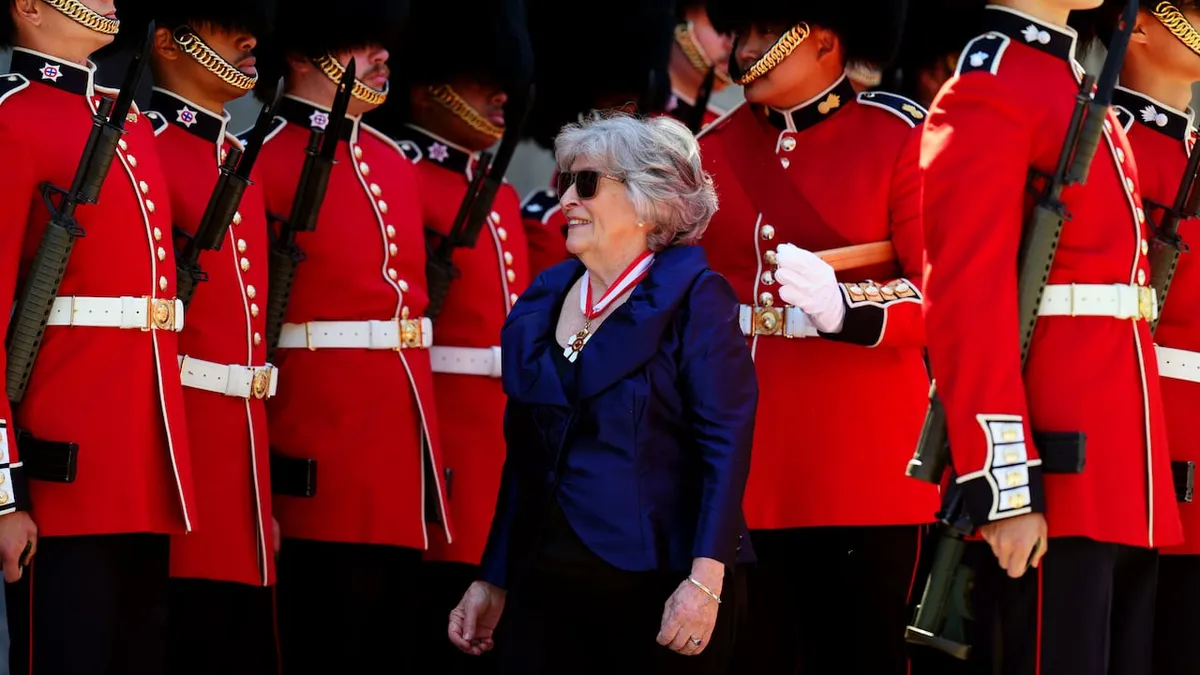
Rideau Hall has implemented revised guidelines that significantly restrict the types of clothing the Governor General can claim as expenses, aiming to prevent taxpayer funding for everyday casual and business attire. The updated policy, introduced during Governor General Louise Arbour’s transition, now explicitly states that funding is reserved for “distinct wardrobe requirements” necessary for representing the monarch and the country.
Specific Occasions Covered, Everyday Wear Excluded
Under the new rules, reimbursement is permitted for outfits suitable for formal events, black-tie affairs, and “very special occasions such as a coronation.” However, standard casual wear and business attire for the Governor General and their spouse will no longer be covered by public funds. This change addresses a previous ambiguity in the clothing allowance, which had been a source of public scrutiny and criticism in the past.
Historically, itemized lists of clothing purchases made by governors general have been released to Parliament, with some past expenditures described as lavish by political observers. The Office of the Secretary to the Governor General indicated that a comprehensive review of financial support for governors general, including the clothing allowance, is ongoing. In a previous review conducted in 2021, the clothing allowance was reduced by 35 percent. Currently, governors general are permitted to expense a maximum of $130,000 over a five-year period for their wardrobes, with potential for further reductions as the current review progresses.
Past Spending Under Scrutiny
Documents submitted to Parliament detail expenses from September 2017 to March 2025. During her tenure, former Governor General Mary Simon incurred over $45,000 in clothing expenses in less than four years. Her predecessor, Julie Payette, spent more than $50,000 in just over three years. Among Simon’s expensed items was a $997 raven silk capelet, created by a Haida designer, which she wore at significant events including a ceremony marking the anniversary of unmarked graves found at the former Kamloops Indian Residential School site and during the Pope’s visit to Canada.
However, other documented purchases appeared to be for everyday wear. Conservative Member of Parliament Tamara Jansen questioned Ken MacKillop, the Secretary to the Governor General, in early May regarding whether taxpayers would fund professional attire for Governor General Arbour. MacKillop stated that the clothing allowance is reviewed annually for potential adjustments. MacKillop’s office subsequently provided the revised clothing guidelines to members of the parliamentary committee, as initially reported by Blacklock’s Reporter.
Historical Context and Future Consistency
Carolyn Harris, a historian and royal commentator, noted that governors general, particularly women, have historically faced considerable scrutiny regarding their fashion choices, with criticisms ranging from being too extravagant to too understated. She suggested that Rideau Hall’s decision to establish clear guidelines at the outset of Arbour’s mandate aims to preempt the controversies experienced by predecessors.
“Rideau Hall is sending a message that there is going to be consistency going forward regarding the clothing allowance,” Harris stated. “There are not going to be the kinds of ambiguities that invite discussion and debate and criticism … the ground rules are going to be set from day one.”
Further examination of expensed items reveals a $1,250 long red silk jacket with black beading of traditional Inuit tattoo symbols for formal occasions and a $1,500 beaded sealskin chest piece for official events in Nunavut, both expensed by Simon. Of the more than 100 clothing items claimed, approximately 50 did not specify the events at which they were worn. These included items such as $228 grey crepe pants, a $178 scoop neck tank top, and a $225 burgundy skirt. Documents indicate that Simon had donated her pre-existing workwear to charity before assuming office.
Among the nearly 90 items expensed by Payette were a $3,000 black velvet dress with silk lining and a $445 Ecru Apparel hat. Her expenses also included seemingly basic items like $78 for three T-shirts and a $65 “quarter-zip black pullover sweater.” It remains a possibility that these items were worn by Payette and Simon during events related to their representational duties, though the documents do not explicitly confirm whether they were classified as everyday casual or business attire.
Allowance Origins and Public Image
The clothing allowance originated in the 1980s, intended to ensure governors general possessed the necessary attire for diverse conditions, formal engagements, and various cultural or religious observances both domestically and internationally, according to a document from 2025. Harris commented that while an allowance for clothing is understandable given the role, it should be periodically reviewed based on public engagements.
The Governor General’s role involves representing the monarch and Canada on the global stage, including meetings with foreign heads of state, ambassadors, and members of the royal family. The Governor General’s salary for 2026 is set at $393,800.
“There is a public image that is expected in terms of showcasing Canada and Canadian designers,” noted Harris, who also teaches history at the University of Toronto’s School of Continuing Studies. Barbara Messamore, a history professor at the University of the Fraser Valley, emphasized the necessity of vigilance regarding escalating expenses but also pointed out that female governors general tend to attract more attention regarding their clothing choices. She suggested that male officeholders can often “get away with alternating some inconspicuous dark suits.”
Messamore described a clothing allowance averaging around $10,000 annually as not appearing excessive, particularly considering the requirement for formal and ceremonial garments. “Mary Simon’s choices were often made with a view to showcasing the work of Canadian designers and especially Canadian Indigenous designers,” she remarked. “And these lovely designs often did draw attention and positive comment.”
Rideau Hall has confirmed that governors general are permitted to retain clothing purchased with government funds during their mandates. In the past, there was consideration given to publicly displaying specific items worn by Mary Simon, recognizing the historic significance of her mandate as Canada’s first Indigenous governor general.









