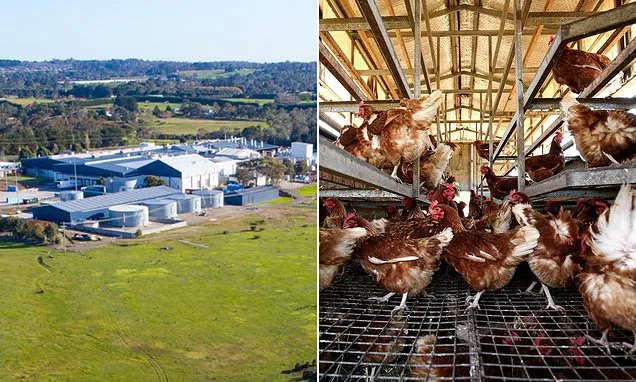
Poultry Giant Implements Strict Lockdown Amid Bird Flu Scare
Australia’s largest poultry producer, Inghams Group, has initiated a comprehensive lockdown of its Western Australian operations following the confirmation of a deadly avian flu strain. The decision comes as a precautionary measure to mitigate potential risks, even though the virus has not been detected in commercial poultry flocks.
Second Bird Flu Case Confirmed in Western Australia
The highly pathogenic H5N1 avian influenza variant was initially identified in a sick brown skua found on a remote beach near Esperance. A second migratory bird, a giant petrel, has subsequently tested positive for the virus. Reports indicate that over a dozen other birds have also been observed exhibiting signs of illness or have been found deceased.
Inghams Group announced on Monday that its lockdown protocol includes restricting all non-essential access to its Western Australian farms and processing facilities. The company is also engaging with the state government to secure a regional housing order, which would permit free-range poultry to be kept indoors.
National Preparedness for Avian Flu
Chief veterinary officer Beth Cookson stated that Australia has been preparing for the arrival of this deadly avian flu for years, as it was previously the only continent not to have experienced outbreaks of this particular strain. “Our actions at the moment are really to understand whether these two single individual birds have been able to spread it into other populations in Australia,” Dr. Cookson commented on ABC Radio National.
Dr. Cookson emphasized that the current approach aims to learn from international experiences and implement practical measures to minimize impacts. At present, there are no other reported detections in wildlife, poultry, or agricultural systems.
Wild Bird Origins and Public Safety
Analysis suggests the two affected birds likely originated from the sub-Antarctic territories of Heard Island and McDonald Islands, regions where the H5N1 strain has been linked to significant mortality events in wildlife, including the deaths of thousands of southern elephant seal pups.
The public is strongly advised to report any sightings of sick or injured birds but to maintain a safe distance. While rare, the virus can, under certain circumstances, transmit to humans in close contact.
Government Monitoring and Conservation Concerns
Environment Minister Murray Watt noted that since the initial detection, there have been 16 reports of sick or dead birds in Western Australia. However, he cautioned that it is not yet clear if these cases are directly related to bird flu or other common causes of avian mortality.
“At this point, there’s no need for alarm that this has become a more widespread incident beyond those two birds,” Mr. Watt said. He highlighted concerns for endangered species, including certain bird types and the Australian sea lion, as avian flu can also affect mammals.
The federal government has allocated approximately $100 million towards preparedness, developing over 100 response plans for critical sites and vulnerable species.
Scientific and Industry Concerns
The emergence of the virus has raised alarms among scientists, conservationists, and agricultural organizations, drawing parallels to catastrophic outbreaks overseas that have led to mass die-offs and substantial population reductions in wildlife.
Michelle Wille, a researcher at the University of Melbourne, indicated that while Australian authorities have prepared for the worst-case scenario, international precedents paint a concerning picture. “Everywhere this virus has emerged has been really catastrophic, with mass mortality events in wildlife, and in some places, we’ve seen species-level reductions in population,” Wille stated.
The potential economic repercussions for the industry are also significant, with over 200 million chickens having been culled in the United States following the virus’s introduction there.