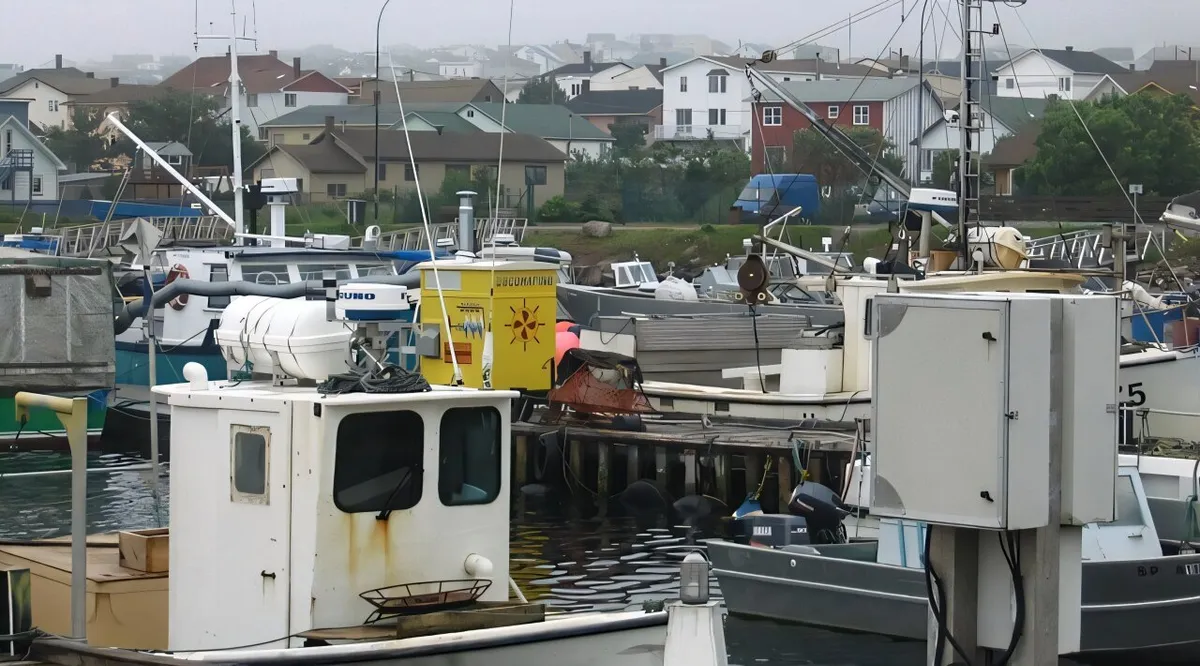
Massive Scale of Unreported Fish Waste Uncovered
Industrial fishing operations in the waters of Saint Pierre and Miquelon have been discarding an estimated 80,000 metric tons of fish annually between 1950 and 2022. This staggering amount of waste, equivalent to filling 32 Olympic-sized swimming pools, has largely gone unmonitored by authorities. A recent comprehensive study has shed light on these destructive practices and the inadequate management that allowed them to persist.
Study Exposes Significant Discrepancies in Reported Catches
The investigation, published in the journal Cybium and spearheaded by researchers from the Sea Around Us initiative, found that fishing vessels operating from the French archipelago caught approximately 1.2 times more fish than officially reported. The majority of this unreported catch consists of discards, with a notable portion also comprising seafood caught on bait lines within artisanal cod and other groundfish fisheries, particularly during the 1950s and 1960s.
Impact of Cod Collapse and Shifting Fishing Practices
The findings are particularly significant given the region’s history, which was heavily impacted by the collapse of the North Atlantic cod stock in the late 1980s and the subsequent cod fishing moratorium imposed by Canadian authorities in 1992. “In an area that was deeply impacted by the crash of the North Atlantic cod stock in the late 1980s and the moratorium imposed in 1992 by Canadian authorities, which banned cod fishing along Canada’s East Coast, uncovering a substantial amount of discards was surprising,” stated Anna Luna Rossi, the lead author of the paper and a contributor to the Sea Around Us initiative at the University of British Columbia’s Institute for the Oceans and Fisheries.
Saint Pierre and Miquelon, the last French territory in North America, experienced a significant blow to its fishing industry due to the cod moratorium. Historically reliant on cod for about two centuries, the archipelago’s fishing sector shifted with the introduction of trawlers in 1952. “SPM relied on cod fished by artisanal vessels called doris for about two centuries, before the introduction of the first trawlers in 1952,” Rossi explained. “As soon as that happened, the data start showing a decrease in artisanal catches, with the last doris operating until 1992.”
Industrial catches, conversely, saw an increase from the 1950s through the 1970s, with a brief dip before peaking in the 1980s. This surge was partly attributed to government subsidies for fuel and equipment, which intensified pressure on the already overexploited Atlantic cod stock.
Diversification and the “Fishing Down the Food Web” Phenomenon
Following the cod depletion and the establishment of quotas in 1994, the industrial sector saw a relative rebound. Artisanal fisheries, however, did not return to cod fishing. Instead, they diversified their targets to species like snow crab and lumpfish, the latter being exploited for its roe. “Artisanal fisheries, however, did not go back to fishing cod after the moratorium, instead focusing on snow crab and lumpfish, the latter exploited for its roe,” said Dr. Fabrice Teletchea, a co-author of the study and associate professor at the University of Lorraine.
A significant, previously unaccounted-for practice involved the use of capelin as bait. During the 1950-1992 period, approximately 6,600 tons of capelin were used as bait and not included in official reports. This practice contributed to the depletion of a forage species crucial to local fisheries and culture. “In fact, during that period, about 6,600 tons of capelin were used as bait and unaccounted for in official reports. This practice contributed to the depletion of a forage species that used to have a central role in local fisheries and culture,” noted Dr. Teletchea.
The shift in focus extended to industrial fisheries, which began targeting species such as snow crab, lumpfish, sea cucumber, American lobster, and northern shortfin squid within the Saint Pierre and Miquelon Exclusive Economic Zone, alongside Atlantic deep-sea scallops. “Where cod, haddock and redfish used to make up the greatest part of the catch, local fisheries are now disproportionately reliant on lower-trophic-level species,” observed Dr. Daniel Pauly, principal investigator of the Sea Around Us and a co-author of the study. “This shift from higher to lower trophic levels is a prime example of the concept of fishing down the marine food web, where fisheries progressively target smaller fish and invertebrates at lower trophic levels after depleting larger, high-value apex predators.”
Ecological and Economic Implications of Shifting Targets
The removal of apex predators, according to Dr. Pauly, jeopardizes ecosystem resilience by disrupting food web dynamics and creating cascading effects. “The removal of these predators threatens ecosystem resilience by disrupting food web dynamics, causing cascading effects on the rest of the food web and weakening the resilience of ecosystems,” he stated.
Furthermore, increased fishing pressure on invertebrate species raises concerns about overexploitation and potential stock collapse, particularly for species like sea cucumber. “Moreover, with the increased effort put into invertebrate species, pressure on their stocks rises, and this has proven to lead to overexploitation and potential collapse in sea cucumber species,” Dr. Pauly warned. He concluded, “If not comprehensively managed in consideration of the lower resilience of invertebrate species, these lower-trophic-level fisheries will likely be unsustainable for the local economy and the SPM marine ecosystem.”