

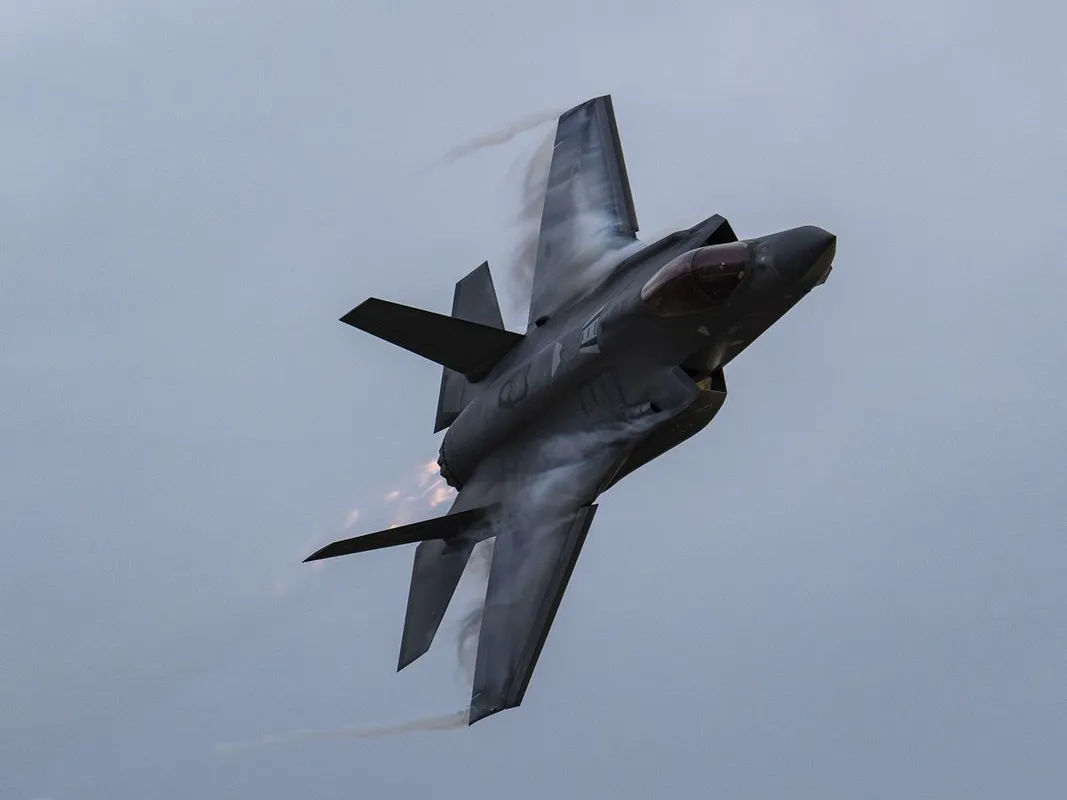
Washington is voicing increasing impatience with Ottawa’s protracted decision-making process regarding its F-35 fighter jet acquisition and a broader defense review. While U.S. defense officials initially welcomed Canada’s 2022 selection of Lockheed Martin’s stealth fighter, with plans to acquire 88 of the American-made aircraft, ongoing political discussions and evolving priorities have resulted in only 30 jets currently under contract.
Defense Spending and Strategic Alignment
For years, the United States has urged Canada to increase its defense expenditures. Progress has been noted, with Prime Minister Mark Carney highlighting Ottawa’s commitment to achieving the 2 percent of GDP defense spending target in the past year. Now, the U.S. is emphasizing the importance of Canada maintaining close alignment on defense matters. This urgency extends beyond the F-35 procurement to encompass future defense strategies.
The allocation of Canada’s enhanced defense budget remains a key question, particularly as Prime Minister Carney seeks to reduce Canada’s reliance on the U.S. Ambassador Pete Hoekstra recently stated at a summit in Toronto, “The F-35 is not an American plane. The F-35 is what? It is an international consortium building the most advanced fighter jet in the world.” He further suggested potential collaboration on sixth-generation fighters, noting, “You may get an invitation to join the U.S. as part of a consortium to do the sixth gen on fighter planes. Your choice. You wanna partner with the U.S. or not? Not our decision.”
Ongoing Fighter Fleet Review
Prime Minister Carney’s review comparing the F-35 with Saab’s Gripen was anticipated last summer but continues, according to Defense Minister David McGuinty. “We are taking the necessary time to study very, very closely the question of the fighter fleet,” McGuinty stated recently. Canada is also reportedly examining its potential involvement in the development of a sixth-generation fighter.
Expert Opinions on the F-35
Defense analysts and military leaders generally favor the F-35, citing its consistent performance superiority and crucial interoperability for NORAD and NATO. Richard Shimooka, a senior fellow at the Macdonald-Laurier Institute, described it as the “easy button for moving the Air Force forward,” referencing previous assessments that identified it as the optimal choice. He also pointed out that Canada’s industrial benefits from the F-35 program are directly linked to the number of aircraft purchased, implying that a smaller order would diminish long-term work and sustainment opportunities. Shimooka anticipates that Prime Minister Carney will proceed with the F-35 purchase, likely acquiring 88 or more, though he acknowledges the possibility of a mixed fleet.
Christopher Coates, director of foreign policy, national defense, and national security at the Macdonald-Laurier Institute, also supports the F-35 and advocates for a larger procurement. “I think the right answer is a greater number than [88],” Coates remarked, suggesting a fleet size of 125-135 aircraft would be appropriate.
Political Undercurrents and Future Capabilities
The F-35 debate has become politically charged. Coates observed that public sentiment in Canada has grown increasingly critical of the U.S., leading to a reluctance to embrace American products, a phenomenon he fears is influencing the fighter jet decision. He suggested that delaying the F-35 choice might be politically expedient, but this cannot continue indefinitely. Coates believes Prime Minister Carney may be aiming to de-escalate tensions, citing a recent speech in New York where the Prime Minister stated that a strong Canada could contribute to making America great again as a potential sign of détente.
While a well-funded mixed-fleet approach with a significant F-35 component could be acceptable, the discussion extends to Canada’s future role in advanced military technology. Reports indicate that Prime Minister Carney’s administration is considering observer status in the UK-Japan-Italy Global Combat Air Programme (GCAP), a sixth-generation fighter initiative facing financial and timeline challenges. British Defence Secretary John Healey’s recent resignation over defense spending concerns also highlights the complexities of such programs.
Ambassador Hoekstra expressed skepticism about European defense partnerships for Canada, stating, “Europe was working on sixth gen, and they’ve been working on it for more than five, maybe 10 years. The partnership between Spain, Germany, and France, poof, gone. F6 is gone. Gen 6 is gone in Europe. I know you’ve been looking at doing business in Europe on defence. You’re not gonna be doing it on Gen 6.”
Sixth-Generation Fighter Considerations
Jennifer Kavanagh, a senior fellow and director of military analysis at Defense Priorities in Washington, questions the necessity and affordability of Canada’s participation in sixth-generation fighter programs given its current defense spending levels. “Canada’s defence spending is not high, so it cannot afford to waste money on expensive platforms that it does not need,” she explained, suggesting that while these fighters may be crucial for major power conflicts, Canada’s comparative advantage may lie elsewhere.
Conversely, Coates argues that future-proofing Canada’s defense and security portfolio is a reasonable government objective. “Part of that is being, for a nation with Canada’s resources and ambitions, maybe not at the leading edge, but in the next tier. So maybe not leading the development of a sixth-gen fighter, but participating in such a program would make sense for Canada,” he concluded.









