

Historical Documents Reveal Chemical Disposal at Former RAF Site
Renewed calls for comprehensive investigations into ‘forever chemical’ contamination are emerging at a former Royal Air Force (RAF) base slated for redevelopment. This surge in concern follows the disclosure of historical Ministry of Defence (MOD) documents that detail the draining of ‘firefighting chemicals’ at RAF Upper Heyford.
These substances, now identified as polyfluoroalkyl substances (PFAS), are feared to be the source of pollution in nearby waterways. Campaigners and the local Member of Parliament (MP) Calum Miller are urging for immediate testing of both the local population and the surrounding environment to ascertain the full extent of potential contamination and its impact on the community.
Documents Detail Past Disposal Practices
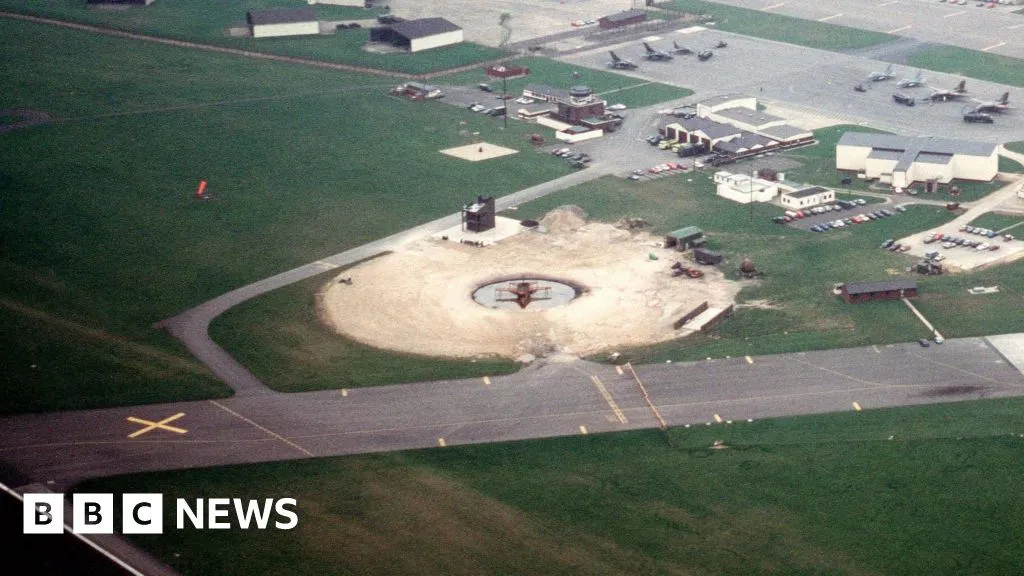
The unearthed documents, dating back to 1997, were compiled as the MOD was preparing to sell the site, which had hosted the United States Air Force for four decades. Multiple land and groundwater assessments from that period reference the base’s fire training area, a location where firefighters practiced extinguishing aircraft fires above a fuel-laden ‘pond’.
A list of potential contaminants identified from this ‘fire practice pond’ includes petrol, oil, lubricants, solvents, and firefighting chemicals. Crucially, these were reportedly “drained into storm water drainage.”
Expert Concerns Over ‘Forever Chemicals’
Environmental forensics and PFAS expert Dr. David Megson commented on the findings, stating, “This does seem like another concerning case where these chemicals were widely used and have escaped into the environment. It’s only decades afterwards that we are beginning to understand what harm may have been caused.”
The Environment Agency has identified military sites and airports as key areas for PFAS contamination, often referred to as ‘forever chemicals’ due to their persistence. These chemicals were extensively used in firefighting foams for many years.
Testing Reveals Elevated Contaminant Levels
To date, six streams have undergone testing, conducted by both local residents and the Environment Agency. All tests have revealed elevated levels of PFOS, a specific type of PFAS used in firefighting foams. PFOS is considered a human carcinogen and is now banned in England and Wales.
An environmental risk assessment from 1997, included in the documents, warned of potential adverse effects on human health should ground and groundwater become impacted. It stated that “human health could be adversely affected by dermatological contact, inhalation and ingestion of both soils and groundwater.” The assessment also noted that “grazing animals, currently on-site and situated in the surrounding farmland may also be potential receptors, impacted directly from ingestion of impacted soils and/or spring waters.”
Notably, the documents contain no evidence of testing or remedial works for PFAS on the site prior to 1997.
Community and Political Action Demanded
Residents have voiced strong concerns. Leigh Radwell, a resident of Heyford Park, recently expressed a desire for water and soil testing due to worries about potential contamination of her vegetables. She, along with two other residents, have indicated a willingness to participate in blood testing for the chemicals if it becomes available.
Calum Miller MP for Bicester and Woodstock, who received the documents from defence minister Luke Pollard, emphasized the urgency for testing, stating, “The detail in the documents makes the need for testing all the more urgent.” He further announced, “I’m going to be meeting very shortly with the relevant minister at DEFRA who’s responsible for forever chemicals. I’m looking forward to that meeting, which will also be attended by officials from the Health Department.”
Mr. Miller added, “Local residents are understandably very anxious. They’ve gone from a few months ago, really not knowing very much about this issue, to suddenly being aware that there is potentially something very serious on their doorstep. What they are looking for is answers to the many questions they have.”
Charlie Henry from the Gallos Brook Community Group highlighted ongoing testing efforts: “There’s 14 streams that run off this base into different villages. We’re calling on the Environment Agency and Cherwell District Council to test them because children play in them, dogs swim in them… it’s really serious.”
Regulatory Response and Local Authority Stance
The Environment Agency has stated its commitment to investigating reports of pollution, while also noting that the local authority holds responsibility for contaminated land. Residents have confirmed reporting the issue to the Environment Agency.
A spokesperson for Cherwell District Council has indicated that the council is not aware of any evidence suggesting an immediate risk to residents’ health.









