Ten years ago, the groundwork for Britain’s departure from the European Union was laid within the offices of a prominent national newspaper. As the reverberations of the global financial crisis continued to affect European economies, a chief political commentator, Patrick O’Flynn, returned from a summer recess with a clear vision.
A Growing Discontent with EU Governance
O’Flynn, deeply concerned by Britain’s relationship with Europe, observed a system burdened by complex regulations and what he perceived as an unnecessary influx of laws originating from Brussels. He noted a growing sentiment that unelected officials, influenced by larger European powers, were making critical decisions impacting sectors from agriculture to food safety, bypassing the authority of the UK Parliament. The strain on individual European nations due to increasing integration was becoming evident.
The Birth of a Bold Proposition
Upon his return, O’Flynn proposed a radical idea to his editor, Peter Hill: that the newspaper should spearhead the national discourse for Britain to leave the European Union and actively campaign for this outcome. At the time, this stance was considered highly unconventional and outside the mainstream political and media consensus. One veteran journalist reportedly dismissed the idea, stating, “It’s a nice idea… Of course, it’ll never happen.”
Understanding the Electorate’s Sentiment
However, O’Flynn, who sadly passed away from cancer at the age of 59 last year, possessed a keen understanding of the newspaper’s readership and the broader British public. He suspected a significant portion of the population was weary of what they viewed as an unaccountable European superstate. His intuition proved correct.
“The EU was failing and nothing good for Britain was going to emerge from it,” he would later reflect. “I knew our readers were intensely Eurosceptic. Frankly, they did not like being ruled from Brussels. Now that the EU economy was so obviously failing, with the eurozone debt crisis in full swing, it was clear to me that the one pragmatic reason in favour of EU membership was fast disappearing.”
Launching the ‘Better Off Out’ Campaign
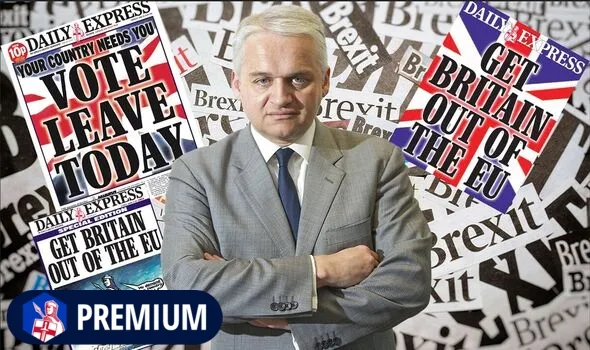
On November 25, 2011, the newspaper launched its campaign with the front-page headline: “Get Britain out of Europe: we want our country back.” The accompanying leader column declared, “From this day forth our energies will be directed to furthering the cause of those who believe Britain is Better Off Out.” The paper’s iconic Crusader mascot was adopted as a symbol for the effort to reclaim British sovereignty from what was described as a failing political project.
The editorial stated, “After far too many years as the victims of Brussels larceny, bullying, over-regulation and all-round interference, the time has come for the British people to win back their country and restore legitimacy and accountability to their political process.” A petition was initiated to gather public support and opinions.
Initial Skepticism and Overwhelming Response
Despite the paper’s strong stance, many within the political and media spheres initially dismissed the campaign as a fringe issue. Even editor Peter Hill harboured some initial doubts about its potential impact. He acknowledged at O’Flynn’s funeral that while it was the “perfect campaign,” the eventual success of Brexit was still surprising.
However, the response from readers was remarkable. Analysis of correspondence indicated that 99% of those who contacted the paper supported leaving the EU and regaining national control. Within months, over 375,000 individuals had signed the petition calling for a referendum on EU membership.
Reinforcing the Message and Political Impact
On January 8, 2011, the newspaper continued its assertive campaign with a front-page depiction of its Crusader mascot overlooking the White Cliffs of Dover. The internal coverage argued that the EU’s fundamental aim was the creation of a unified European state, asserting that this pursuit had eroded the traditional rights and freedoms of European peoples. It also criticized the EU’s leadership as an “arrogant cadre of politicians and bureaucrats” who disregarded democratic principles, challenging readers to identify any EU act or law that had genuinely benefited Britain.
Years of advocacy contributed to Prime Minister David Cameron’s 2015 general election manifesto commitment to renegotiate the UK’s EU membership terms, followed by an in-out referendum. Despite Cameron’s efforts to renegotiate, which he hoped would quell the ongoing debate, his proposals were reportedly rebuffed by EU leaders.
The Culmination: ‘Vote Leave Today’
The leadership of the EU, confident that Britain would not opt to leave, underestimated the public sentiment. The newspaper, however, strongly believed that ordinary Britons were dissatisfied. On June 23, 2016, a front page emblazoned with the Union Flag and the headline “Vote Leave Today” marked the culmination of this sustained campaign.
The opposing “Remain” campaign’s strategy, which relied on what was termed “Project Fear,” ultimately proved ineffective. Just six years after Patrick O’Flynn, who had since become a Member of the European Parliament, proposed the campaign, the UK populace voted 52% to 48% in favour of leaving the EU. This referendum saw a significant 72% national turnout, the highest recorded for a UK-wide referendum.
Reflections and the Path Forward
Two days after the vote, in an article titled “It’s taken years but we’ve got our country back,” O’Flynn addressed readers, ing his profound sense of privilege in having played a part. He stated, “It has been the greatest privilege and honour of my life to play my part. And together we have done the greatest thing that any of us will ever do. We have, as the now famous slogan goes, got our country back.”
He added, “We must now prove that the fears of the Remain voters are ill-judged… We do not want to be Little England but truly Great Britain trading with the world and serving as a beacon for democracy and freedom. This isn’t the end of all Britain’s problems, just the start of being able to tackle them ourselves. And it feels great.”
A decade on, the commitment to advocating for a robust Brexit remains, reflecting an ongoing dedication to the principles that fueled the initial campaign.