

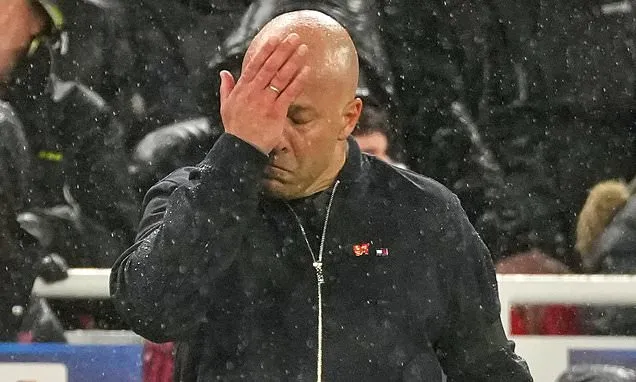
Liverpool’s Managerial Shift: A Difficult Decision Made
The decision to part ways with manager Arne Slot was one that few at Liverpool Football Club anticipated, especially just a year after a period of significant success. However, a challenging season marked by a string of disappointing performances, even in victory, and growing fan dissatisfaction ultimately led to the manager’s position becoming untenable. The club recorded twenty defeats, a stark headline figure that masked deeper issues with the team’s on-field display.
Anfield’s supporters, known for their knowledge and understanding, do not expect entitlement to success, having witnessed only two titles in 35 years. When they voice their discontent, it signifies a serious situation. The repeated booing from the stands, occurring for the third time in a matter of months, signaled a point of no return for Slot, who had been viewed as an infallible choice just a year prior.
Signs of Discontent and a Need for Change
Club leadership acknowledged the visible signs of struggle, including dull football and fans departing matches early. The widespread discontent was palpable not only within the stadium but also throughout the city, with conversations about the manager’s future a common topic of discussion among residents.
Player sentiments also contributed to the growing unease. Indirect comments from prominent figures, such as Mohamed Salah expressing a longing for Jurgen Klopp’s previous high-energy style of play, were interpreted as a vote of no confidence from key members of the squad. This situation has drawn parallels to political leadership where initial strong support can erode due to a series of missteps and public statements.
Evaluating the Season and Future Prospects
While criticism of Slot’s performance throughout the difficult term was warranted, as a title-winner, he was afforded a full campaign to steer the team back on course. The timing of his departure allows him to leave as a title-winner, preserving a positive aspect of his tenure. A continued slide into the next season could have significantly damaged his reputation.
As the season progressed, it became increasingly apparent that Slot’s ability to influence positive change had diminished, leading to a decline in confidence. While some within the club reportedly wished for his success, there was a collective acceptance that a change in leadership was necessary for a rebuild, which is now perceived to be more extensive than initially forecast.
Underlying Issues and a Costly Campaign
A significant concern was the apparent failure to learn from recurring mistakes. Issues that plagued the team in September persisted well into May. After an initial strong start with five consecutive wins, the team dropped points in 22 of the subsequent 33 matches. Despite Liverpool not being characterized as a club that frequently sacks managers, the current level of performance was deemed insufficient, particularly given the substantial investment of £446 million last summer.
While acknowledging mitigating circumstances, it was felt that Slot leaned towards providing excuses rather than outlining concrete solutions. The immeasurable grief following the passing of Diogo Jota last July undoubtedly impacted the squad, with players processing the loss in various ways. The challenges of leadership for Slot, as the squad navigated such a profound personal tragedy, are understandable.
Injuries to key players, including Alexander Isak and Hugo Ekitike, further complicated matters. New signings also struggled to adapt, and Salah’s form saw a significant dip. Despite these challenges, Slot had the majority of his title-winning squad available for much of the season but was unable to consistently elicit strong performances. Opposing teams appeared to have found ways to counter Liverpool’s tactics, and Slot lacked the necessary adjustments to evolve.
A Shift in Support and a New Direction
Throughout the season, the prevailing message from club hierarchy was one of unwavering support for Slot. Even as recently as the current week, discussions with his former assistant, Etienne Reijnen, were seen as a signal of continued backing. However, this stance shifted dramatically following an end-of-season review, leading to the decision to move forward without him.
Slot was informed of the decision shortly before it became public and expressed surprise, given the recent affirmations of support. He is reportedly not dwelling on the outcome but leaves with pride in his accomplishments at the club. Players were also taken aback by the news. While Slot has previously been a target for other clubs, he is not actively seeking an immediate return to management but remains open to suitable opportunities.
The Search for a New Manager
The focus now shifts to identifying Slot’s successor. Andoni Iraola is reportedly a leading candidate, with the former Bournemouth manager aware of Liverpool’s interest. Iraola has also been approached by other clubs, including Crystal Palace and has held discussions with AC Milan and Bayer Leverkusen. His established relationship with Liverpool’s sporting director, Richard Hughes, from their time at Bournemouth, is a notable factor.
Iraola’s tenure at Bournemouth saw them achieve European qualification for the first time in their history and finish narrowly outside the Champions League places, despite significant player departures. His high-energy tactical approach has garnered widespread admiration. His previous club, Rayo Vallecano, has also seen sustained success under his former assistant, Inigo Perez.
Other potential candidates include Sebastian Hoeness of Stuttgart and Pierre Sage of Lens, both recognized for their transformative work with their respective teams. Liverpool is expected to make a swift decision to ensure the new manager can integrate quickly and address the team’s current challenges, as the club finds itself seemingly back at square one two years after Slot’s predecessor’s departure.









