[ad_1]
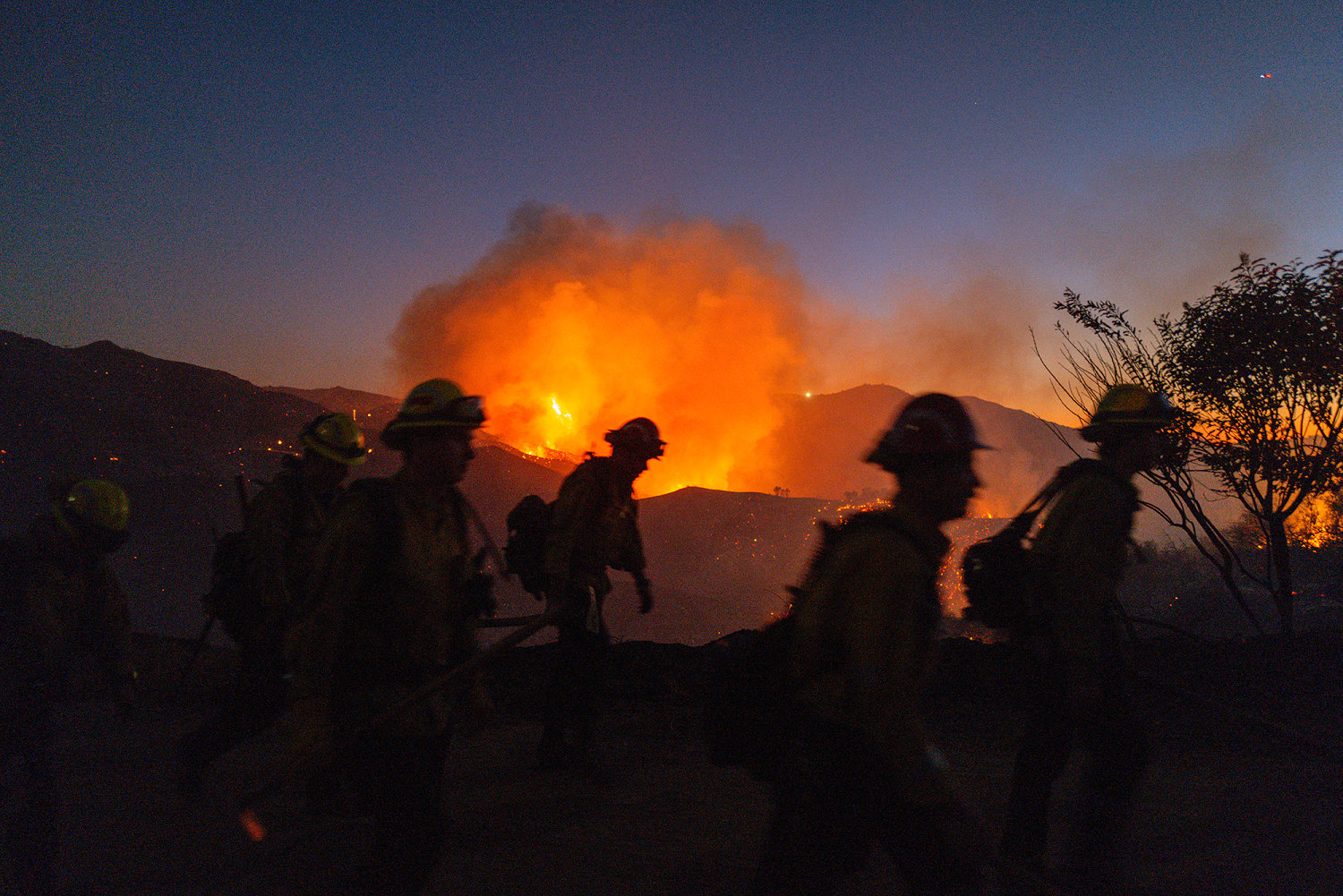
Pregnant girls’s publicity to wildfire smoke — notably within the third trimester — could enhance the chance of autism of their youngsters, in keeping with new analysis, which checked out lots of of hundreds of births in Southern California.
The examine, revealed Tuesday within the journal Environmental Science & Expertise, is the primary to look at a possible hyperlink between prenatal wildfire smoke publicity and autism. Earlier analysis has advised that pregnant girls’s publicity to air air pollution extra broadly, together with smog spewed by automobiles, smoke stacks and lead, could also be linked to the developmental dysfunction.
The brand new analysis targeted on exposures to PM 2.5, tiny particles in wildfire smoke that may lodge deep within the lungs and enter the bloodstream, which has raised main well being issues. To estimate smoke publicity, researchers used a mannequin to estimate ranges of PM 2.5 at every particular person’s dwelling tackle throughout their being pregnant.
“This paper helps different scientific analysis that hyperlinks prenatal publicity to air air pollution, notably PM 2.5 to autism,” mentioned Alycia Halladay, chief science officer on the nonprofit Autism Science Basis, who was not concerned within the examine. “The scale of the chance shouldn’t be enormous, however it’s in line with different analysis and provides to a physique of scientific literature linking air air pollution and autism.”
“Each autism and wildfires are on the rise, and this examine is only the start of investigating hyperlinks between the 2,” mentioned senior examine writer Mostafijur Rahman, an assistant professor of environmental well being sciences at Tulane College’s Celia Scott Weatherhead Faculty of Public Well being and Tropical Medication.
How huge is the chance?
The examine analyzed well being data of greater than 200,000 births in Southern California from 2006 by way of 2014. California, the researchers mentioned, leads the nation in each yearly acres burned by wildfire and charges of childhood autism diagnoses.
The elevated threat was strongest when moms have been uncovered to wildfire smoke through the third trimester (the final three months of being pregnant), particularly throughout stretches of a number of smoky days, quite than from total common air pollution ranges alone, the examine discovered.
The chance of autism prognosis was about 10% increased for kids whose moms skilled 1 to five smokey days within the third trimester, 12% increased with 6 to 10 days and 23% increased with greater than 10 days.
The affiliation was clearest amongst girls who didn’t change residences throughout being pregnant, suggesting that sustained publicity in the identical location — not simply occasional smoke — could play an vital position.
The examine, nevertheless, doesn’t clarify why wildfire smoke could enhance autism threat.
Rahman mentioned wildfire smoke is kind of completely different from different pollution, resembling site visitors pollution, that persons are uncovered to on an nearly on a regular basis foundation.
“Wildfire smoke has a singular chemical composition,” he mentioned, “together with increased ranges of carbon compounds, metallic, poisonous byproducts, and it tends to happen in intense and brief time period spikes.”
The third trimester is a vital interval in a fetus’s growth, mentioned lead examine writer David Luglio, a post-doctoral fellow with the Celia Scott Weatherhead Faculty.
“By way of the mind, and the late trimester, that is when the mind actually grows in dimension and develops its fundamental facilities,” he mentioned. He added that the findings shouldn’t trigger alarm, noting that autism isn’t restricted to environmental components, however can also be believed to have a powerful genetic part.
Halladay mentioned publicity to excessive ranges of PM 2.5 have already been linked to decrease birthweight, increased ranges of preterm births, bronchial asthma and weight problems.
“So shut monitoring, in addition to mitigation of air air pollution, must be a precedence for regulatory businesses going ahead,” she mentioned.
Extra analysis is required
Autism spectrum dysfunction — characterised by challenges with social and communication expertise and by repetitive behaviors — impacts 1 in 31 school-aged youngsters in america, in keeping with the Facilities for Illness Management and Prevention.
The dysfunction is believed to be “multifactorial,” mentioned Dr. Akhgar Ghassabian, an affiliate professor of pediatrics and inhabitants well being on the NYU Grossman Faculty of Medication, with a number of environmental components “proven to be concerned, notably if these environmental exposures occur throughout youth.”
Well being and Human Companies Secretary Robert F. Kennedy Jr., with the backing of President Donald Trump, has made autism a high-profile analysis precedence, saying that well being officers need to higher perceive the situation’s “root causes,” together with potential environmental causes, resembling air air pollution, chemical compounds and drugs. Kennedy has additionally promoted unproven therapies, together with leucovorin, an artificial type of vitamin B9 or folate, which the physique must make wholesome blood cells.
In September, Trump claimed with out new proof that acetaminophen — the lively ingredient within the ache reliever Tylenol — was a explanation for autism, an announcement that drew intense pushback from OB-GYNs, autism advocacy teams and worldwide well being organizations, just like the World Well being Group. A big new evaluation discovered no hyperlink between acetaminophen and autism.
David Mandell, a psychiatry professor on the College of Pennsylvania, mentioned the concept wildfire smoke publicity may elevate autism threat is broadly in line with earlier analysis linking air air pollution publicity through the mom’s being pregnant to poorer neurodevelopmental outcomes in youngsters.
However he mentioned that he was cautious about how the examine’s findings have been interpreted, noting that the noticed results have been small and that the best publicity group didn’t present a transparent enhance in threat.
“They do see a extra elevated threat on the second-highest publicity degree within the third trimester amongst nonmovers, however not on the highest publicity degree,” Mandell mentioned. “This lack of a dose response makes me skeptical concerning the findings. I’d undoubtedly need to see a replication earlier than I put lots of inventory in it.”
The authors observe the examine has limitations: Publicity estimates have been primarily based on out of doors air, and researchers don’t know the way a lot smoke folks have been uncovered to indoors, or whether or not they used air filters, wore masks or altered their conduct throughout a wildfire occasion. Rahman mentioned additional research are nonetheless wanted.
The findings, he mentioned, “reinforce the significance of minimizing smoke publicity throughout a wildfire occasion when doable and following the general public well being steering.”
Mandell mentioned that he hopes an administration “actually excited about enhancing little one outcomes would strengthen” the Environmental Safety Company and strengthen the Federal Emergency Administration Company “to scale back air pollution and assist households cope.”
“This administration appears to be going within the absolute wrong way,” he mentioned.
Rahman mentioned he’s additionally curious whether or not prevention — resembling masks or air purifiers — could scale back the chance seen within the examine.
“Wildfire smoke is a doubtlessly preventable environmental publicity,” he mentioned.
[ad_2]