

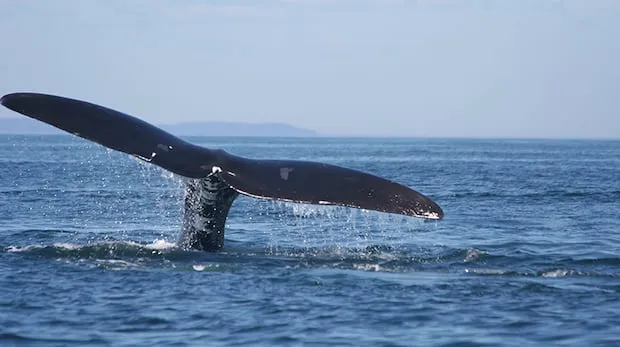
New Strategy Aims to Protect Endangered Right Whales
Federal officials have unveiled a comprehensive five-year plan to develop and implement specialized fishing gear designed to prevent whale entanglements. The initiative specifically targets protection for the critically endangered North Atlantic right whale population in eastern Canadian waters.
Two-Pronged Gear Approach
The strategy focuses on promoting two types of modified equipment: acoustic on-demand systems that eliminate vertical ropes through remote-activated lifts, and weaker breaking links designed to release at 1,700 pounds of force. Fisheries officials confirm the lower-strength links offer a budget-friendly option, while on-demand technology currently carries higher costs.
“We’re working closely with Indigenous and commercial harvesters to develop practical, cost-effective solutions tailored to different fisheries,” stated Brett Gilchrist, a national programs director with Fisheries and Oceans Canada. “Our goal is to advance innovation while making these technologies more accessible.”
Phased Implementation and Funding Questions
While officials confirmed gear requirements will vary by region and fishery type, high-risk entanglement zones will mandate some form of whale-safe equipment. The program will eventually expand to address marine mammal protection on Canada’s west coast, though no specific timeline was provided.
Significant questions remain about financial support for harvesters. When asked about subsidies for gear acquisition, officials acknowledged no funding commitments have been finalized at this stage.
Environmental Groups Urge Further Action
Conservation advocates welcomed the initiative but emphasized the need for accelerated progress. “With only approximately 380 North Atlantic right whales remaining—including just 70 breeding females—we need more rigorous testing and investment in ropeless technology,” said Hanna Vatcher, a marine conservation specialist with Oceana Canada.
Field Testing Realities
Researchers stress that successful implementation depends on practical adaptation to local fishing conditions. “Technological solutions must align with regional operational realities to gain industry acceptance,” explained Nick Coady, a marine researcher testing modified gear in Newfoundland waters. “The weak-link concept directly contradicts harvesters’ instinct to use stronger gear—we need solutions that protect whales without jeopardizing livelihoods.”
Current regulations require temporary fishery closures when right whales are detected, unless vessels use approved on-demand systems. Officials confirm ongoing collaboration with fishing associations to identify high-risk zones and customize gear requirements nationwide.









