

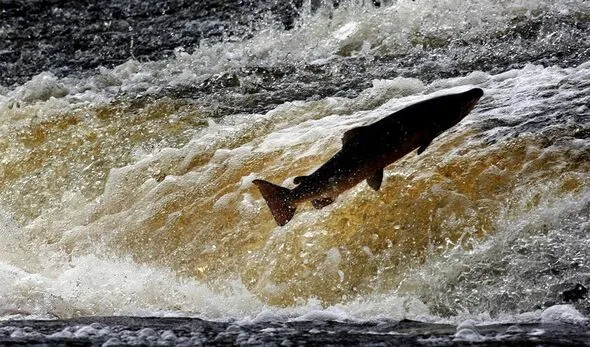
Cocaine pollution in waterways alters salmon behavior, driving fish to roam farther and act more boldly. Scientists warn that exposure to the drug and its metabolite, benzoylecgonine, significantly expands the movement range of Atlantic salmon in natural lake settings.
Field Experiment Details
Researchers from the Swedish University of Agricultural Sciences conducted a study in Lake Vattern. They implanted slow-release devices into young hatchery-reared salmon to simulate chronic exposure to contaminated water.
The fish divided into three groups: one with cocaine implants, another with benzoylecgonine—the drug’s primary breakdown product often detected at higher levels in rivers—and a control group with inert devices. All received electronic tracking tags and researchers monitored movements for two months after release.
Key Findings on Movement Patterns
All salmon initially explored widely, but patterns diverged. Control fish reduced activity and settled about 20 kilometers from the release site. Cocaine-exposed fish traveled farther than controls, while benzoylecgonine-exposed salmon showed the most pronounced effect, roaming up to 1.9 times farther weekly.
By experiment’s end, benzoylecgonine group fish dispersed roughly 32 kilometers, compared to 20 kilometers for controls. These shifts indicate drug pollution heightens roaming behavior.
Broader Ecological Impacts
Results align with lab studies where cocaine increases activity and risk-taking in species like water fleas and crayfish, prompting faster swimming or abandonment of shelter. Scientists suspect benzoylecgonine lingers longer in environments, amplifying effects.
Such changes could disrupt feeding, predator evasion, and migration in wild populations. While hatchery fish may naturally act bolder, findings raise alarms for ecosystems stressed by climate change, habitat loss, and overfishing.
Ecotoxicologists urge more research on chemical mixtures in waterways and their long-term effects on wildlife survival and balance. Human-introduced substances persist in rivers and lakes, subtly reshaping aquatic life.









