

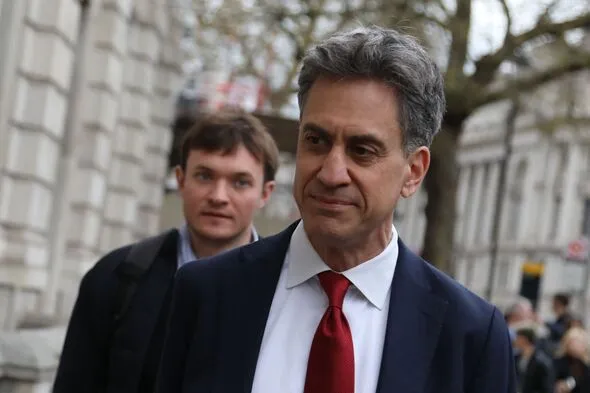
Energy Secretary Ed Miliband prepares to deliver a key speech reinforcing the UK’s shift to clean energy, despite warnings that his policies could drive up household bills during the ongoing cost-of-living pressures.
Clean Energy Acceleration Plans
Miliband commits to accelerating renewables deployment and electrifying heating and transport systems to wean homes and businesses off fossil fuels. He rejects calls for expanded North Sea oil and gas drilling, arguing that overlooking two fossil fuel crises in under five years would prove irresponsible.
Central to the strategy is severing the connection between gas and electricity prices. Gas currently influences wholesale electricity costs about 60% of the time under the marginal pricing system, where the priciest energy source dictates rates for all generators. The government proposes voluntary fixed-price contracts for legacy clean power producers, which supply roughly a third of the nation’s electricity. Tax incentives from the Treasury aim to facilitate this switch, potentially lowering consumer bills within the next year.
Critics Slam Policy as ‘Lunacy’
Claire Coutinho, Shadow Energy Secretary, criticizes the approach: “If we want people to use electricity, then we need to make it cheap, that’s the Conservative position, but Ed Miliband has instead been piling cost after cost onto people’s electricity bills.”
She highlights that fuel accounts for only 25% of electricity bills, with the remaining 75% comprising taxes, levies, and non-commodity costs imposed by the government. Coutinho advocates a plan to reduce these, saving average households £200 annually.
Douglas Lumsden, Scottish Conservative energy spokesman, calls the stance baffling: “It beggars belief that Mr Miliband is doubling down on his anti-oil and gas stance when it’s doing untold damage to our economy and energy security.” He labels ignoring North Sea resources as lunacy amid soaring fuel bills.
Broader Energy Challenges
Consumers grapple with elevated petrol prices and impending energy bill increases under the July price cap, stemming from global market disruptions linked to the US-Israeli conflict with Iran. This follows the 2022 spike triggered by Russia’s invasion of Ukraine.
Key Initiatives and Miliband’s Vision
The agenda eases transitions to electric vehicles and heat pumps through deregulation, including permitted development rights for on-street charging and simplified installations for renters and leaseholders. Officials anticipate this will meet rising demand for heat pumps, solar panels, and EVs.
Expansion of renewables on public brownfield sites, industrial areas, and railway land targets up to 10 gigawatts of capacity, enough to power five million homes.
In his address to the Good Growth Foundation, Miliband declares: “As we face the second fossil fuel shock in less than five years, the lesson for our country is clear: The era of fossil fuel security is over, and the era of clean energy security must come of age.”
He adds: “For Britain and so many other countries, clean energy is now the only route to financial security, energy security and national security.” Miliband insists on accelerating efforts: “While some have said we have gone too far and too fast, I profoundly disagree. In response to recent events, our action must now be faster, deeper and more wide-ranging.”
He further states: “To ignore one fossil fuel crisis and carry on with business as usual, as some wanted to do, was wrong. To ignore two in less than five years would be completely irresponsible.” Unlike past shocks, clean energy from domestic wind, sun, and nuclear offers a stable alternative immune to foreign conflicts.









