

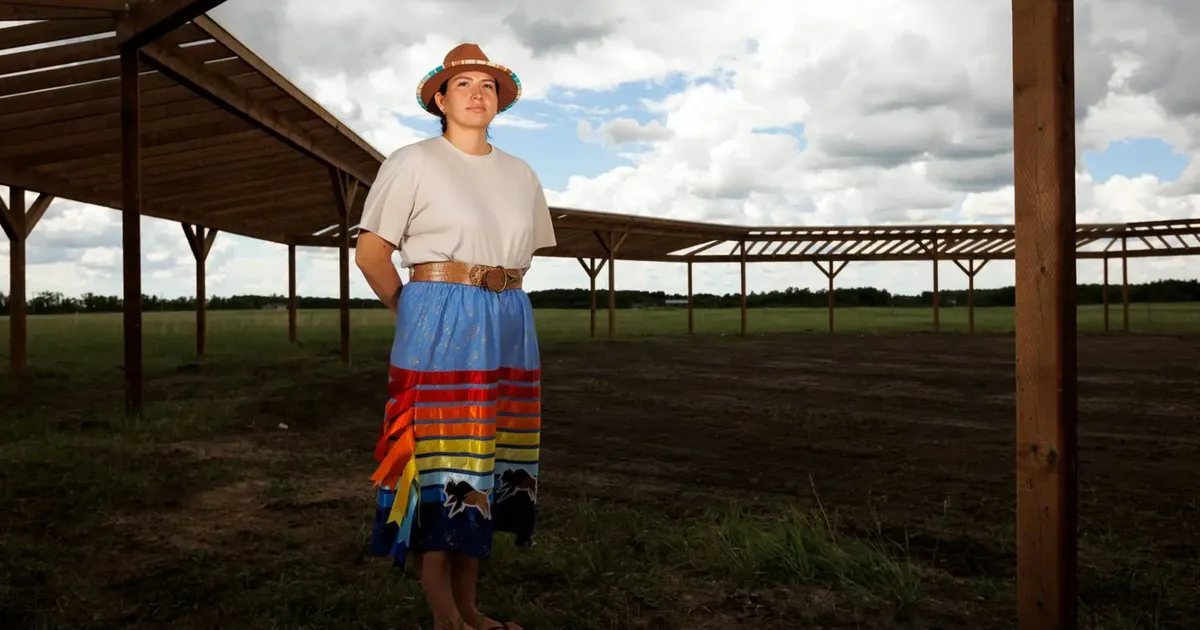
Growing Momentum Sees Indigenous Women Leading Communities
A significant shift is underway in First Nations across Canada, with women increasingly stepping into prominent leadership positions. This trend is not only reshaping community governance but also inspiring future generations of Indigenous women.
Young Leaders Emerge
Tréchelle Bunn, a member of Birdtail Sioux First Nation, exemplifies this movement. At just 25 years old, Bunn was recently elected chief of her community, a historic achievement making her both the first woman and the youngest person to hold the position. Described on the podcast “Matriarch Movement” as embodying the spirit of female leadership, Bunn is balancing law school, community governance, and national advocacy. Her ascent highlights a new era where the next generation of leaders is already at the helm.
Bunn’s journey is part of a broader national narrative. Earlier this year, the Assembly of First Nations National Chief Cindy Woodhouse Nepinak reported a record 164 female chiefs leading First Nations nationwide, a number that has since grown to 165. “First Nations women continue to guide pathways of healing, sovereignty, and opportunity,” Nepinak stated on social media, underscoring the vital role women play in community development.
Challenging Perceptions and Paving the Way
As chief, Bunn sees herself as a representative of young people and the next wave of leadership, aiming to inspire other women and girls by demonstrating what is possible. “I’m still challenging the narrative of what it looks like and what it means to be a chief,” she shared. “I think it’s also challenging society’s perception of seeing a young woman as a chief.”
This sentiment resonates across the country. Bunn noted that for decades, young women in her community lacked tangible representation in the form of a female chief they could look to as a role model. “If they can do it, so can I,” she explained, a message she hears from young people both locally and nationally.
Revival of Matriarchal Influence
In Westman, Dakota First Nations provide a clear illustration of this trend, with three out of five communities now led by women chiefs. Bunn views this not as breaking new ground but as a “beautiful resurgence” of matriarchs reclaiming their rightful place in community leadership and decision-making.
Prominent Female Chiefs in the Region
- Sioux Valley Dakota Nation is led by Chief Jennifer Bone.
- Canupawakpa Dakota Nation is headed by Chief Charlene Higheagle-Moore.
Both Bone and Higheagle-Moore were elected within the past year. Chief Bone agreed that a significant shift is occurring, noting that while women have always held important positions, they are now increasingly entering political and professional leadership roles.
Empowerment Through Entrepreneurship and Education
Chief Bone highlighted an entrepreneurial workshop held in Sioux Valley, where approximately 30 women were trained in eyelash styling, equipping them to start their own businesses. “Seeing Indigenous women taking on those roles and being successful with their entrepreneurship is inspiring for other women,” Bone stated. “I think it’s more inspiring for young women to further their education.”
Bone, who is pursuing a master of business administration degree and has a long history of involvement in Sioux Valley’s governance, believes the momentum for First Nations women will continue to grow and carry into the next generation. She recently attended an inaugural “matriarch summit” in Ottawa, bringing together female chiefs from across Canada to discuss community issues.
Strengthening First Nations Collectively
The increasing presence of women in professional and political roles strengthens First Nations communities by amplifying voices and advocacy. “I think it really helps us, not just to advance our nations, but all First Nations collectively,” Chief Bone observed. “You have more people that are advocating for you — not only politically, but financially and economically.”
Advocacy as a Driving Force
Kyra Wilson, who was elected grand chief of the Assembly of Manitoba Chiefs last year, emphasized the importance of advocacy in achieving positive outcomes. Wilson told reporters following her victory that she was a strong advocate committed to pushing for desired results. “My education, my career, my experience has always been advocating for our people. So I’ve really been able to develop the skill,” Wilson said.
Wilson became the Assembly of Manitoba Chiefs’ second female chief, following Cathy Merrick, who in 2022 became the first woman to hold the position since the organization’s inception in 1987.
A Legacy of Firsts
Chief Bunn feels the weight of responsibility as the first woman chief in her community, keenly aware of the impact her tenure will have on those who follow. “I’m hopeful that anything that I do now in this role, with the opportunities I’m given, is paving the way for those that come after me,” she expressed. “I’m maybe the first, but I’m not going to be the last.”









