

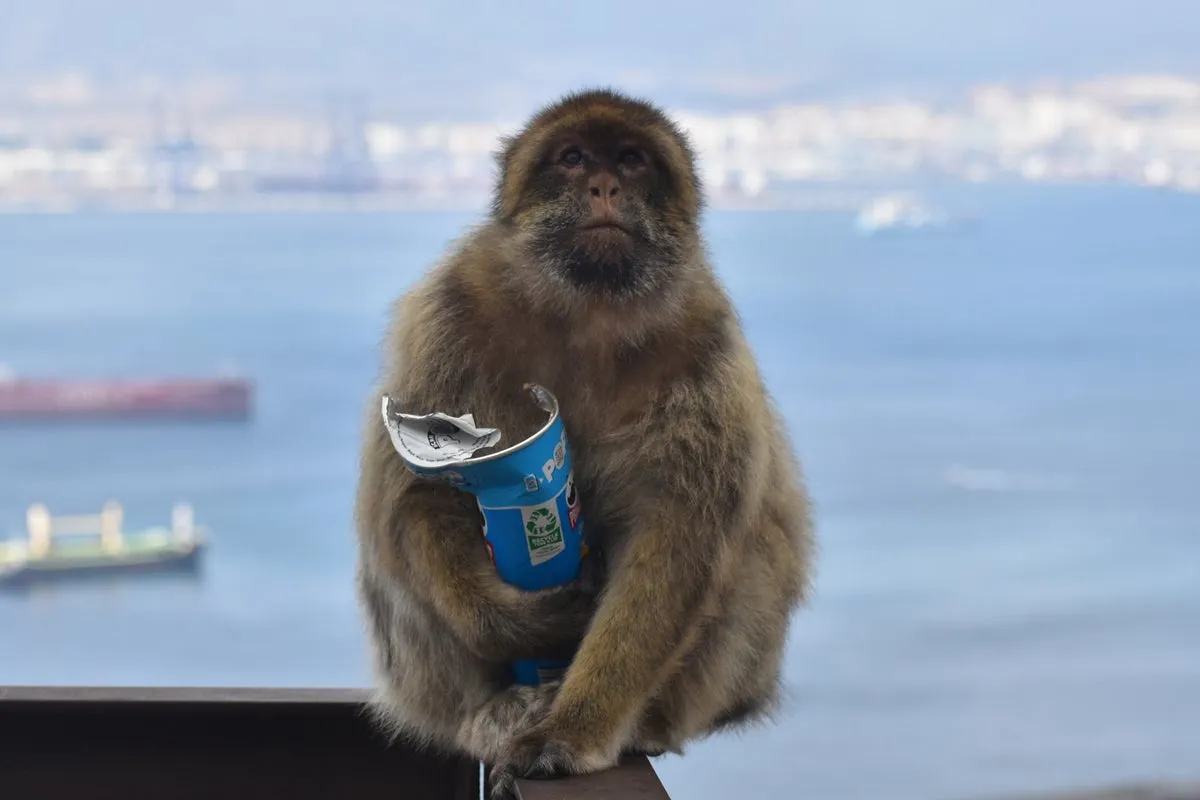
Barbary macaques in Gibraltar consume soil to calm their upset stomachs after indulging in junk food discarded by tourists, reveals new research from the University of Cambridge.
Junk Food Disrupts Natural Diets
These only wild monkeys in Europe devour sugary snacks, ice cream, and sweets, leading to digestive discomfort. Researchers observed geophagy—the practice of eating dirt—throughout the Rock of Gibraltar. Monkeys frequently encountering tourists ingest significantly more soil, with rates peaking during high tourist seasons.
Scientists suggest geophagy helps macaques counteract the high-calorie, low-fiber content of these human foods, which trigger gastric issues in primates.
“Foods from tourists consumed by Gibraltar’s macaques overflow with calories, sugar, salt, and dairy,” states Sylvain Lemoine, lead researcher. “This starkly contrasts their typical diet of herbs, leaves, seeds, and insects.”
Lemoine notes this behavior emerges both functionally and culturally, akin to nut-cracking in chimpanzees, but stems entirely from human proximity.
Official Feeding Efforts and Tourist Temptations
Local authorities supply daily fruits, vegetables, and water at feeding stations. Yet, macaques often snatch prohibited snacks from visitors. Across observations, junk food accounts for 18.8% of their intake.
Seasonal Patterns and Global Comparisons
Monkeys eat 40% less tourist food in winter compared to summer, with geophagy dropping 31%. Gibraltar’s macaques show higher dirt-eating rates than any other, except semi-feral ones in Hong Kong’s Kam Shan Country Park amid abundant human provisions.
Historical Ties to Humans
Originating from North Africa, Barbary macaques arrived in Gibraltar during medieval Moorish rule via Berber soldiers’ pets. They symbolize British presence, prompting Winston Churchill to bolster their numbers for troop morale.
“Gibraltar’s macaques intertwine deeply with human history, providing a prime example of human-primate interactions,” Lemoine explains. “Varied human contacts across groups offer a natural lab for studying how human-altered environments shape primate behavior and culture.”









