

House of the Dragon Season 3: Early Episodes Show Promise, But Action Falls Short
The initial four episodes of House of the Dragon season 3 offer a familiar, yet elevated, return to the world of Westeros. While the season effectively begins to mend the reputation tarnished by the previous season’s conclusion, a significant gap remains in the action department. Should this trend continue, the series risks mirroring its predecessor’s pitfalls by its own finale.
Key Takeaways:
- The dramatic narrative remains compelling.
- The established cast continues to deliver strong performances.
- New cast additions are a welcome and talented presence.
- Episode 3 stands out as a masterclass in storytelling.
- The season effectively sets the stage for a more impactful second half.
Areas for Improvement:
- The Battle of the Gullet does not meet epic expectations.
- A persistent lack of action remains a disappointment.
- Certain characters are not fully utilized.
Following a divisive second season, House of the Dragon faces the challenge of re-establishing its standing. While the first four episodes of season 3 demonstrate a significant effort to rectify the narrative stumbles of its predecessor, the season itself is not without its own critiques.
Fire and Ash: A Seamless Transition
Much like the aftermath of its first season, House of the Dragon season 3 picks up immediately after the events of the season 2 finale. The season opens by addressing the clandestine agreement between Queen Dowager Alicent Hightower (Olivia Cooke) and Rhaenyra Targaryen (Emma D’Arcy). This deal was intended to allow Rhaenyra safe passage to King’s Landing to claim the Iron Throne with minimal opposition, in exchange for Alicent and her daughter Halaena’s (Phia Saban) safe departure from the capital. However, as is often the case, these plans unravel in a dramatic and ultimately fatal manner.
Season 2 saw Rhaenyra task Ser Corlys Velaryon (Steve Toussaint) with blockading King’s Landing’s ports. In response, an ally of the Hightowers, House Lannister, persuades the Triarchy, an Essosi naval alliance, to support their cause and break the blockade. This sets the stage for the highly anticipated Battle of the Gullet.
The Battle of the Gullet: An Unfulfilled Promise
Despite pre-release hype from the cast and crew, the naval conflict of the Battle of the Gullet falls short of the colossal set-piece anticipated. The clash, which spans the final 25 minutes of the premiere episode, is undeniably brutal and nerve-wracking, with the devastating consequences sending shockwaves through all storylines. However, it fails to reach the intensity of landmark battles from its parent series, such as ‘The Watchers on the Wall’ or ‘The Battle of the Bastards,’ nor does it fully capture the relentless struggle seen in the ‘Hardhome’ episode.
Part of the issue lies in the intercutting of other scenes during the battle, which disrupts its flow and diminishes its impact. Although the Battle of the Gullet was originally planned to conclude season 2 but was postponed due to budgetary and time constraints, its execution in season 3, with ample time and resources, does not earn it a place among the franchise’s best battles.
This criticism extends to other action sequences. Similar to the previous season, the first half of season 3 only shows the conclusion of Daemon Targaryen’s (Matt Smith) campaign in the Riverlands, rather than a full depiction of the fighting. For House of the Dragon to overcome accusations of being light on action, a significant escalation is needed in the latter half of season 3.
Seizing the Throne: Character Arcs Shine
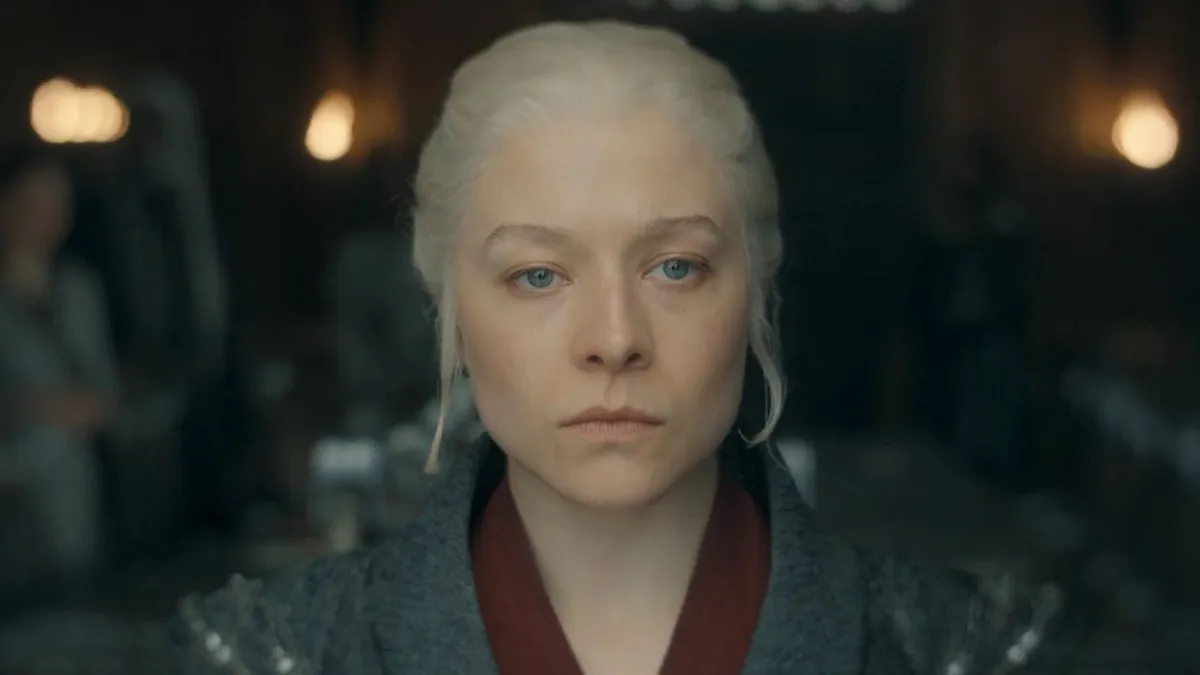
Fortunately, House of the Dragon season 3 excels in other areas, particularly in its portrayal of Rhaenyra’s emotional and psychological decline. Given the series of traumatic events she has endured, this development is unsurprising. The season 3, episode 2, delivers a particularly poignant moment that solidifies Emma D’Arcy’s powerful performance as Rhaenyra, showcasing their ability to convey immense emotional gravitas. D’Arcy further impresses as Rhaenyra navigates grief and rage, evolving into a formidable figure.
Episode 3, a character-driven installment devoid of action, stands out as a potential highlight of the season. It intensifies the pressure on Rhaenyra, laying the groundwork for a significant breakdown. This descent into madness is handled with more nuance and less abruptness than Daenerys Targaryen’s similar turn in the final season of the original series. Rhaenyra’s volatile decisions and her handling of loyal followers promise to have considerable repercussions for Westeros.
Enemy at the Gates: A Rich Ensemble
The season is far from solely Rhaenyra’s story. A diverse cast of new and returning characters injects the series with essential dramatic flair, political intrigue, and familial betrayals. The constant cycle of one-upmanship and internal family machinations ensures plenty of twists and turns to keep viewers engaged.
Fans will be pleased to see continued development in the dynamic between leading ladies Alicent and Rhaenyra. Matt Smith continues his compelling portrayal of the unpredictable and power-hungry Daemon Targaryen, whose self-serving actions, like Rhaenyra’s, are poised to backfire.
The storylines involving Aegon Targaryen (Tom Glynn-Carney) and Larys Strong (Matthew Needham) emerge as particularly intriguing subplots, even with Rhaenyra’s impending crisis. Following Aegon’s abdication and flight from King’s Landing, their journey, while not entirely novel in its execution, forces the egocentric Aegon into a humbling quest. This exemplifies the franchise’s strength in making audiences sympathize with characters they may have previously disliked.
Among the new additions, Ormond Hightower (James Norton) makes a notable entrance. As a calculating and cunning strategist, Norton imbues Alicent’s cousin with an immediately irritating yet captivating presence. His ambitious master plan promises to be a significant factor in the season’s unfolding events.
With such a large ensemble cast, some characters inevitably receive less screen time. Aemond (Ewan Mitchell) and Criston Cole (Fabien Frankel) appear to be the most affected in the first half of the season. While they have moments to shine, viewers expecting extensive roles should temper their expectations. Hopes remain that these characters will play more significant roles as the season progresses and the action elements are amplified.
Verdict: A Season of Potential
In the wake of fan dissatisfaction with the previous season’s finale and the critical success of the spin-off A Knight of the Seven Kingdoms, House of the Dragon season 3 was tasked with delivering a significant improvement. In many respects, it succeeds, offering a more polished overall package. However, its limitations are still apparent.
Should the latter half of the season address its primary concerns, particularly by delivering more substantial action sequences, a reassessment of the series’ overall quality is likely. The second season promised much regarding the destructive Targaryen civil war, the Dance of the Dragons, but largely failed to deliver. The hope is that season 3 will not be met with similar criticisms in the coming months.
House of the Dragon season 3 premieres on Sunday, June 20, in North and South America, and on Monday, June 21, in the UK and other territories.









