RBA Halts Interest Rate Hikes, Offering Borrowers a Breather
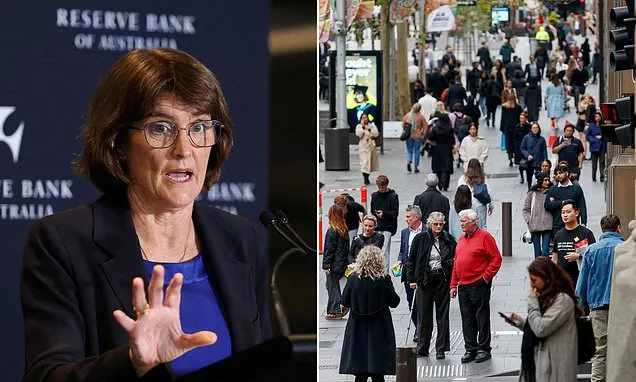
Millions of Australian mortgage holders have received a temporary reprieve as the Reserve Bank of Australia (RBA) has decided to pause its cycle of interest rate increases. The central bank maintained the cash rate at 4.35 percent on Tuesday, bringing an end to a series of three consecutive hikes that have placed significant financial strain on households.
Assessing Economic Pressures
Reserve Bank Governor Michelle Bullock announced the widely anticipated decision following two days of board deliberations. The pause comes amid growing indications that Australians are struggling with the escalating cost of living. The RBA Board stated that it was prudent to keep the cash rate target unchanged while it evaluates the impact of previous rate adjustments.
In its published decision, the board highlighted ongoing uncertainties surrounding the domestic economic outlook and inflation. “There continue to be heightened uncertainties about the outlook for domestic economic activity and inflation,” the statement read. The board also noted the early stages of conflict resolution in the Middle East, acknowledging that “plausible scenarios where inflation is higher and activity lower than envisaged” exist. Furthermore, the resolution of global oil supply issues is expected to take time, contributing to sustained upward pressure on energy prices and inflation.
Economists Weigh In on the Decision
Greg Jericho, chief economist at The Australia Institute, suggested that the RBA is now recognizing the undue hardship faced by Australian families. “Since the RBA raised the cash rate from 4.10% to 4.35% in May – the third straight rate hike – unemployment has risen to 4.5% and the March quarter National Accounts reveal household discretionary spending was already stalling before the rate rises, as households cut back in order to pay for essentials,” Jericho stated. He further contended that current inflation levels are not primarily driven by wages or consumer spending, but rather by increased profits and geopolitical events.
Angus Moore, senior economist at REA Group, pointed to declining oil prices following a recent Middle East peace deal as a factor providing some relief on inflation. “While there is still a lot of uncertainty, the fall in oil prices will have given the RBA a little more comfort in holding this month,” Moore commented. Despite inflation remaining above the RBA’s target, Moore indicated that the bank is prepared to observe the effects of the existing rate hikes. “While the RBA remains focused on inflation, and underlying inflation remains above the RBA’s target band, they are comfortable to wait and see how the effects of the interest rate hikes already in place flow through,” he explained.
Signs of a Cooling Economy
Evidence of economic cooling is becoming apparent across Australia. The nation’s housing market, once characterized by rapid price growth, is showing signs of a slowdown, with national prices flat in May and experiencing declines in Sydney and Melbourne. Household spending has also decelerated significantly after a robust end to the previous year.
Moore cautioned that the property market downturn may persist, with higher interest rates continuing to diminish borrowing capacity and exert downward pressure on prices throughout the remainder of the year. The impact of recent government budget measures, including limitations on negative gearing for existing properties, is also being felt.
The RBA’s Balancing Act
Dr. Nicola Powell, chief residential economist at Domain, emphasized that the RBA’s recent decision is less about the pause itself and more about future policy direction. “The RBA has already delivered a sharp adjustment, lifting rates three times in five months and returning policy to restrictive settings,” Dr. Powell noted. She added that these aggressive measures are impacting borrowing capacity and dampening demand, particularly in interest-rate sensitive markets.
The labor market is also exhibiting signs of strain, with rising unemployment and falling employment figures indicating a broader economic slowdown. Dr. Powell described the central bank’s current position as a delicate balancing act. “Inflation is still too high, but the economy is clearly losing momentum,” she stated. “How the Bank balances these competing pressures will be critical, not just for monetary policy, but for housing market confidence and activity over the next six to twelve months.”
Dr. Powell also warned that the RBA has not ruled out further rate increases. “The Bank is keeping the option open to move again if needed,” she said. “A significant amount of tightening is still flowing through the economy – what happens next will depend on how the balance between inflation and growth evolves.”
Future Outlook and Potential Increases
Westpac has advised borrowers not to assume the current pause signifies the end of the rate hike cycle, forecasting another potential increase as early as August. Such a move would further burden households already facing financial pressure. Data from Canstar indicates that a homeowner with a $600,000 mortgage and 25 years remaining could see monthly repayments increase by $92 with a single 0.25 percentage point hike. Across four potential hikes this year, this could amount to an additional $364 per month.
Sally Tindall, insights director at Canstar, described the outlook as highly uncertain. “It is highly uncertain which direction the cash rate will go next and when,” Tindall said. “With inflation sitting at 4.2 per cent, the RBA is likely to keep the country on notice that more hikes could still be necessary.”
David Koch, economic director at Compare the Market, urged the RBA to “take a breather,” suggesting that the latest hike may have already pushed households beyond their capacity. “I just don’t think the Reserve Bank understands how tough it is for Australian households at the moment,” Koch commented. “They’re being crunched, absolutely crunched, by the last three interest rate increases, rising petrol prices, and the uncertainty around tax changes, particularly for small business owners. It is essentially forcing everyone into hibernation.”
Koch also expressed concern about a potential spike in unemployment, describing it as a significant risk. “The latest figures showed a slight increase, but as we know, unemployment is often the last piece of economic data to deteriorate in a downturn and, when it does, it comes with a ‘bang’ out of nowhere and it’s really hard to stop.”
Conversely, NAB economist Josh Copeland anticipates that the next RBA move could eventually be a reduction in rates. “Inflation risks remain elevated… but we expect with restrictive policy and slow growth momentum, the next move from the RBA is likely to be down,” Copeland stated.