

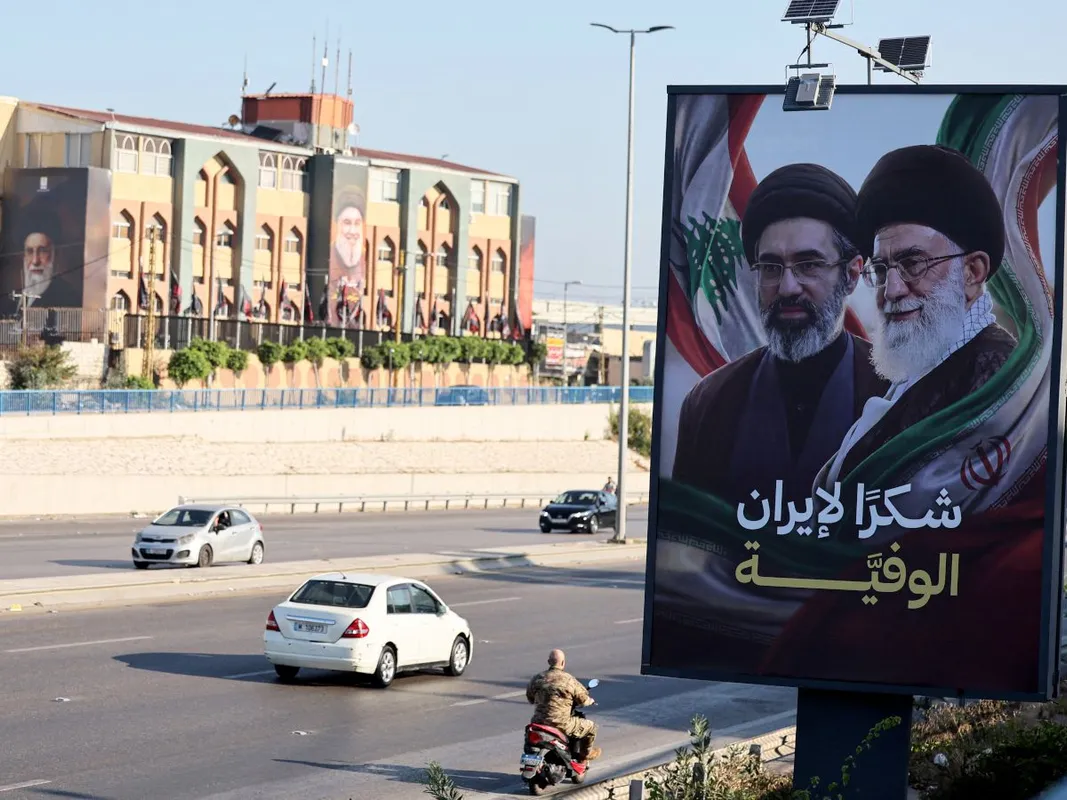
Concerns Mount Over $300 Billion Iran Investment Fund
A recent memorandum of understanding between Washington and Tehran has sparked widespread concern, particularly regarding a proposed $300 billion “reconstruction” fund. While initially perceived by some as direct financial aid to Iran, a closer examination reveals a more complex, yet potentially detrimental, arrangement.
Private Investment at the Core
Details surrounding the fund remain somewhat opaque. However, indications suggest it will primarily involve private sector investment within the Iranian market. This means American and potentially Persian Gulf financiers would deploy capital in exchange for ownership stakes in various projects. This transactional relationship is distinct from large-scale post-war reconstruction efforts like the Marshall Plan, which largely utilized non-repayable grants.
The approach bears some resemblance to former U.S. President Donald Trump’s earlier proposals for joint investment funds with Ukraine and Russia, initiatives that did not gain significant traction.
Potential Costs for American Taxpayers
Despite the private investment focus, the fund could still incur costs for American taxpayers. Investors are likely to approach a country with which Washington has recently experienced heightened tensions with significant skepticism, especially if a peace agreement appears fragile. Conversely, Iran may be hesitant to cede control over critical infrastructure, likely maintaining strict oversight of Western-backed ventures.
In such a climate, incentivizing foreign investment could necessitate U.S. government support through subsidies or government-backed loans. While these measures might represent a fraction of the total fund and could potentially benefit American entities, they would ultimately be borne by the public and create liabilities for the U.S. Treasury.
Questionable Return on Investment and De-radicalization Hopes
A key question arises: will the potential return on investment justify expanding economic ties with Iran? The assumption that increased economic engagement will lead to de-radicalization and enhanced global security is increasingly being challenged.
Following the Cold War, many Western policymakers operated under the belief that globalization and economic interdependence would foster peace. The theory posited that economic liberalization in autocratic states, coupled with rising living standards, would encourage pro-democracy movements and make conflict economically unfeasible. However, this “peace through trade” strategy has shown limitations, particularly when dealing with nations that have demonstrated a capacity for strategic maneuvering.
Lessons from China and Russia
Examples from China and Russia illustrate these challenges. For decades, China accepted substantial foreign investment while integrating its economy with the U.S. Yet, Beijing maintained stringent controls on foreign capital and joint ventures, prioritizing the consolidation of Communist Party power over political liberalization. Despite the growth of pro-democracy sentiments, these were met with suppression, mass surveillance, and violence, as tragically seen at Tiananmen Square. Instead of becoming more peaceful, China rapidly expanded its military and adopted a more assertive foreign policy, leveraging economic interdependence to limit Western responses. The current economic decoupling between China and the U.S. further erodes this supposed barrier to conflict.
Similarly, Russia experienced strong economic growth in the 2000s, partly fueled by foreign investment. This period preceded failed pro-democracy protests in the early 2010s. While Western trade was hoped to foster a more peaceful Russia, it instead contributed to Europe’s reliance on cheap Russian gas, a dependency that Moscow has exploited, particularly during the full-scale invasion of Ukraine.
Implications for Iran
Given the outcomes in China and Russia, the prospect of achieving significant reforms in Iran through economic integration appears even more tenuous. Iran, governed by a religious leadership, exhibits less ideological flexibility. Reports of the government’s violent suppression of recent protests highlight the deep ideological convictions of its rulers, making it improbable that enhanced trade alone would lead to a change in their approach to governance or human rights.
Furthermore, while the Iranian population is educated and desires democracy, the cultural impact of rapprochement through trade may be limited. The most probable outcome of a $300 billion investment fund, if launched, is the enrichment of the Iranian regime without substantial reforms, potentially setting the stage for future conflict. Additionally, the establishment of American stakeholders with financial ties to Iran could create incentives to lobby for a more conciliatory U.S. policy towards Tehran.
A Businessman’s Approach to Foreign Policy
The underlying issue may stem from a perspective that views international affairs primarily through a business lens, potentially overlooking broader cultural and political dynamics. This approach, which assumes trade deals can resolve complex geopolitical issues, appears to be a remnant of past decades and stands in contrast to more recent foreign policy considerations.









