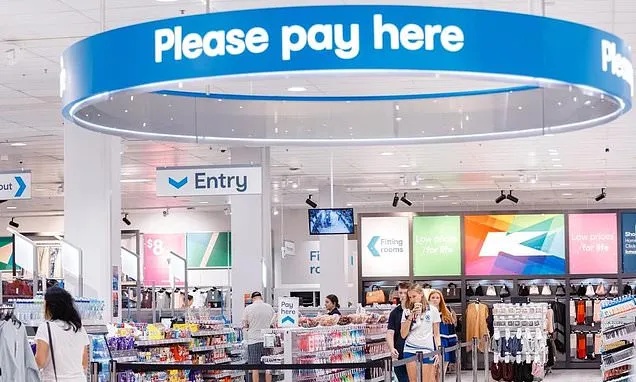
Kmart Revamps Store Layout, Bringing Checkouts Back to Entrances
Kmart is implementing a significant retail overhaul, with plans to relocate cash registers back to store entrances in a new format. This strategic shift is part of a broader refurbishment program impacting numerous Kmart locations across Australia.
The retailer is also piloting a novel concept store dedicated to home goods, aiming to explore new avenues for growth in this sector. Kmart Group managing director Aleksandra Spaseska revealed these details to industry analysts, outlining the company’s vision for enhanced customer experience and sales performance.
‘Plan C+’ Format Drives Sales and Efficiency
The updated store format, dubbed ‘Plan C+’, involves the reintroduction of entry and exit gates alongside the relocated cash registers. According to Ms. Spaseska, this configuration is already demonstrating positive results in the 16 stores that have undergone the conversion so far. These locations represent a portion of the approximately 300 Kmart stores operating in Australia.
“It is delivering improved space allocation, better visual merchandising, and an enhanced beauty experience,” Ms. Spaseska stated. She further elaborated that the new format is contributing to increased sales by fostering greater cross-shopping between different store departments, leading to customers purchasing more items per basket.
In response to these encouraging outcomes, Kmart Group is scaling up its investment in this transformation initiative. The company anticipates that by the end of the 2026/27 financial year, a total of 40 stores will be operating under this revitalized format.
Return to Entrance Checkouts After Customer Pushback
This move marks a reversal of Kmart’s previous strategy. Between 2012 and 2015, the retailer relocated its cash registers to the central areas of its stores, a decision that met with considerable criticism from customers.
New ‘K Home’ Concept Store to Debut
Beyond the store layout changes, Kmart is set to launch a new ‘K Home’ concept store in Box Hill, a suburb in eastern Melbourne. This standalone store will function as a dedicated destination for home furnishings and decor.
“It is designed to test whether we can unlock a bigger home opportunity through a more immersive format that showcases the breadth of the Anko range in a way our full line stores cannot,” Ms. Spaseska explained. The concept store will feature curated displays, room-based inspiration, and an environment designed to highlight the extensive Anko product line. It will also showcase products that are typically available online-only due to space limitations in traditional Kmart stores.
Ms. Spaseska emphasized the learning aspect of this trial. “We will use the trial to learn quickly, refine the model, and assess the longer term opportunity,” she said.
Supply Chain Enhancements and Online Marketplace Growth
In parallel with its in-store initiatives, Kmart’s 10-hectare automated customer fulfillment center in Moorebank, Western Sydney, is progressing as planned. Upon its expected opening in 2027/28, this facility is anticipated to bolster the group’s supply chain, making it more resilient, efficient, and scalable.
The retailer’s online marketplace, launched in May 2025, has also seen significant expansion, now listing 130,000 products from 90 third-party sellers.
Customer Focus on Value Amidst Cost of Living Concerns
Ms. Spaseska noted a discernible shift in customer behavior in recent months. She observed that customers have become more discerning and value-conscious, leading to a reduction in the number of items purchased per transaction.
“We can see from all of our customer data, households are very much focused on cost of living,” Ms. Spaseska stated. “It is the number one issue on their mind, and thinking about how they make household budgets work and how they find more value is really critical.”