

Minister Addresses Leaked Communications on Welfare Spending
A senior Labour minister has addressed controversial leaked messages that reveal his private concerns about party colleagues’ approaches to welfare spending. The communications, shared with Lord Mandelson last year, suggest a tension within the party regarding how to fund the growing benefits bill.
Concerns Over Taxing for Benefits
The unearthed WhatsApp messages show the minister, Pat McFadden, ing frustration that some Labour backbenchers were primarily focused on identifying individuals or groups to tax to cover benefit payments. These messages surfaced as part of a wider release of documents concerning Lord Mandelson’s past appointment as a US ambassador. The content was quickly highlighted by political opponents, including the Conservative Party and Reform UK.
Minister Explains Private Exchanges
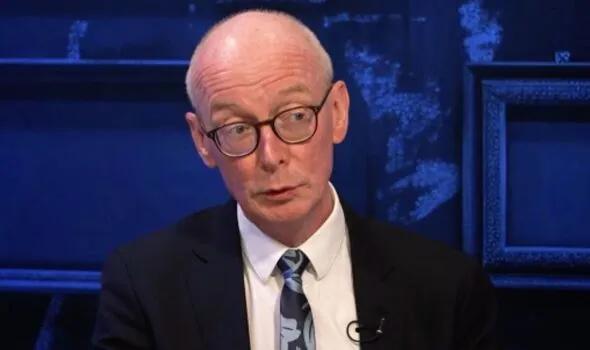
During a recent interview on GB News, the Work and Pensions Secretary characterized his exchanges with Lord Mandelson as typical political dialogue. “I’ve known Peter Mandelson for many years, and these messages are kind of back and forth about politics and Government that go on a lot,” McFadden stated. He emphasized that political discourse often involves continuous conversations, and the released material reflects this reality.
McFadden also commented on his awareness of Lord Mandelson’s past associations, noting that he was not privy to the full extent of Lord Mandelson’s ties to Jeffrey Epstein at the time the messages were sent. Lord Mandelson’s connection to Epstein ultimately led to his dismissal in September 2025.
Reframing Welfare Reform
The minister acknowledged that private messages often contain candid remarks that individuals may not expect to be made public. However, he reiterated his long-held belief, ed both privately and publicly, that the fundamental approach to the welfare system needs to evolve. “What I mean by that is we need to move from a question which just asks: what benefits are you entitled to? To a question that says: how can we help you change your life?” he explained.
He described this shift as a progressive welfare reform strategy, placing emphasis on work and opportunity. “I think that is a progressive welfare reform question, because it puts work and opportunity at the heart of what you’re trying to do. I’ve been saying that in public and in private for a long time,” McFadden added.
Concluding his remarks, the minister stressed that welfare reform should not be approached solely as a cost-saving exercise. “I don’t think you can or should do welfare reform just by saying: ‘Here’s a sum of money we’ve got to save,’ and then you graft on the policy afterwards,” he stated, advocating for a more integrated and proactive approach.









