

For many Australians, the allure of an open home is irresistible. Author Fiona Wright describes it as a window into intimate lives, offering subtle clues about the people who once inhabited the space. This fascination with real estate fueled her debut novel, Kill Your Boomers, which centers on Keira, a Sydney-based writer in her thirties grappling with the unattainable dream of homeownership. Balancing freelance work and casual babysitting to cover rent, Keira finds herself endlessly scrolling through property listings and attending open houses.
The Housing Predicament Fuels Artistic Expression
Wright’s research for her novel involved visiting numerous open homes within walking distance of her own residence. She noted a psychological shift during this period, experiencing heightened anger, envy, and a more acute sense of longing. “It was mind-blowing that that much commerce was happening so constantly in a sphere from which I was entirely locked out,” she stated.
Recent governmental proposals aim to alleviate this feeling of exclusion by making homeownership more accessible for younger generations, primarily through adjustments to negative gearing and capital gains tax breaks. However, these measures have not garnered universal support from younger demographics. While some express concern over taxes on their investments, others, like Wright and filmmaker Zoe Pepper, are channeling their experiences with the housing crisis into their artistic endeavors.
The Indignities of Renting
Wright, a long-term renter when she began writing Kill Your Boomers in 2018, cited the “indignities of renting” as a primary motivation. She recounted the exhausting process of searching for accommodation for over 12 weeks and the constant upheaval of moving. “I kept thinking about the weirdness of home ownership being so culturally ingrained in this country. And the flip side is there’s no protections for renters,” Wright explained. She contrasted this with other parts of the world where renting is a lifelong norm, often accompanied by longer leases and greater freedom to personalize living spaces, without the fear of arbitrary eviction.
While some renter protections have been introduced, such as the end of no-grounds evictions in New South Wales, Wright was struck by the evolution of the public discourse surrounding both renting and homeownership. “2018 was before we were talking about a ‘housing crisis’, but I certainly felt like I’d been living for years under the conditions that are now suddenly part of the conversation, and so had many of my friends,” she recalled.
Since the pandemic began, national house values have surged by approximately 38.4 percent, significantly outpacing wage growth, which has increased by less than half that amount. By March of last year, rental prices had also climbed, standing $177 per week higher than in March 2020.
Wright now owns a home with her partner, but her past experiences with precarity as a poet, essayist, and academic informed her novel. She opted for fiction to explore the concept of “pitting landlords and renters against each other” to its “natural”, absurd conclusion, rather than adhering to a purely political or economic framework. “It’s much easier if you can make it a fight between individual people,” Wright commented.
In Kill Your Boomers, the protagonist and her flatmates contemplate affording a home only after the death of a loved one, leading to a dark fantasy. Wright described it as a “silly revenge fantasy” that was liberating to write, allowing her to shed the self-aware style of her personal essays. “To be able to just let all of that go and have Keira be horrible, think horrible thoughts and do horrible things and also think she’s worse off than everybody around her was delightful,” she said.
A Generational Pressure Cooker
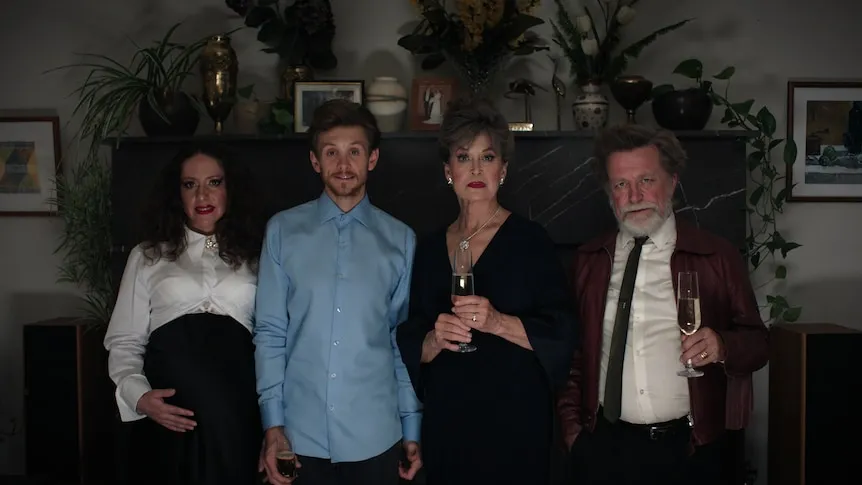
Zoe Pepper’s film Birthright also depicts a clash between generations. The story follows Cory and Jasmine, a couple in their thirties facing eviction and expecting a child, who move in unannounced with Cory’s parents, Richard and Lyn. Pepper was inspired by friends who moved back home during the pandemic, observing how these temporary stays often extended and the underlying power dynamics that emerged.
She recognized this scenario as a “microcosm for the warring between generations, the beef between millennials and baby boomers that presents itself in housing and then seeps into all facets of life.” Data from 2022 indicates a decline in homeownership across successive generations, with only 55 percent of millennials owning a home by the same age their Gen X and Baby Boomer counterparts did. Simultaneously, real weekly wages have stagnated, while housing costs have dramatically increased.
In Birthright, both couples experience frustration with each other’s perspectives. The film intentionally shifts audience sympathy as both parents and children exhibit entitled and exaggerated behaviors, driven by their inability to understand the other’s viewpoint. “It was definitely a conscious choice to make it keep shifting, so your allegiances don’t really settle,” Pepper stated. “It’s the worst of everyone.”
Pepper, drawing on her theater directing experience, masterfully balances comedy and tragedy. She chose to make Birthright a film, with the confined setting of Richard and Lyn’s home amplifying the “pressure cooker” tension. “To make it work, there needs to be that isolation so these characters descend into their own flavour of madness,” Pepper explained.
The film’s exploration of the housing crisis, a topic that has intensified since Pepper began writing it in 2021, also contributed to its feasibility. “That was when things started to go insane: Average time on the market for a house was like five days,” Pepper recalled. “You’d spend more time buying jeans than buying a house.” She expressed initial concerns about the film’s relevance if the housing market cooled, but instead, the situation worsened.
Pepper hopes Birthright will resonate with millennials and their parents. Since its premiere at the Tribeca Film Festival in 2025, she has observed varying audience reactions based on generational and regional differences. “I find the worse the housing crisis in the city, the harder the laughs,” she noted. “And if there’s a balance of generations, the tragedy lands in a different way. It carries more weight. If it’s predominantly millennials [in the audience], it lands as more of a straight-up comedy.”
A Broader Artistic Landscape
Wright and Pepper are not alone in their artistic engagement with the housing crisis. Ellena Savage’s novel The Ruiners and Ian Strange’s photographic works exploring suburban homes also address themes of home and belonging. Alana Hunt’s exhibition A Deceptively Simple Need directly tackled the crisis with letters addressed “To the Owner (of multiple properties),” requesting a decade of free housing.
Wright suggests that as millennials age, their preoccupation with the housing crisis intensifies. “There are so many narratives or expectations about what we expected to have achieved or earned or to own by this time in our lives and instead we’re watching those things become increasingly more impossible,” she remarked. “It really does feel like: What are any of us supposed to do?”
Pepper believes the artists’ focus extends beyond housing to the psychological impact of this predicament. “We internalised this worldview from our baby boomer parents [of meritocracy and hard work] and we came of age and realised that worldview doesn’t stack up anymore,” she explained. “That’s where the art comes from.”
Birthright is currently in cinemas. Kill Your Boomers is published by Ultimo Press.









