

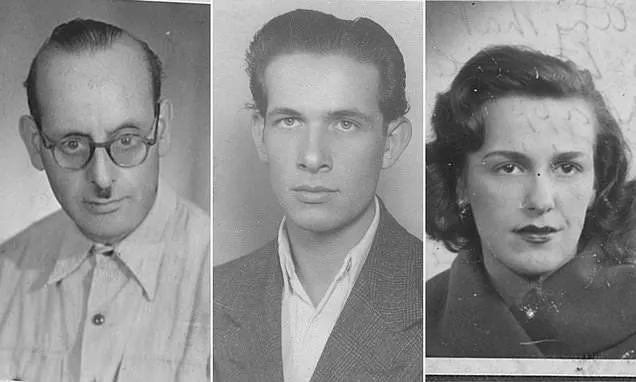
In 1935, Erna Bernstein prepared dumplings in her central Berlin tenement flat when Gestapo officers arrived. They demanded she divorce her Jewish-born husband, Sigi, claiming it would improve their children’s lives. Erna refused, determined to keep her family intact.
Sigi faced rejection from his parents after marrying Christian-born Erna. The couple raised Heini and Edie in a secular working-class home, attending neither synagogue nor church. Nazi racial laws branded the children ‘Mischlinge’—a term implying inferiority—and treated them as Jews.
Intensifying Racial Persecution
Month by month, anti-Semitic decrees escalated, making daily life intolerable for Jews and Mischlinge. Edie shared her story with daughter Sharon late in life, revealing a black box containing brother Heini’s unread memoir: ‘That’s your Uncle Heini’s memoir. I’ve never read it, because I know it will be painful. I know it, because I was there too.’
Edie’s Hardships in Berlin
Teachers expelled Edie from school at age 12, stating they did not want her mixing with the Aryan race. Malnutrition and fear of street violence caused rickets, confining her indoors. At 16, authorities forced her into slave labor, scavenging Berlin bomb sites littered with human remains for 12 hours daily.
As Soviet forces entered in 1945, Edie narrowly escaped rape by a Russian soldier who assaulted the woman beside her.
Heini’s Resistance and Imprisonment
Handsome and resourceful, teenage Heini worked as a plumber and defied curfews to visit non-Jewish girlfriend Margot. Gestapo agents arrested him in 1943, subjecting him to interrogation before an ‘educational camp’ with 12-hour railway shifts in -10°C conditions.
Guard Sergeant Franke showed rare humanity, permitting postcards home and exchanges for cigarettes and food using found coupons. Erna visited, bringing socks, a pullover, and boots. During a pursuit of an escaped Russian, Heini attempted flight but returned without a ration card.
Punishment followed: demotion to SS dogsbody, whistling orders including counting 25 lashes on a prisoner tied to a flagpole. Transported to Buchenwald amid gallows executions, Heini posed as an electrician alongside Czech prisoner Frantisek. He endured 25 lashes for missing pliers—lent to Russian escapees—and agony on bare-wire beds.
Liberation and Family Survival
The Nazi regime collapsed after 12 years. On April 1, 1945, SS guards vanished during Heini’s forced march from Buchenwald, harnessed to trailers. Freed prisoners seized sausages and tobacco from the loads.
Father Sigi endured forced labor in Auschwitz, emerging skeletal. Liberation left him too weak for the 350-mile trek home immediately. Returning to Berlin, he found their flat destroyed by Allied bombing; Erna resided in a former Nazi-owned apartment. Miraculously, the entire family survived.
New Lives After the War
Venturing to the countryside in summer 1945, Edie—never before leaving Berlin—met English soldier Jimmy Ring on a lane. Five days later, he declared, ‘I’m going to marry you.’ They wed, relocated to London, welcomed daughter Sharon, and later purchased a three-bedroom home in Enfield using German compensation.
Heini, Sigi, and Erna relocated to Palestine but returned to Germany due to homesickness. On August 13, 1961, the Berlin Wall rose overnight, stranding Heini on the east side while his parents remained west.
Edie reflected to Sharon: ‘That man [Hitler] didn’t dominate my life. I made it a happy one, and gave you a happy life, too, my daughter. That was my triumph.’
This account, viewed through siblings with two Jewish grandparents, illuminates Holocaust survival amid Nazi racial policies.









