Budapest, February 17, 2026 — Public sentiment in Hungary favors ousting Prime Minister Viktor Orbán in favor of a younger challenger who vows to tackle corruption, revitalize the economy, and repair ties with the European Union ahead of the April 12 election.
Tight Polls Signal Uphill Battle
Recent data from the Idea Institute reveals a challenging landscape for Orbán. Among decided voters, 38 percent support Orbán’s Fidesz party, while 48 percent back challenger Péter Magyar, a former government insider leading the center-right Tisza party. Notably, 24 percent of all voters remain undecided.
Trump’s Key Endorsement
Orbán positions U.S. President Donald Trump as a crucial ally. Trump publicly endorsed him on social media February 5, echoing support from the previous election four years ago. This alliance stands out as Europe’s leaders voice concerns over Trump’s stances on Greenland, Ukraine, and NATO commitments.
Rubio’s Budapest Visit Reinforces Ties
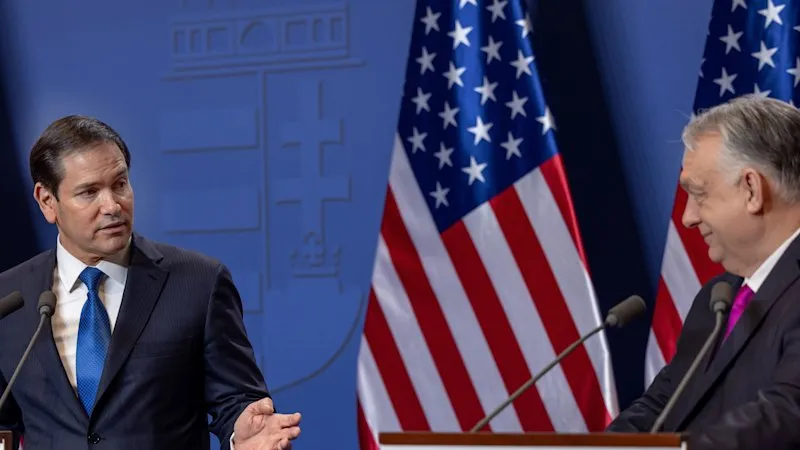
U.S. Secretary of State Marco Rubio visited Budapest on Monday, joining Orbán on stage to herald a “golden age” in U.S.-Hungarian relations. At a joint press conference, Rubio emphasized the partnership’s importance.
“President Trump is deeply committed to your success because your success is our success,” Rubio stated. “This relationship in Central Europe is essential for our national interests. If you face financial struggles or threats to stability, President Trump will be very interested—through your personal ties.”
Rubio highlighted potential U.S. aid in areas like finances to bolster Hungary’s growth and security.
History of U.S. Assistance
Orbán touted a “financial shield” from the U.S. after White House meetings last November. Trump recently approved a currency swap for Argentina’s President Javier Milei in October, which U.S. Treasury Secretary Scott Bessent noted profited taxpayers. Last year, Trump exempted Hungary from sanctions on Russian oil and gas, vital for the landlocked nation’s energy needs via pipelines.
Orbán’s Long Tenure and Strategy
A seasoned politician, Orbán entered parliament in 1990 after communism’s fall and served as prime minister from 1998 to 2002. He returned to power in 2010, securing re-elections in 2014, 2018, and 2022. Facing headwinds, he intensifies criticism of EU leaders and Ukrainian President Volodymyr Zelenskyy.
While many European nations distance from Russia, Orbán visits Moscow frequently, including last November and July 2024. Russian President Vladimir Putin welcomed him warmly, stating on camera, “We are aware of your balanced position on the situation in Ukraine.”
Broader European Echoes
Orbán’s staunch anti-immigration views, blaming Brussels for lax policies, align with Trump’s warnings of Europe’s “civilisational erasure.” Similar sentiments appear in Britain’s Reform UK led by Nigel Farage, France’s National Rally with Marine Le Pen and Jordan Bardella, and Germany’s AfD under Alice Weidel.
An Orbán victory would sustain a prominent Trump supporter in Europe amid others’ caution. Trump engages selectively, backing allies like Japan’s Prime Minister Sanae Takaichi last week, defying norms on foreign elections. The coming months will test the depth of this transatlantic populist support.