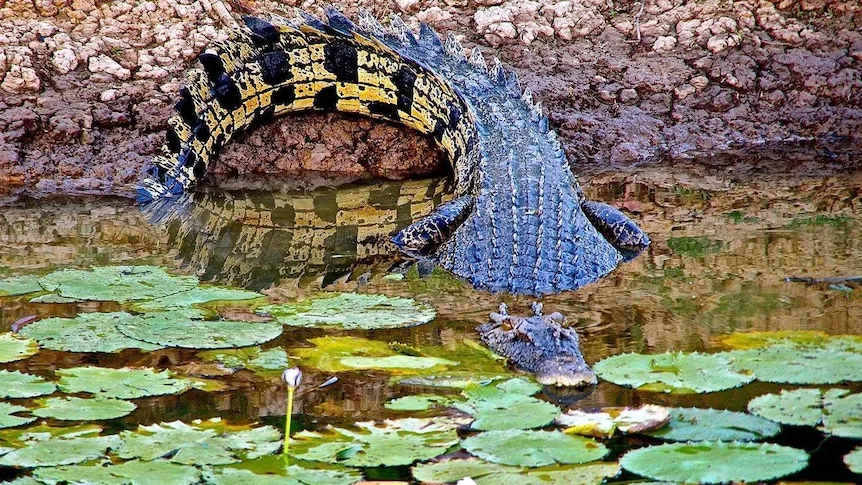
Crocodile detection cameras powered by artificial intelligence undergo road testing in Queensland. Successful trials could transform monitoring at boat ramps and marinas, with plans to expand the technology for estimating animal sizes.
The Prototype and Field Trials
Researchers develop a prototype AI system that scans live-streamed footage from cameras on movable trailers to automatically detect crocodiles in north Queensland waters. The Department of Environment, Tourism, Science and Innovation (DETSI) and James Cook University (JCU) collaborate on the project.
Over the next year, three week-long proof-of-concept trials assess accuracy in northern Queensland locations. DETSI senior conservation officer Daniel Guymer notes that crocodile density influences site selection to ensure sufficient data on animal movements.
“Somewhere we’re going to get a solid number of movements through the array to be able to glean the effectiveness of the technology,” Guymer said.
DETSI invests $359,000 since January 2025 and supplies thousands of videos for AI training. JCU researcher and project lead Tao “Kevin” Huang states the trials will guide improvements, targeting at least 70 percent accuracy after achieving reasonable initial results.
Key Challenges for AI Detection
Huang highlights difficulties like light reflections on water, varying conditions, and floating logs or debris resembling crocodiles.
“This system is designed to support early detection, trying to provide an additional layer of monitoring, but people should always follow the existing safety advice,” Huang said.
The technology aims to outperform human observation but requires complementary measures. Guymer emphasizes pairing cameras with underwater methods like sonar in the future, while stressing personal responsibility for safety.
Expert Insights on Reliability
Barry Brook, from the University of Tasmania’s Biological Sciences faculty, praises object-detection AI’s growing role in ecology. He stresses diverse training data to handle flooding, debris, and weather variations.
“The more variety, the more of the total distribution of possible things that the camera could see are covered in that training data, the more reliable it’s going to be,” Brook said. He warns against biased data focusing on factors like water color or turbidity.
Ferdous Sohel, AI professor at Murdoch University, views the project as valuable for marine and wildlife detection despite limitations.
“If we say that the crocs are coming to these waters 100 times, and we are able to detect them 90 percent of the time, that’s still a lot of safety,” Sohel said.
Sohel advocates human confirmation on detections and thorough training data, noting pre-processing techniques can mitigate glare, ripples, and murky water.
Potential Safety Impact
Huang envisions deployment at public boat ramps and marinas if trials succeed, enhancing crocodile management as one of several DETSI innovations.