

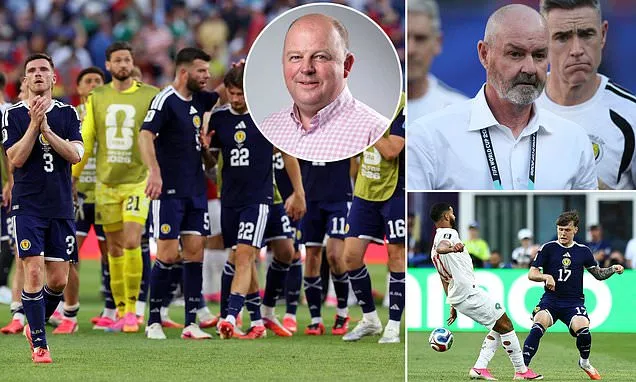
Scotland’s Knockout Hopes Hinge on Tactical Shift
Despite performances that have left much to be desired, Scotland’s path to the World Cup knockout stage remains statistically probable. Even a narrow defeat against Brazil could be sufficient, given the current landscape of international tournaments. However, the prospect of advancing through a less-than-convincing tactical approach is a grim one.
Cautious Tactics Under Scrutiny
Manager Steve Clarke’s inclination towards a defensive posture is a significant concern. The approach adopted against Morocco, which prioritized nullifying the opposition’s threats, resulted in a nervous and largely ineffective performance. The team appeared overwhelmed, reminiscent of their struggles in the opening match of the previous Euros against Germany.
The decision to deploy Kieran Tierney in an unfamiliar midfield role, ostensibly to counter Morocco’s wing-backs, was a tactical gamble that backfired. It stifled the team’s attacking potential, particularly by benching Ben Gannon-Doak, the squad’s primary source of pace and an effective outlet. The first half against Morocco was characterized by a lack of cohesion and possession, with key players like Scott McTominay and Che Adams isolated.
Embarrassing and Demoralizing Performance
The narrow victory over Haiti, while secured, did little to inspire confidence. The subsequent display against Morocco, culminating in a decisive early goal for the opposition, was both embarrassing and demoralizing. It underscored a worrying trend: the team is not defensively robust enough to consistently eke out results through a purely defensive strategy.
The second half against Morocco offered a glimmer of hope, suggesting that a more proactive approach, aimed at relieving pressure and getting the ball forward, might be the most effective route to success. The question remains whether Clarke is willing or prepared to adopt such a strategy from the outset, especially against a formidable opponent like Brazil. His reluctance to introduce changes earlier in past matches, such as against Hungary in the Euros, raises concerns.
Shifting Focus to Offensive Potential
While acknowledging Brazil’s individual talent, it’s evident that Scotland cannot solely build game plans around negating opposition strengths. A greater emphasis must be placed on Scotland’s own attacking capabilities, transitions, and maximizing the impact of their key players. The team needs to shift from showing excessive respect to higher-ranked nations to imposing their own game and engaging in a battle.
Despite perceived limitations in central defense and upfront, the squad possesses a belief in their ability to compete at this level, as expressed by players like Ryan Christie. The challenge lies in accentuating these positives and playing with confidence on the front foot.
Leveraging Fan Support and Key Players
The passionate Scottish fanbase in the United States represents a significant asset that should be utilized as a weapon. The shift in atmosphere during the latter stages against Morocco, when the team adopted a more attacking stance, demonstrated the impact of an energized performance on the crowd.
For the upcoming match against Brazil, the inclusion of winger Ben Gannon-Doak is crucial. While not without imperfections, his ability to unsettle defenders and create moments of magic is unparalleled within the squad. Scott McTominay should also be deployed in a more advanced role, supporting the lone striker Che Adams, whose movement can create space for others.
Formation and Personnel Considerations
A 4-2-3-1 formation could offer tactical advantages. In goal, Angus Gunn is expected to start. The return of Aaron Hickey at right-back would be beneficial, given Nathan Patterson’s lack of recent game time. Andy Robertson is a natural fit at left-back, with Jack Hendry in central defense. Grant Hanley, despite questions surrounding his form and lack of recent match action, remains a favored option for Clarke.
Lewis Ferguson’s presence in central midfield is vital for his discipline and physicality, potentially alongside Kenny McLean, who showed promise as a substitute. John McGinn would operate on the left, with Gannon-Doak on the right, and McTominay pushing forward to support Adams.
A Call for Boldness
Regardless of officiating controversies, the imperative for Scotland to adopt a more adventurous style of play is clear. Continuing with a fearful, defensive approach, even if it leads to qualification, will likely result in a premature exit from the knockout rounds. The team must learn from past tournaments and embrace the attacking impetus shown against Morocco in the latter stages. This approach, while at times chaotic, managed to unsettle the opposition and energize the Tartan Army, proving that a bolder strategy can yield positive results and create memorable moments for the fans.









