Volcanic Eruption Diversity Explained by Superheated Magma Dynamics
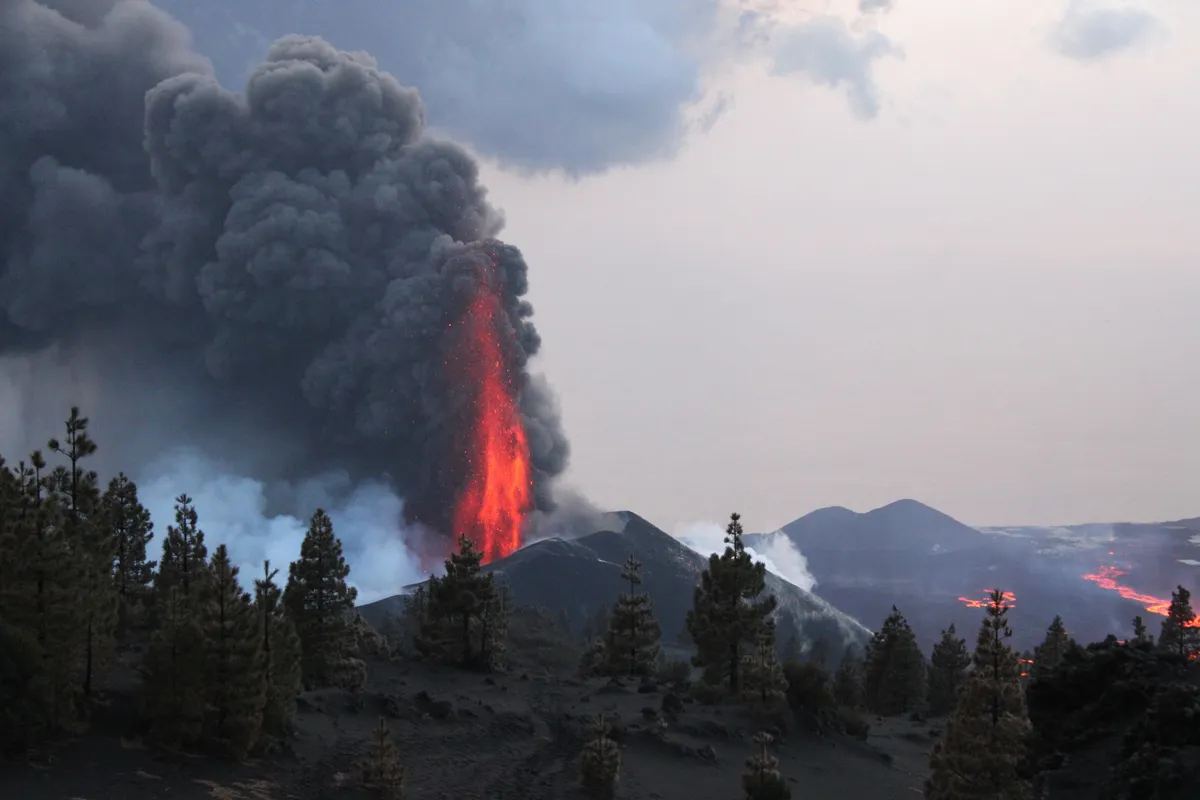
Scientists have uncovered a crucial thermal process within magma that may finally clarify why volcanically similar systems can exhibit vastly different eruption behaviors. A recent international study, spearheaded by researchers at The University of Manchester, examined magma from the 2021 Tajogaite eruption on La Palma, Spain. Their findings point to “superheating”—a condition where magma exceeds the temperature at which its crystalline components are stable—as a significant factor in delaying crystal formation as magma ascends toward the Earth’s surface.
Crystal Formation Delays and Eruption Styles
The research, published in Nature Communications, reveals that elevated temperatures can effectively dissolve pre-existing microscopic crystal “seeds.” These seeds typically act as nucleation points, initiating the formation of new crystals. Without them, and with a restructured, more uniform magma interior, the conditions become less conducive to new crystal growth. This phenomenon directly impacts how rapidly magma rises and how easily volcanic gases can escape, both of which are critical determinants of an eruption’s explosivity.
This work addresses a long-standing scientific puzzle concerning the influence of a magma’s thermal history on crystallization processes occurring before and during eruptions.
Laboratory Insights into Volcanic Processes
Dr. Barbara Bonechi, a lead author and Research Associate at The University of Manchester, emphasized the significance of crystal and bubble growth dynamics. “The history of crystal and bubble growth can dramatically control how a magma erupts,” she stated. “In particular, as more crystals grow, they eventually have a dramatic effect on magma viscosity. Until now, we did not fully understand the dynamics of crystal growth for magmas that received an injection of superheat just before ascent.”
To gain these insights, the team employed a novel X-ray transparent pressure vessel coupled with synchrotron X-ray microtomography, enabling direct observation of these processes in real-time. They replicated volcanic conditions in a laboratory setting using magma from the Tajogaite eruption, which is believed to have undergone some degree of superheating before and during its ascent.
Experimental Observations and Numerical Modeling
Using synchrotron X-ray microtomography at Diamond Light Source for real-time crystallization observation, complemented by longer-duration experiments in Prague, the researchers meticulously tracked crystallization processes under controlled high-temperature and high-pressure environments. Their experiments demonstrated a stark difference: magma not subjected to superheating began crystallizing within approximately 20 minutes. In contrast, magma exposed to significant superheating exhibited delayed crystal formation for over eight hours.
These experimentally determined nucleation delays were then integrated into numerical models designed to simulate magma ascent. These simulations predict magma’s movement and evolution as it travels through the Earth’s crust. The modeling results indicated that prolonged crystallization delays allow magma to ascend rapidly while maintaining a relatively fluid state, potentially leading to dramatic lava fountaining. Conversely, magma that crystallizes earlier becomes more viscous and rises more slowly, allowing more time for gases to dissipate and favoring gentler, effusive eruptions.
Improving Volcanic Hazard Assessment
These findings hold the potential to enhance how scientists interpret volcanic monitoring signals and forecast eruption behavior. Dr. Margherita Polacci, a Senior Lecturer in Volcanology at The University of Manchester and a co-author, noted, “Current volcanic hazard models typically focus on magma chemistry, gas content and pressure changes. This work suggests that pre-eruptive thermal history and crystallization kinetics may also play an important role in controlling magma ascent and eruptive behavior, with implications for volcanic hazard assessment.”