

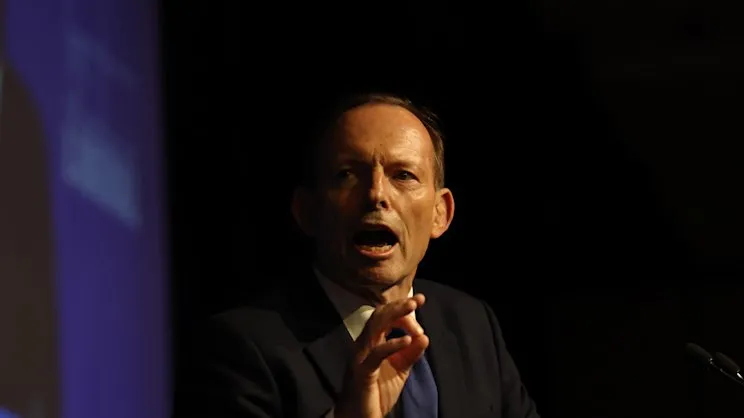
Liberal stalwart Tony Abbott has been elected unopposed as the party’s federal president, a move that has ignited debate about its potential impact on the current opposition leadership. The position, traditionally a behind-the-scenes role requiring subtle negotiation, stands in stark contrast to Abbott’s renowned assertive and conviction-driven political style.
Abbott’s Unopposed Presidency
The former Liberal leader and prime minister secured the federal presidency last Friday. This significant appointment places Abbott back in a prominent party role for the first time since losing his seat in Warringah in 2019. Despite the typically understated nature of the role, Abbott’s election is seen by some as a strategic move by the Liberal Party leadership to leverage his considerable public profile and experience during a period of perceived existential crisis.
A Return to the Spotlight
While Abbott initially indicated a desire to avoid daily media engagement, he quickly reappeared in the public eye. Appearances on national television and radio programs saw him articulate familiar policy positions with his characteristic rhetorical skill. His messaging focused on key concerns for conservative voters, including the potential scrapping of new government taxes, curbing migration, and addressing broader economic issues. Abbott stated he did not anticipate daily media involvement but suggested his presidency could reassure skeptical voters about the Coalition’s commitment to these policies.
Potential for Overshadowing
This renewed media presence has raised questions about whether Abbott’s robust public engagement could inadvertently overshadow the current opposition leader, Angus Taylor. Political observers note Abbott’s ability to distill complex issues into concise, impactful slogans, a skill that proved highly effective during his time as opposition leader. The concern is that Abbott’s strong voice and established public persona might detract from Taylor’s efforts to establish his own leadership credentials and connect with voters.
The dynamic is complex. Abbott’s supporters view him as a principled patriot capable of dissecting government policy with precision. Critics, however, point to his past prime ministership, marked by culture wars and controversial decisions, questioning his suitability for a unifying party role. His election as president, coupled with his subsequent media activity, is being interpreted by some as a critical juncture for the Liberal Party, with internal strategies aimed at regaining public trust and electoral favor.
The Leadership Challenge
The Liberal Party is currently facing a challenging political landscape, with polling indicating a surge in support for alternative parties. Abbott’s return to a leadership position within the party, particularly his active engagement with the public, presents a potential double-edged sword. While intended to galvanize support and project strength, it risks creating a perception of divided leadership or a dependence on past figures, potentially undermining the current opposition leader’s efforts to present a fresh and authentic vision for the party.
The effectiveness of this strategy will likely depend on the delicate balance between Abbott’s public advocacy and Taylor’s ability to assert his own leadership. The coming months will reveal whether this high-profile return serves to bolster the opposition or inadvertently distracts from its core messaging and leadership aspirations.









