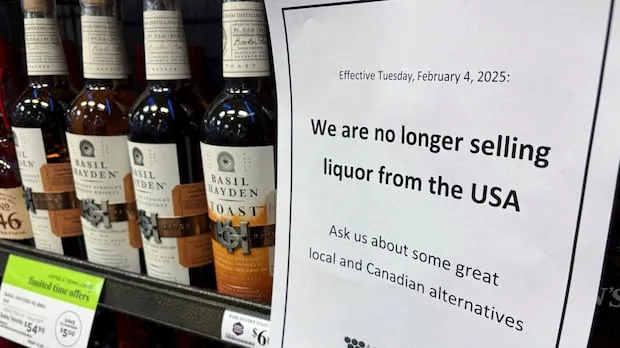
Provincial restrictions on alcohol sales and the federal “Buy Canadian” procurement policy emerge as major trade irritants between the United States and Canada, according to the latest annual reports the Office of the United States Trade Representative.
Challenges for U.S. Alcohol Exports
Market access barriers enforced by provincial liquor control boards significantly hinder exports of American wine, beer, and spirits. Several provinces removed U.S. alcohol products from shelves last year following tariffs imposed by U.S. President Donald Trump. The U.S. demands the immediate and permanent restoration of these products across all Canadian markets.
Concerns Over ‘Buy Canadian’ Procurement
The federal “Buy Canadian” policy prioritizes Canadian products and workers in government contracts valued at $25 million or more. U.S. companies report difficulties competing, including requirements to disclose board of directors’ information or demonstrate independence of Canadian subsidiaries from U.S. parent companies.
Additional Trade Hurdles
The report also highlights delays in aircraft validation processes in Canada and steep tariffs on U.S. dairy imports exceeding quota levels, such as 245% on cheese and 298% on butter. U.S. goods exports to Canada reached $336.5 billion in 2025, a nearly four percent decline from 2024, with Canada ranking as the second-largest U.S. export market.
Lagging Trade Negotiations and CUSMA Review
Negotiations with Canada for the mandatory review of the Canada-U.S.-Mexico Agreement (CUSMA) trail those with Mexico. U.S. Trade Representative Jamieson Greer noted that discussions with Mexican counterparts progress as the Trump administration seeks modifications to the pact, originally negotiated to replace NAFTA.
CUSMA has protected Canada and Mexico from broader 10% tariffs on compliant goods, though sectors like steel, aluminum, autos, lumber, and cabinets face separate duties. The administration initiated Section 301 investigations into forced labor in supply chains, including Canada, following a Supreme Court decision limiting presidential tariff authority.
The report criticizes Canada’s enforcement of forced labor import bans, suggesting ineffective measures allow such goods to enter the market and potentially lower costs unfairly.
Greer has pointed to persistent barriers, including provincial alcohol restrictions, complicating bilateral talks. The U.S.-Canada relationship strains under ongoing tariffs and annexation threats.
CUSMA’s Uncertain Future
With the CUSMA review underway, President Trump deems the agreement irrelevant and potentially obsolete. Greer proposes replacing it with separate bilateral deals. Countries face a July decision: renew for 16 years, withdraw, or opt for annual reviews extending up to a decade. Ottawa and Mexico City prioritize preserving the trilateral framework, evidenced by recent high-level trade missions.