

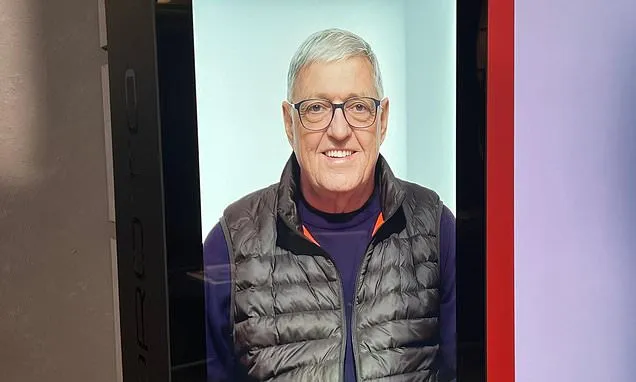
A 78-year-old widow astonished around 200 mourners at her husband’s wake by unveiling a lifelike hologram of him as the centerpiece of the event.
Pam Cronrath, married to Bill for nearly 60 years until his death at age 75, delivered on her vow for an unforgettable farewell. “I promised him a super wake!” Ms. Cronrath declared.
The Hologram’s Dramatic Entrance
The gathering took place in Wenatchee, Washington, a scenic rural community in the Cascade Mountains foothills. Attendees paid respects unaware of the surprise ahead. Suddenly, a waist-up, life-sized hologram of Bill materialized, addressing the room directly.
“Now, before anyone gets confused, I’m not actually here in Valhalla today,” the hologram announced. It then engaged the crowd: “Is this going to be fun?”
Inspiration Behind the Tribute
A lifelong technology enthusiast, Ms. Cronrath drew inspiration from a medical conference where a doctor’s hologram broadcast live from across the country. “I was completely impressed,” she recalled.
After Bill’s passing, she sought to recreate that impact. Securing assistance proved challenging on short notice and a modest budget. Many firms focused on high-profile clients like celebrity estates balked at the scale. “When you hear they’re working with Michael Jackson’s estate, and then it’s me—Pam from Wenatchee—you do wonder how it’s going to work,” Ms. Cronrath noted.
Ultimately, U.S.-based specialists Proto Hologram and Hyperreal stepped in, despite costs escalating 10 to 15 times her initial $2,000 budget. They crafted the avatar from existing recordings of Bill’s voice and likeness. With no new footage possible, Ms. Cronrath scripted the content herself.
The hologram went beyond a monologue, featuring a scripted Q&A led by Bill’s nephew. Some guests mistook the interaction for live, leaving them stunned. “People were aghast. Some genuinely couldn’t understand how it was happening,” Ms. Cronrath shared.
Grief Tech’s Growing Role and Concerns
Recent advancements in grief technology offer new avenues to connect with departed loved ones. AI-driven chatbots mimic appearances, speech, and conversations, enabling ongoing simulated interactions.
Yet experts caution that such tools may disrupt natural mourning and cause lasting harm. Cambridge University researchers warn that ‘deadbots’ could digitally haunt survivors.
Ms. Cronrath emphasizes her hologram served as a temporary comfort, not a substitute. She still views the recording months later, likening it to cherished photos or home videos. “When you’re hurting, it helps to feel like that person is still right there with you,” she said.









