Experts warn that summer holidays to Mediterranean destinations face severe disruptions from an ongoing jet fuel crisis, as the Strait of Hormuz remains closed following Iran’s blockade on February 28. Safety concerns, including undersea mines, keep the vital route—supplying 20% of global oil and liquefied natural gas—shut to shipping. U.S. President Donald Trump imposes a counter-blockade on Iranian ports.
Airports Nearing Critical Fuel Shortages
European airports stand three weeks from systemic jet fuel shortages unless the strait reopens fully. Leisure hubs in Spain, Greece, and Italy operate on slim fuel reserves, making them prime targets for impacts. Asian airports also risk disruptions due to heavy reliance on Gulf supplies.
The International Energy Agency reports global jet fuel demand at 7.8 million barrels per day in 2025, with Gulf exports averaging 400,000 barrels daily. Europe depends on the Middle East for 75% of its net jet fuel imports. Spain exports surplus fuel, but the UK— the region’s top consumer—imports 65% of its needs, including four million tons annually from Kuwait. Recent attacks on Kuwait’s Mina Al-Ahmadi refinery threaten output even if shipping resumes.
Current stockpiles exceed 29 days of demand, the highest since 2020. Full replacement of Middle East imports sustains supply through 2026. However, replacing only 75% drops stocks below the critical 23-day threshold by August, while 50% replacement triggers shortages by June.
EU Entry/Exit System Sparks Major Delays
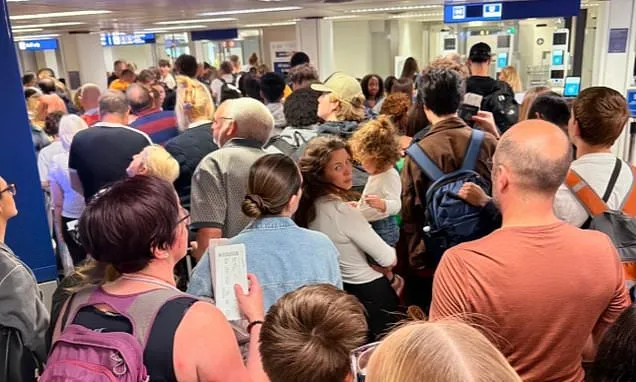
Meanwhile, the EU’s new Entry/Exit System (EES) causes ‘very bad’ delays at 15 major airports across France, Germany, Belgium, Italy, Spain, and Greece. Travelers from non-Schengen countries, including the UK, endure up to three-hour waits for fingerprints and photos on entry and exit.
Olivier Jankovec, director of Airports Council International (ACI) Europe, states, ‘This situation, in the coming weeks and certainly over the peak summer months, is going to be simply unmanageable.’ Peak queues emerge as traffic builds.
Chaos peaked in Milan Linate, where heat left passengers vomiting and fainting after three-hour waits. Around 100 easyJet passengers to Manchester were stranded when crew departed without them. Delays also hit Geneva, Lisbon, Malta, Brussels, and Amsterdam over the weekend.
Rory Boland, editor of Which? Travel, predicts EES delays worsen this summer and advises package holidays for refunds if flights cancel.
Airlines Respond to Surging Costs
Jet fuel prices have doubled since the conflict, comprising 27% of airline operating costs—outpacing crude oil’s 50% rise. Carriers impose surcharges, cut routes, and delay financial moves.
Lufthansa CEO Carsten Spohr warns, ‘Kerosene will remain in short supply and therefore more expensive for the rest of the year.’ Groundings loom at critical Asian airports.
Virgin Atlantic adds a £50 economy fuel surcharge, £180 for premium economy, and £360 for business class. CEO Corneel Koster notes failed U.S.-Iran peace talks spell higher fares for months, possibly the year. Economy demand weakens versus business amid tightened budgets. Virgin cancels winter Dubai and Riyadh flights but withholds further cuts.
Qantas pauses a share buyback due to volatile prices. South Korea’s T’way Air plans unpaid cabin crew furloughs in May and June.
European Commission spokeswoman Anna-Kaisa Itkonen confirms no current shortages but flags jet fuel risks ahead. ACI Europe urges strait reopening by late April. UBS analyst Jarrod Castle highlights persistent concerns despite a brief ceasefire, with December futures up over 50% year-on-year.