Tropical cyclones rank among the world’s most devastating natural events, making it essential to track how they evolve in a warming world. While experts have advanced projections for cyclone intensity and rainfall, changes in their vertical structure remain less understood.
Shift Toward Shallow Cyclones
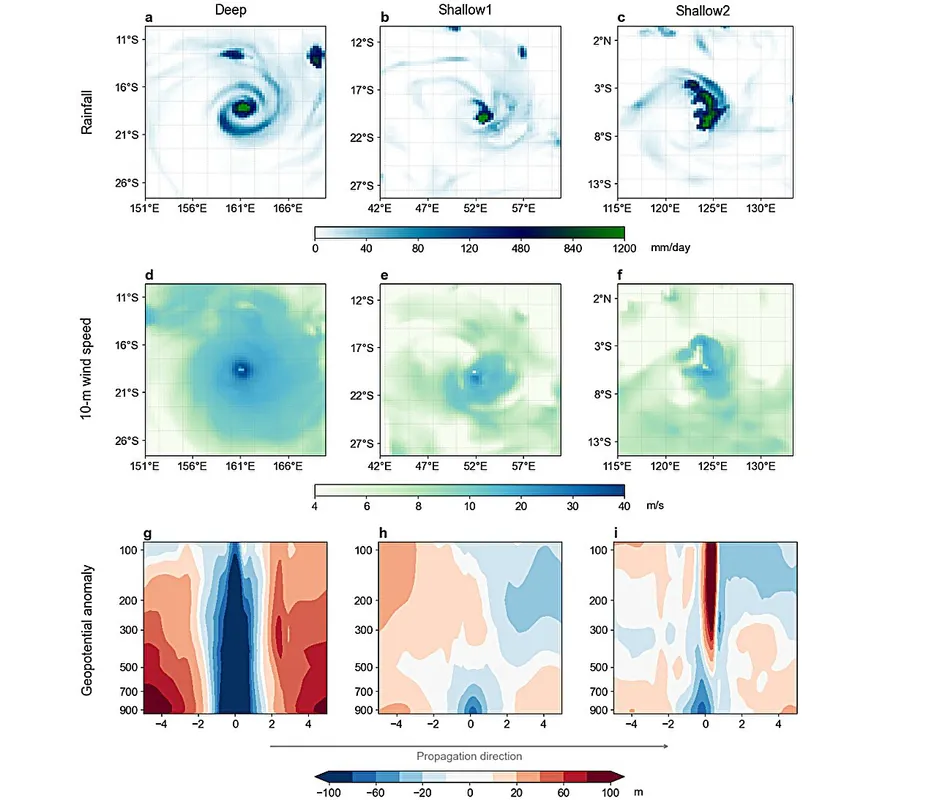
Analysis reveals that extreme warm climates significantly raise the share of shallow cyclones in the tropics. These storms feature convective updrafts and low-pressure zones mostly in the lower troposphere, unlike deeper cyclones that extend higher.
Climate model simulations combined with proxy records from the Early Eocene Climatic Optimum (EECO), about 56 to 48 million years ago, show shallow cyclones comprised 51.83% of tropical systems then, surpassing deep ones. High CO2 levels created a more stable atmosphere and enhanced mid-level winds, restricting cyclone growth.
Hazards of Shallow Storms
Shallow cyclones do not equate to lower risks. They generate weaker winds but match deep cyclones in extreme rainfall contributions during the EECO.
“The decoupling of rainfall from wind speed in shallow cyclones stems from intense warm-rain processes,” states lead researcher Tingyu Zhang.
Need for Updated Assessments
Current models often overlook shallow cyclones by focusing on upper-level indicators and wind speeds. This approach underestimates hydrological threats from future storms, where rainfall and winds diverge.
“This research underscores the need to reevaluate cyclone-related flooding risks,” notes senior researcher Tianjun Zhou. “Wind-based metrics fail to capture rainfall potential in shallow systems.”